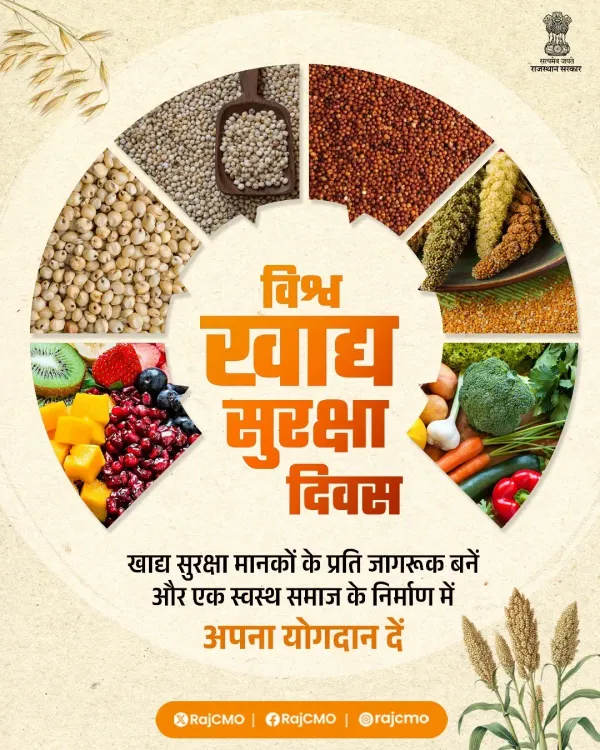
Rajasthan CMO marks World Food Safety Day, vows action on adulteration
Synopsis
On World Food Safety Day, 7 June 2026, the Rajasthan Chief Minister's Office reaffirmed its 'Shuddh Aahar, Milavat Par Vaar' anti-adulteration campaign, calling on citizens to uphold food purity standards and contribute to a healthier society.
Key Takeaways
The Rajasthan CMO marked World Food Safety Day on 7 June 2026 with a pledge to intensify action against food adulteration.
The state is running the 'Shuddh Aahar, Milavat Par Vaar' (Pure food, a strike against adulteration) campaign with continuous enforcement drives.
World Food Safety Day is a global observance promoted by WHO and FAO every year on 7 June .
Rajasthan's campaign operates within the framework of the Food Safety and Standards Act, 2006 and aligns with FSSAI's Eat Right India initiative launched in 2018 .
Citizens were urged to raise awareness of food safety standards and report suspected adulteration.
State-level sampling results and prosecution data under the campaign are expected to be published in annual enforcement reports.
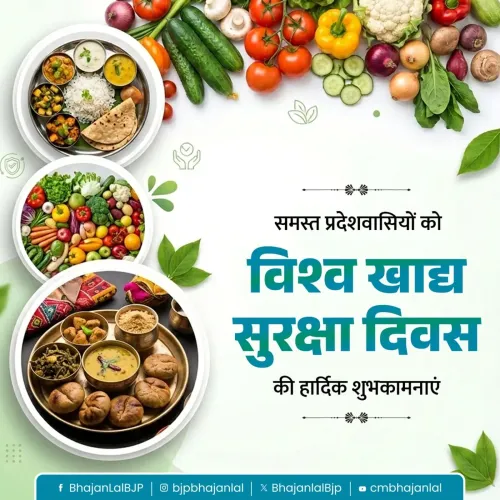
The Chief Minister's Office of Rajasthan on Sunday, 7 June 2026 marked World Food Safety Day by reaffirming the state government's commitment to eliminating food adulteration, calling on citizens to pledge collective responsibility for food purity and quality.
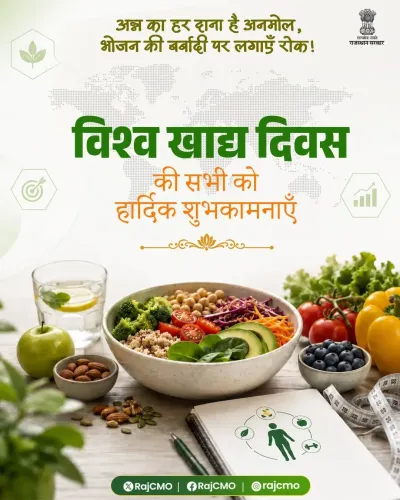
Posting on the occasion, the CMO stated: 'शुद्ध आहार, मिलावट पर वार' — translated as 'Pure food, a strike against adulteration' — is an active state campaign under which continuous, effective action is being taken against those who adulterate food products. The post urged residents to become aware of food safety standards and contribute to building a healthier society.
Context
World Food Safety Day is observed every year on 7 June, promoted jointly by the World Health Organization (WHO) and the Food and Agriculture Organization (FAO) of the United Nations. The day draws attention to foodborne risks and the importance of safe food handling across the entire supply chain — from farm to fork. India observes the day through coordinated messaging by central and state governments, food regulators, and public health bodies.Policy Backdrop
Rajasthan's 'Shuddh Aahar, Milavat Par Vaar' campaign is anchored in the Food Safety and Standards Act, 2006, which established the Food Safety and Standards Authority of India (FSSAI) as the national statutory regulator. The Act empowers state food safety departments to conduct sampling, inspections, and prosecutions against adulteration. FSSAI's Eat Right India initiative, launched in 2018, further deepened state-level partnerships for consumer awareness and risk-based surveillance. Rajasthan's campaign aligns with this national framework by deploying food safety officers in enforcement drives and public outreach programmes. Indian states have increasingly intensified anti-adulteration enforcement through periodic drives that combine field sampling with awareness campaigns. The model reflects FSSAI's shift toward risk-based surveillance, prioritising high-risk commodities such as milk, edible oils, spices, and sweets — categories historically associated with adulteration in domestic markets.Stakeholders and Impact
The campaign's primary beneficiaries are everyday Rajasthan consumers, who face health risks from adulterated food products. Food businesses — from large manufacturers to street vendors — are directly subject to inspections and legal action under the campaign. State food safety officers serve as the enforcement backbone, conducting sampling and initiating prosecutions. Consumer awareness is a stated goal, with the government encouraging citizens to report suspected adulteration and make informed purchasing choices. The broader public health dividend lies in reducing the burden of foodborne illness, which remains a significant concern across Indian states.What's Next
The Rajasthan government's messaging on World Food Safety Day 2026 signals continued operational momentum for the 'Shuddh Aahar, Milavat Par Vaar' campaign through the coming months. Observers will watch for state-level annual reports detailing sampling results and prosecution outcomes under the drive. Any alignment with upcoming FSSAI national food safety audits or review meetings could further sharpen Rajasthan's enforcement calendar. As food safety standards draw growing public attention, states that demonstrate measurable adulteration reduction stand to set a benchmark for others across the country.Point of View
Reinforcing its 'Shuddh Aahar, Milavat Par Vaar' brand ahead of what could be a fresh enforcement cycle. Framing the campaign as a citizen-government partnership — rather than purely a regulatory exercise — reflects a broader trend among Indian state governments of using awareness-driven messaging to supplement field operations. The post also aligns Rajasthan with the national FSSAI agenda at a moment when the Centre is deepening risk-based surveillance across states. Whether the campaign translates into measurable reductions in adulteration cases will ultimately determine its political and public health legacy.
NationPress
23 Oct 2026
Frequently Asked Questions
What is the 'Shuddh Aahar, Milavat Par Vaar' campaign in Rajasthan?
'Shuddh Aahar, Milavat Par Vaar' — meaning 'Pure food, a strike against adulteration' — is a Rajasthan state government campaign that conducts enforcement drives, food sampling, and public awareness programmes to combat food adulteration under the Food Safety and Standards Act, 2006.
When is World Food Safety Day observed and why?
World Food Safety Day is observed every year on 7 June. It is promoted by WHO and FAO to draw global attention to the risks of foodborne illness and the importance of safe food handling from production to consumption.
What is FSSAI and how does it relate to Rajasthan's food safety campaign?
FSSAI, the Food Safety and Standards Authority of India, is the national statutory body that sets food safety standards under the Food Safety and Standards Act, 2006. Rajasthan's state campaign operates within FSSAI's regulatory framework and aligns with its Eat Right India initiative launched in 2018.
What action can citizens take against food adulteration in Rajasthan?
Citizens can report suspected adulteration to state food safety officers, make informed purchasing choices, and support public awareness drives. The Rajasthan government has called on residents to stay aware of food safety standards as part of the 'Shuddh Aahar, Milavat Par Vaar' campaign.
What foods are most commonly adulterated in India?
Milk, edible oils, spices, and sweets are among the commodities historically associated with adulteration in Indian markets and are prioritised under FSSAI's risk-based surveillance model, which state campaigns like Rajasthan's align with.