Rajasthan Congress Leader Voices Alarm Over Educational Curriculum Cuts
Synopsis
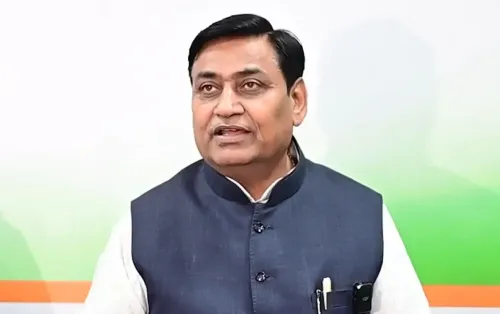
Rajasthan Congress President Govind Singh Dotasra has raised serious concerns regarding the government's decision to eliminate key historical texts from the school curriculum for 2026-27, warning it could lead to a distorted understanding of India's history.
Key Takeaways
Criticism of Curriculum Changes: Dotasra's condemnation highlights the potential risks of altering educational content.
Importance of Historical Texts: The removed books cover essential narratives of India's freedom struggle and development.
Concerns Over Representation: The decision raises questions about how history is taught in schools.
Significant Historical Contributions: The texts reference key figures and their roles in shaping modern India.
Future Implications: The removal may influence students' understanding of their cultural and historical heritage.
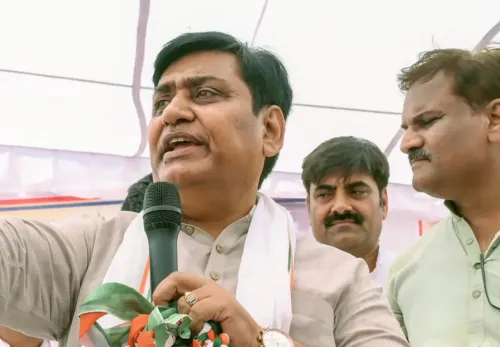
Jaipur, April 16 (NationPress) The President of the Rajasthan Pradesh Congress Committee, Govind Singh Dotasra, expressed his discontent on Thursday regarding the state government's choice to exclude four significant books from the curriculum for the academic year 2026-27.
Dotasra emphasized that eliminating texts such as Rajasthan’s Freedom Movement and Gallantry Traditions (Class 9), History and Culture of Rajasthan (Class 10), Golden India After Independence (Class 11), and Golden India After Independence - Part 2 (Class 12) will expose students to a narrative that is only a “half-truth.” He challenged the reasoning behind these exclusions, pondering if the intent was to undermine the nation-building narrative.
“Should there have been any factual inaccuracies, they could have been rectified. The complete removal of these books indicates that the aim is not reform but rather erasure,” he remarked.
Dotasra further accused the government of attempting to manipulate the portrayal of historical narratives, raising concerns regarding the methodology behind such curriculum adjustments.
He questioned whether lessons about the freedom struggle, bravery, and historical heritage were being omitted, pointing to the contributions of various leaders and movements in India's journey to independence and its subsequent development.
He noted that Golden India After Independence contains crucial references to Mahatma Gandhi and Jawaharlal Nehru, detailing the establishment of democratic institutions and key entities like IITs, IIMs, AIIMS, DRDO, UGC, and the Planning Commission.
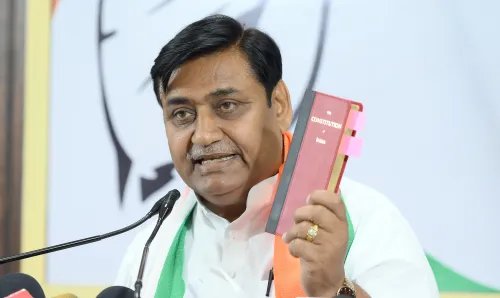
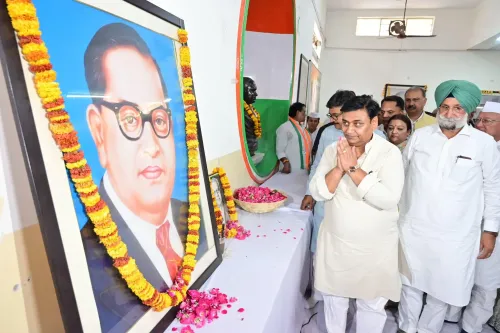
Additionally, he highlighted B. R. Ambedkar's pivotal role in drafting the Constitution, which enshrines justice, equality, and reservation.
Dotasra also recounted significant events during Indira Gandhi's tenure, such as the 1971 war, bank nationalization, and agricultural reforms, along with Rajiv Gandhi's contributions in technology, voting age reforms, and the Panchayati Raj system.
Moreover, he referred to transformational reforms introduced by former Prime Minister Manmohan Singh, such as the Right to Information, MGNREGA, Aadhaar, Right to Education, and Right to Food, which he stated have fortified governance structures.
He mentioned prior instances where, according to him, references to certain pivotal historical figures and events had been omitted from educational content.
Dotasra concluded that the decision to eliminate these books raises serious concerns about how historical developments are represented within the curriculum.
Frequently Asked Questions
What books were removed from the Rajasthan curriculum?
The removed books include 'Rajasthan’s Freedom Movement and Gallantry Traditions' (Class 9), 'History and Culture of Rajasthan' (Class 10), 'Golden India After Independence' (Class 11), and 'Golden India After Independence - Part 2' (Class 12).
Why did Govind Singh Dotasra criticize the removal of these books?
Dotasra criticized the removal, arguing that it presents students with a 'half-truth' and questions the intent behind altering historical narratives.
What historical figures are mentioned in the removed texts?
The texts include references to significant figures such as Mahatma Gandhi, Jawaharlal Nehru, and B. R. Ambedkar.
What impact could this removal have on students?
The removal could lead to a distorted understanding of India's history and diminish the acknowledgment of important historical events and figures.
Are there previous instances of historical content being removed?
Yes, Dotasra mentioned past occurrences where references to certain historical figures and events were also omitted from educational content.