Rajasthan Education Minister Defends Textbook Cuts Amid Historical Dispute
Synopsis
The political battle in Rajasthan escalates as four history books are removed from schools. The Congress party accuses the government of erasing history, while Education Minister Madan Dilawar claims it's a necessary correction. Key figures like Ambedkar, Shastri, and Patel are at the center of this heated debate.
Key Takeaways
Political tensions rise in Rajasthan over textbook removals.
The Congress party alleges historical erasure .
Education Minister Dilawar defends the decision as a correction of historical narratives .
Key historical figures like Ambedkar and Shastri are central to the debate.
The decision affects textbooks for Classes 9-12.
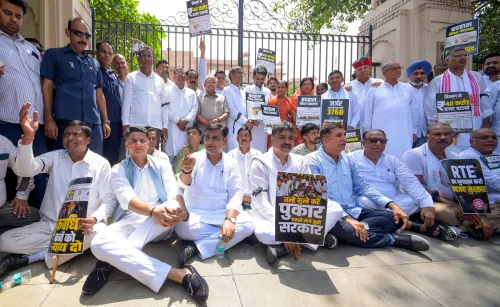
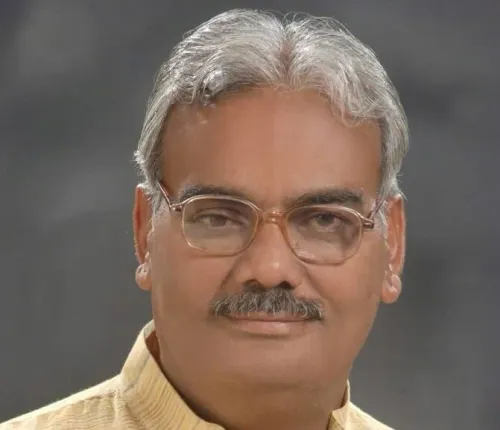
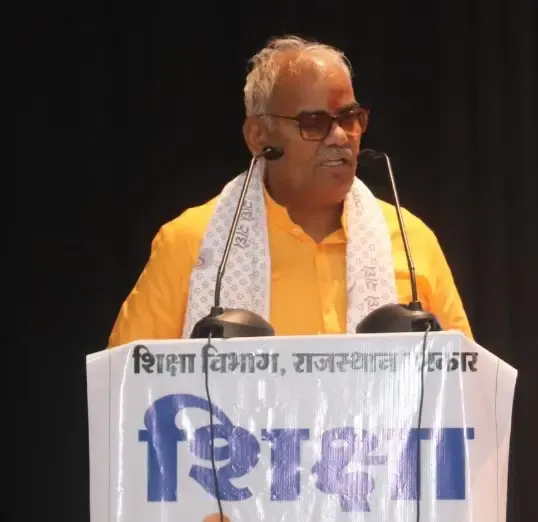
Jaipur, April 17 (NationPress) A political clash is escalating in Rajasthan concerning the exclusion of four history books from the school syllabus. State Congress President Govind Singh Dotasra has accused the government of orchestrating a “plot to erase historical truths,” while Education and Panchayati Raj Minister Madan Dilawar has vehemently denied these allegations.
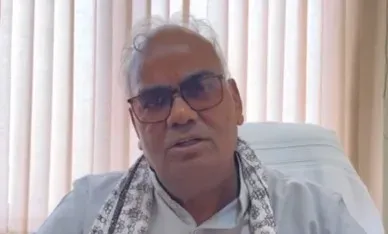
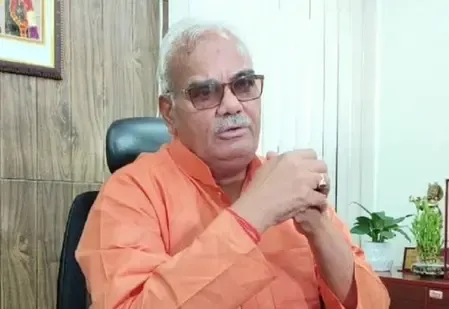
Minister Dilawar responded on Friday, claiming the Congress party is misleading the public, emphasizing that they have a record of undermining prominent figures like B.R. Ambedkar. He remarked that the Congress has diminished Babasaheb’s status to merely a “Dalit leader,” despite his role as a national icon responsible for laws benefiting all segments of society.
During a press briefing at his Jansamvad Kendra in Kota, Dilawar accused the Congress of often neglecting influential leaders such as Lal Bahadur Shastri and Sardar Vallabhbhai Patel in their narrative. He pointed out that, although the Congress had significant leaders like Patel and Shastri, their contributions are underrepresented in educational materials. He argued that textbooks should have included comprehensive accounts of Prime Ministers including Lal Bahadur Shastri, Morarji Desai, Atal Bihari Vajpayee, and Narendra Modi, who have made impactful contributions in the era of Independent India.
“Why is there no content about these leaders? The book titled 'Azaad Bharat ka Swarnim Itihas' should have documented achievements in independent India; however, it lacks substantive text,” he remarked.
“We are not distorting history; we aim to correct it. Ambedkar was never associated with Jan Sangh but is among the greatest leaders of Congress, yet he is only briefly mentioned as a Dalit leader,” Dilawar stated.
“Likewise, Patel and Shastri were not affiliated with Jan Sangh; they were prominent figures in Congress, but their stories remain unwritten in textbooks,” he continued.
He further noted that while references to 'Azad Bharat ka Swarnim Itihas' exist, meaningful content regarding post-independence India and its leadership is scarce.
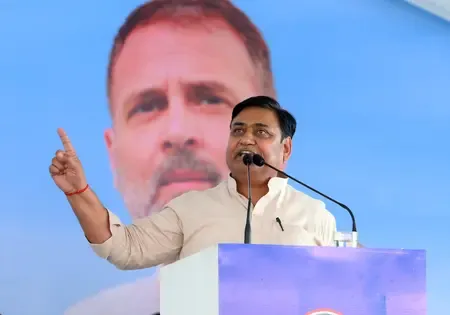
Previously, Dotasra questioned the rationale behind the removal of significant textbooks, labeling the act as a “direct attack on historical thought.” He warned that this decision could lead to an entire generation being taught distorted narratives and propaganda.
Dotasra also inquired whether the removal of these books was due to their emphasis on the contributions of leaders such as Mahatma Gandhi, Jawaharlal Nehru, Indira Gandhi, Rajiv Gandhi, and Manmohan Singh, along with the Constitution drafted by Dr. Ambedkar.
It is noteworthy that the Rajasthan Education Department has made a significant decision by eliminating four textbooks from the curriculum for Classes 9 to 12.
The department has not only withdrawn these texts from the syllabus but has also categorized them as “deleted books,” thereby prohibiting their use in educational institutions. An official directive regarding this action was issued by Sitaram Jat, the Director of the department, clearly listing the banned books and instructing teachers and students against their use.
Each of the four classes—9, 10, 11, and 12—has one book removed. These texts pertain to Rajasthan and Indian history, encompassing topics like the state’s historical heritage, the freedom movement, and India’s progress post-independence.
The withdrawn books consist of the Class 9 title 'Rajasthan’s Freedom Movement' and 'Tradition of Valor' (available in both Hindi and English), the Class 10 book 'History and Culture of Rajasthan' (in Hindi and English), the Class 11 title 'Golden India After Independence' (in Hindi and English), and the Class 12 book 'Golden India After Independence, Part 2' (in Hindi and English).
Point of View
It raises critical questions about the preservation of comprehensive historical knowledge and the potential implications for future generations.
NationPress
16 Sept 2026
Frequently Asked Questions
Why were the textbooks removed?
The Rajasthan Education Department removed the textbooks as part of a decision that has sparked political controversy, with claims of erasing historical narratives.
Who are the key figures involved in this dispute?
Key figures include Congress President Govind Singh Dotasra and Education Minister Madan Dilawar, with references to historical leaders like B.R. Ambedkar, Lal Bahadur Shastri, and Sardar Vallabhbhai Patel.
What subjects did the removed textbooks cover?
The textbooks covered Rajasthan's historical legacy, the freedom movement, and India's development post-independence.
What impact could this have on students?
The removal of these textbooks could limit students' exposure to significant historical events and figures, potentially altering their understanding of India's past.
Is there a possibility of these textbooks being reinstated?
Currently, the textbooks are categorized as 'deleted books,' and it remains unclear if or when they may be reinstated.