Rajasthan Congress Chief Critiques State's Two-Child Policy: Dotasra's Insights
Synopsis
In a recent interview, Rajasthan Congress Chief Govind Singh Dotasra challenges the state government's contradictory stance on the two-child policy, highlighting concerns over local elections and the functioning of the Assembly.
Key Takeaways
Critique of dual policy: Dotasra points out inconsistencies in the two-child norm application.
Impact on local elections: Delay in local elections raises questions about governance.
Assembly functioning: Lack of adequate ministerial responses is concerning.
Public welfare issues: Key concerns remain unaddressed in the current budget.
Call for unity: A consistent policy approach is necessary for fairness.
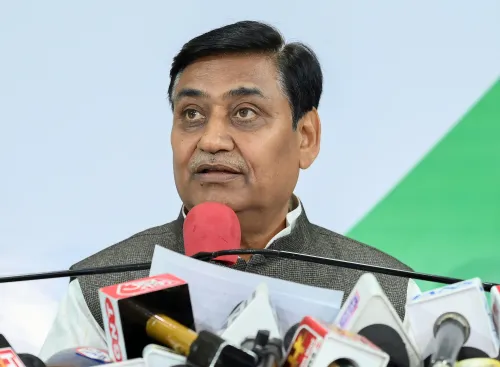
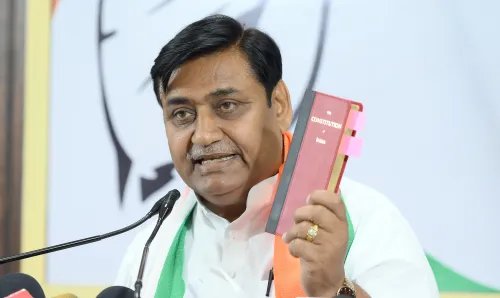
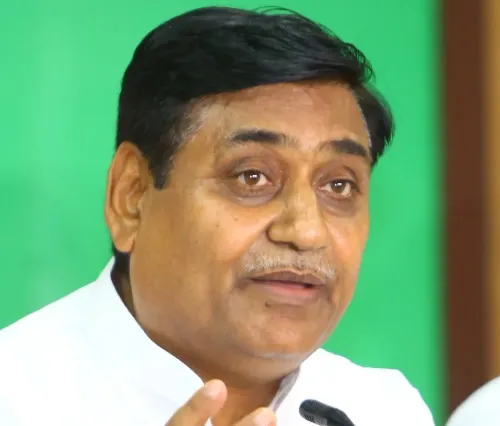
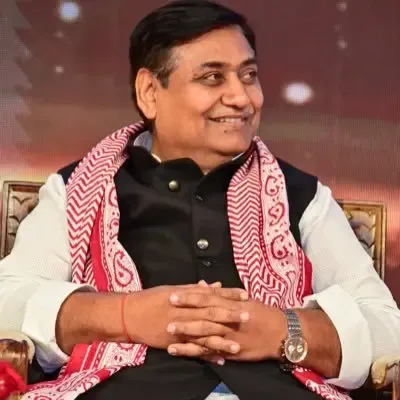
Jaipur, Feb 26 (NationPress) Govind Singh Dotasra, the Chief of Rajasthan Congress, has raised concerns over what he describes as a “dual policy” adopted by the state government concerning the two-child regulation.
Dotasra condemned the government for permitting candidates with more than two children to participate in local elections, while simultaneously imposing restrictions on government employees and officials, including limiting their promotional opportunities.
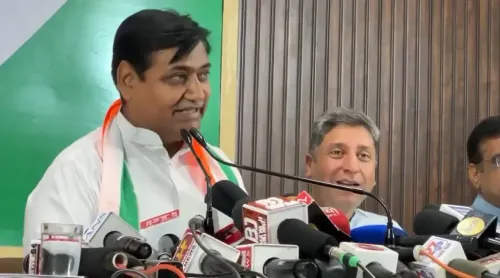
In a detailed interview with IANS, Dotasra discussed significant matters, such as the two-child regulation, delays in local elections, and the operations of the Assembly.
IANS: The BJP government has allowed individuals with more than two children to run for local elections. What are your thoughts?
Dotasra: The Rajasthan government has made it possible for those with more than two children to contest in local elections, yet government employees with the same circumstances continue to face promotional restrictions. This indicates a dual policy approach. All should be evaluated by the same standards. Why should employees bear the brunt? Why are they denied promotions simply for having more than two children? This decision appears to be influenced by pressure from the RSS. The two-child policy was initially implemented around three decades ago as a means of controlling the population. Currently, India’s population exceeds 1.4 billion, with nearly 80 million residing in Rajasthan. We are already grappling with challenges related to resource limitations, quality education, and traffic management. How can we expect to control population growth if such policies are enacted? This decision seems aimed at promoting an increase in the Hindu population, reflecting ideological motivations.
IANS: The government has approached the Supreme Court to delay elections for 113 local bodies.
Dotasra: The preparations for local body elections are already in place. Wards have been established, voter lists finalized, and delimitation has been completed. So, what is the actual issue? Their intention appears to be to postpone the elections until November-December as other Panchayati Raj institutions, including Zila Parishads and Panchayat Samitis, are nearing the end of their terms, wanting all elections to be conducted simultaneously. The Centre allocates approximately ₹3,000 crore to the state for local body elections, but these funds are not being released due to the election delays. While this leads to financial setbacks for the state, they seem willing to accept it out of fear of electoral defeat.
IANS: You have claimed that ministers are not adequately responding to queries in the assembly. Why is that?
Dotasra: The operations of the Assembly are under scrutiny, as ministers often seem ill-prepared. Their inadequate responses have not gone unnoticed by the public. Frequently, even before a minister concludes their answer, the Speaker permits another MLA to interject with a question. This does not leave a favorable impression on the public. Discussions surrounding questions are generally limited to the Leader of Opposition or a single MLA. We have urged the Speaker to allow at least two more MLAs to address crucial topics. He has assured us that he will consider our request.
IANS: What are your thoughts on the State Budget? Does it not seem like a repetition of last year’s budget?
Dotasra: Numerous previous announcements remain unfulfilled, and there appears to be no solid plan for boosting employment, farmers’ incomes, women’s empowerment, or overall development. There is a lack of clear vision regarding women’s health and broader public welfare matters. The primary concerns of the populace are notably absent.
Point of View
Emphasizing the need for a unified approach to regulations affecting citizens.
NationPress
30 Sept 2026
Frequently Asked Questions
What is the two-child norm in Rajasthan?
The two-child norm in Rajasthan is a regulation that restricts government employees and officials from promotions if they have more than two children, aimed at controlling population growth.
Why is there a delay in local body elections?
The Rajasthan government has sought to postpone local body elections, citing the desire to conduct elections for multiple Panchayati Raj institutions simultaneously.
What are the criticisms raised by Govind Singh Dotasra?
Dotasra criticizes the government for a dual policy approach, allowing candidates with more than two children to contest elections while penalizing government employees for the same issue.
How does this policy affect government employees?
Government employees with more than two children face restrictions, including denial of promotions, creating a perceived disparity in policy application.
What are the broader implications of Dotasra's statements?
Dotasra's statements highlight concerns over resource management, public welfare, and the ideological motivations behind population control measures.