Rajasthan Cabinet Revokes Three-Decade-Old Two-Child Rule for Local Body Elections
Synopsis
In a historic policy shift, the Rajasthan Cabinet has abolished the two-child norm for local body elections, a restriction in place for nearly 30 years. This change opens up opportunities for many candidates previously disqualified and is poised to reshape the local political landscape.
Key Takeaways
Significant Policy Shift: Abolishment of the two-child norm for elections.
Increased Candidate Eligibility: Individuals with more than two children can now contest.
Legislative Changes: Rajasthan Panchayati Raj and Municipal Bills approved.
Political Landscape Alteration: Expected to enhance local political competition.
Additional Cabinet Decisions: Establishment of Ayurveda University and Directorate of Revenue Intelligence.
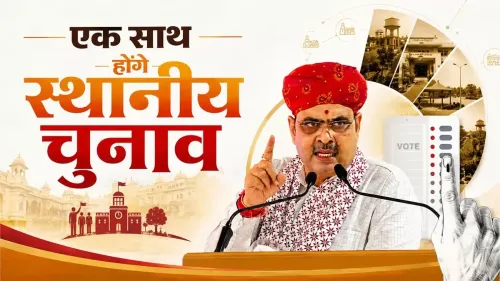
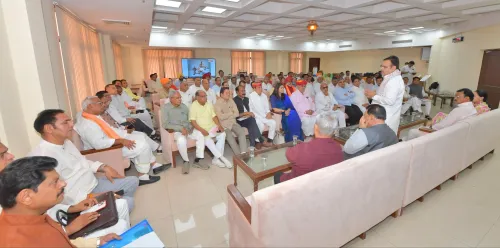
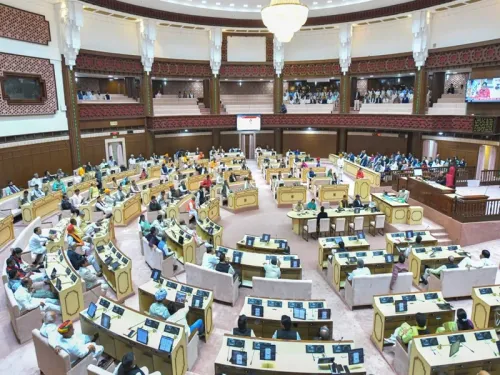
Jaipur, Feb 25 (NationPress) In a pivotal policy change, the Rajasthan Cabinet on Wednesday announced the abolishment of the long-standing two-child norm for candidates vying for Panchayati Raj and urban local body elections, effectively ending a limitation that has persisted for almost three decades.
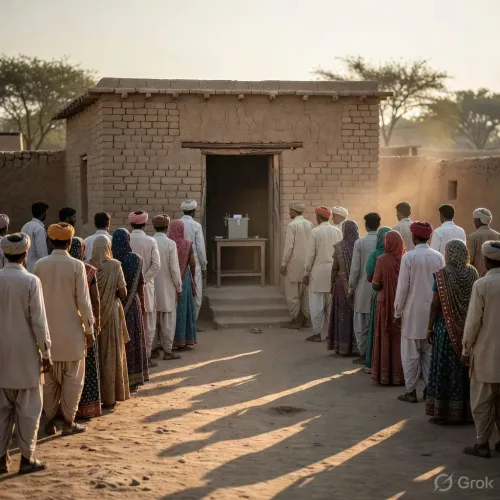
With this new ruling, individuals with more than two children will now qualify to run for panchayat and municipal elections within the state. This decision reverses a regulation established in 1995 under the administration of former Chief Minister Bhairon Singh Shekhawat, signifying a crucial transformation in Rajasthan’s local governance structure.
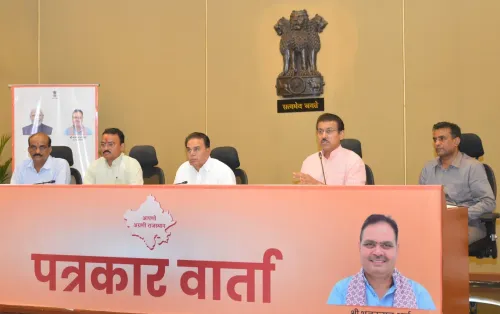
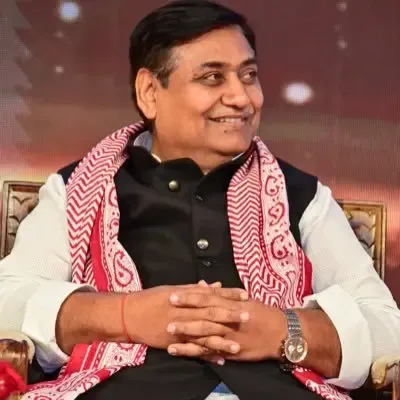
Law Minister Jogaram Patel revealed that the Cabinet has sanctioned the Rajasthan Panchayati Raj (Amendment) Bill, 2026, and the Rajasthan Municipal (Amendment) Bill, 2026.
“These legislative changes will eliminate the restriction that prevented candidates with more than two children from participating in Panchayat and municipal elections. Both Bills are set to be approved during the ongoing Assembly session,” he stated.
Patel pointed out that the two-child policy was initially implemented as a population control strategy. However, he emphasized that the socio-political landscape has evolved significantly over the years, rendering the provision obsolete.
The removal of this restriction is anticipated to dramatically reshape the local political arena. Numerous grassroots leaders and potential candidates who were previously disqualified under this rule will now have the opportunity to contest elections. Influential figures from both the BJP and Congress at the village and district levels had been impacted by this norm.
Political analysts suggest that this reform could broaden engagement and heighten competition in the upcoming Panchayati Raj and urban local body elections.
The call to abolish the two-child rule has been consistently raised in the Assembly throughout the years. Legislators from various parties, including Congress MLA Hemaram Chaudhary and BJP MLA Chandrabhan Singh Akya, have questioned the rationale behind applying this restriction solely to Panchayat and municipal elections while excluding Assembly or Lok Sabha elections.
Numerous social organizations and public representatives have also presented memorandums advocating for its repeal, contending that the regulation was discriminatory and inconsistent. The elimination of the two-child norm is regarded as a landmark advancement in Rajasthan’s electoral reforms and is expected to significantly influence the forthcoming Panchayati Raj and urban local body elections.
In a separate significant decision, the Cabinet endorsed the Ayurveda and Naturopathy University Bill, laying the groundwork for a new Ayurveda University in Ajmer to foster education and research in traditional medicine.
Deputy Chief Minister Premchand Bairwa announced the establishment of a Directorate of Revenue Intelligence and Economic Offences, which will be based in Jodhpur. This new entity will concentrate on combating banking and financial fraud, share market and multi-level marketing scams, as well as land fraud involving cooperative societies. Approximately 60 positions have been authorized.
Industry Minister Rajyavardhan Singh Rathore mentioned that the projected expenditure for the Bharat Mandapam project on Jaipur’s B-2 bypass has been revised from Rs 3,500 crore to Rs 5,800 crore. He asserted that the project is anticipated to yield revenue surpassing the investment and will not impose a burden on the state’s finances.
The Cabinet also sanctioned the allocation of 53 acres of land for an iron ore mining initiative in Udaipur, which entails an estimated investment of Rs 500 crore. This venture is expected to invigorate industrial activities and generate employment opportunities in the area.
Point of View
Fostering a more inclusive democratic process.
NationPress
30 Sept 2026
Frequently Asked Questions
What is the two-child norm?
The two-child norm was a regulation that barred individuals with more than two children from contesting elections for Panchayati Raj and urban local bodies.
Why was the two-child norm introduced?
The two-child norm was initially introduced as a population control measure in 1995.
What impact will removing the two-child norm have?
Removing the norm is expected to increase participation in local elections, enabling many previously disqualified candidates to contest.
When will the new amendments be enacted?
The Rajasthan Panchayati Raj (Amendment) Bill and the Rajasthan Municipal (Amendment) Bill are set to be passed during the current Assembly session.
What other decisions were made by the Rajasthan Cabinet?
The Cabinet also approved the establishment of a new Ayurveda University in Ajmer and a Directorate of Revenue Intelligence to tackle financial fraud.