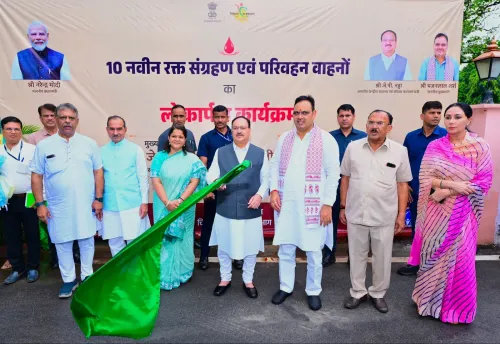
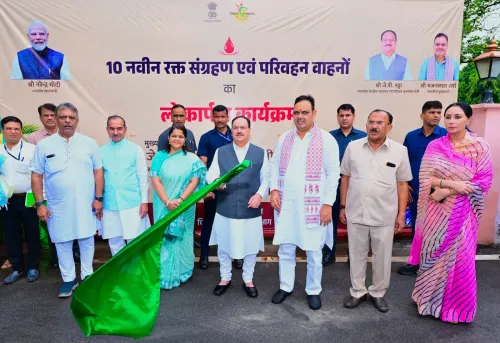
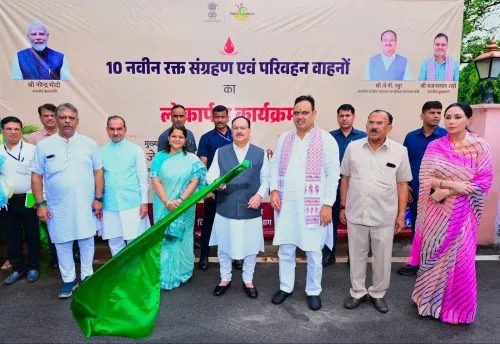
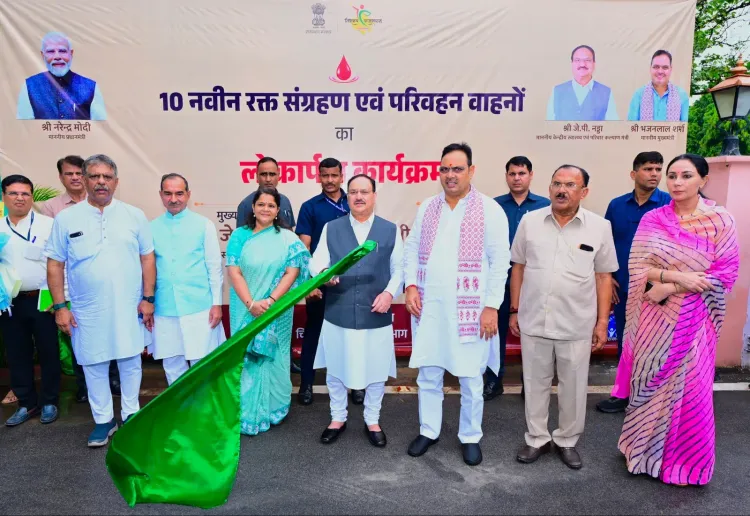
CM Bhajanlal, Nadda flag off 10 blood transport vehicles in Rajasthan
Synopsis
Union Health Minister Jagat Prakash Nadda and Rajasthan CM Bhajanlal Sharma jointly flagged off 10 new blood collection and transport vehicles on 9 August 2026, strengthening the state's blood supply chain and rural health logistics under the 'Aapno Agrani Rajasthan' development push.
Key Takeaways
10 new blood collection and transport vehicles were flagged off jointly by Union Health Minister Jagat Prakash Nadda and CM Bhajanlal Sharma on 9 August 2026 .
The vehicles are purpose-built for blood collection and cold-chain transportation, targeting Rajasthan's last-mile health logistics challenge.
Senior state leadership — including Deputy CM Diya Kumari , Speaker Vasudev Devnani , and Health Minister Gajendra Singh Khimsar — attended the ceremony.
The rollout is part of the Bhajanlal Sharma government's 'Aapno Agrani Rajasthan' development agenda, launched after the BJP came to power in December 2023 .
India's National Blood Policy (2002) underpins the framework for such fleet-based infrastructure upgrades across states.
District-wise deployment data will determine whether the fleet translates into measurable improvements in blood availability at rural hospitals.
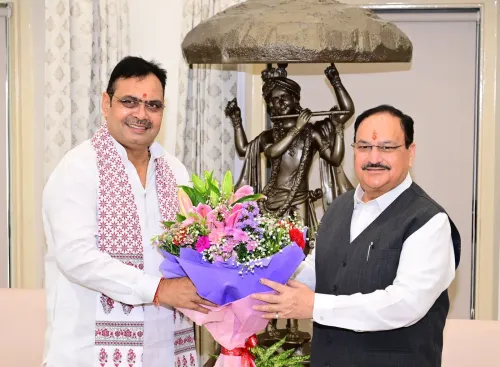
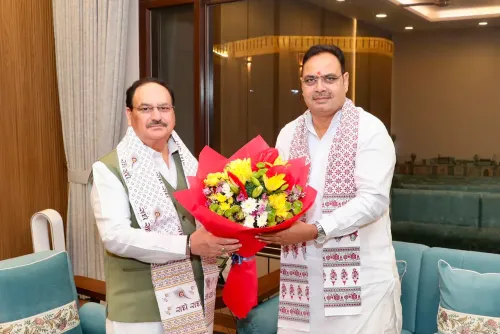
Ten new, state-of-the-art blood collection and transport vehicles rolled out of Jaipur on Sunday, 9 August 2026 — a quiet but consequential push to close the gap between blood banks and the patients who need them most. Union Health Minister Jagat Prakash Nadda and Rajasthan Chief Minister Bhajanlal Sharma jointly flagged off the fleet, signalling a rare moment of Centre-state convergence on frontline health logistics.
The fleet and who was on the ground
The flagging-off ceremony brought together the full weight of Rajasthan's constitutional and political leadership. Assembly Speaker Vasudev Devnani, Deputy Chief Minister Diya Kumari, Medical and Health Minister Gajendra Singh Khimsar, and MP Madan Rathore were present alongside members of the Council of Ministers, sitting MPs, MLAs, and senior departmental officials. The breadth of the gathering underscored that this was not a routine departmental handover — it was a public commitment at the highest level.
The 10 vehicles are described as 'navaeen atyaadhunik' — new and cutting-edge — purpose-built for blood collection and transportation, the final-mile infrastructure that determines whether a unit of donated blood reaches a district hospital in time or does not reach at all.
Why blood logistics matter in a state the size of Rajasthan
Rajasthan is India's largest state by area — a geography that has long made equitable blood supply a genuine operational challenge. Rural and tribal districts can sit hours away from the nearest licensed blood bank, and without reliable cold-chain transport, even well-stocked urban facilities cannot serve emergencies in remote talukas. Maternal haemorrhage, trauma cases, and thalassaemia patients in these zones bear the sharpest cost of that gap.
India's National Blood Policy (2002) laid the framework for modernising blood collection, testing, and transport infrastructure, and successive phases of national health programmes have channelled funds toward vehicle fleets and equipment upgrades across states. Rajasthan has participated in these national drives through multiple administrations, but the scale of deployment has varied with budget cycles and political priority.
Centre-state collaboration under the 'Aapno Agrani Rajasthan' push
The event was hashtagged #आपणो_अग्रणी_राजस्थान ('Aapno Agrani Rajasthan' — 'Our Leading Rajasthan'), the Bhajanlal Sharma government's branding for its development agenda since taking office in December 2023. Nadda's presence as the Union minister responsible for national health policy adds federal heft to what might otherwise read as a state-level procurement announcement — and signals that the vehicle fleet likely draws on central health scheme funding channelled through the state's health department.
For Health Minister Gajendra Singh Khimsar, who oversees day-to-day operations of Rajasthan's sprawling public health system, the rollout is a visible deliverable in a sector where outcomes are often invisible until they fail.
Ten vehicles will not transform Rajasthan's blood supply overnight. But they move the needle — and the next question is how quickly the state health department can publish district-wise deployment data to show exactly where each vehicle is headed.
Point of View
Deploying blood transport vehicles under its 'Aapno Agrani Rajasthan' banner is a tangible, photographable deliverable in a sector where outcomes are otherwise hard to communicate to voters. Nadda's presence also hints that central scheme funding is in play, which matters for how Rajasthan accounts for the procurement in its health budget. The real test will be whether deployment data — which districts, which hospitals — is made public, or whether the fleet becomes another headline without a traceable outcome.
NationPress
24 Sept 2026
Frequently Asked Questions
What did CM Bhajanlal Sharma and JP Nadda flag off in Rajasthan?
They flagged off 10 new, state-of-the-art blood collection and transport vehicles on 9 August 2026, aimed at improving blood supply logistics across Rajasthan.
Who attended the blood vehicle flagging-off ceremony in Rajasthan?
Assembly Speaker Vasudev Devnani, Deputy CM Diya Kumari, Health Minister Gajendra Singh Khimsar, MP Madan Rathore, and other ministers, MPs, MLAs, and departmental officials were present.
Why does Rajasthan need dedicated blood transport vehicles?
Rajasthan is India's largest state by area, and remote districts often lack timely access to blood banks. Dedicated transport vehicles help bridge the cold-chain gap for emergencies, maternal care, and transfusion-dependent patients.
What is 'Aapno Agrani Rajasthan'?
'Aapno Agrani Rajasthan' — meaning 'Our Leading Rajasthan' — is the development branding of the Bhajanlal Sharma government since it took office in December 2023, used to frame infrastructure and public-service initiatives.
What is India's National Blood Policy?
India's National Blood Policy, established in 2002, provides the framework for modernising blood collection, testing, and transport infrastructure, guiding state-level procurement and upgrades through national health programmes.