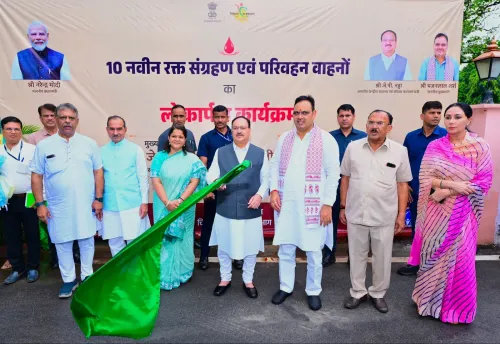
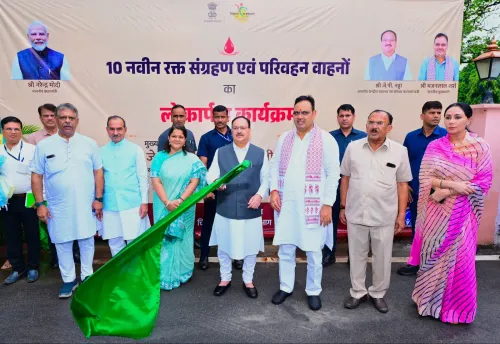
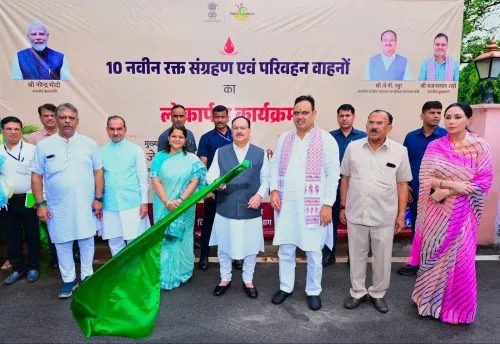
Nadda flags off 10 blood collection buses in Jaipur
Synopsis
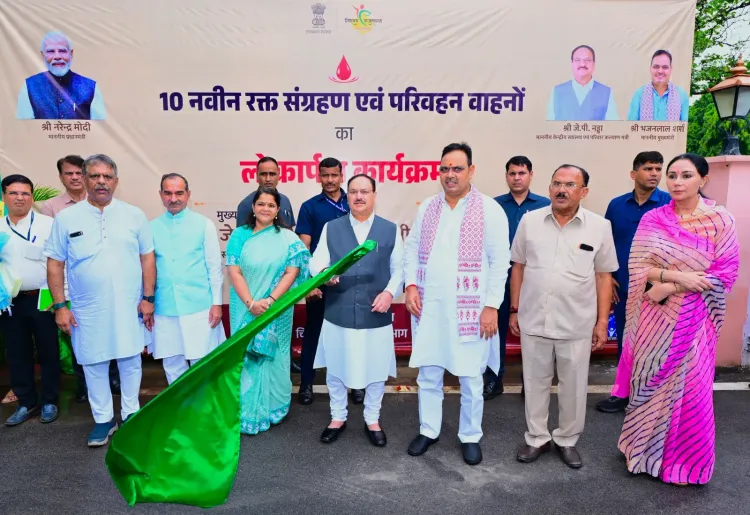
Union Health Minister J. P. Nadda flagged off 10 advanced mobile blood collection and transport buses in Jaipur on August 9, 2026, aiming to strengthen Rajasthan's blood supply chain and ensure timely access for patients across the state.
Key Takeaways
10 mobile blood collection and transport buses were flagged off by Union Health Minister J.
Nadda in Jaipur on August 9, 2026 .
The buses are equipped with advanced facilities for both collecting blood at camps and transporting it safely to hospitals.
The initiative is framed under the BJP's 'double engine' governance model, citing PM Narendra Modi 's guidance and CM Bhajan Lal Sharma 's leadership.
Rajasthan's large geographic area has historically made timely blood delivery a challenge, particularly in rural and semi-urban districts.
India's blood services are underpinned by the National Blood Policy (2002) and the e-RaktKosh digital portal (2016) , which links collection centres with hospitals in real time.
The National Health Mission provides the central funding framework that supports state-level blood transfusion infrastructure.
Ten state-of-the-art mobile blood collection and transport buses rolled out of Jaipur on Sunday, August 9, 2026, as Union Health Minister J. P. Nadda flagged them off in a push to close the last-mile gap between blood donors and patients in Rajasthan.
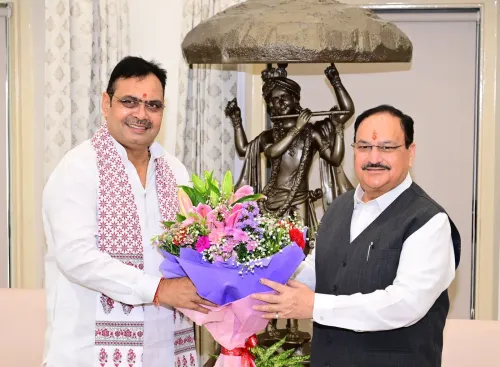
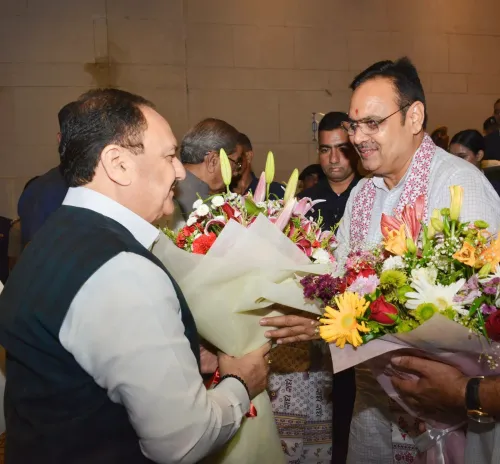
Nadda flagged off the fleet in Jaipur, describing the buses as equipped with advanced facilities that will 'strengthen the blood collection system across the state and play an important role in making blood available to those in need on time.' The minister framed the initiative as a direct product of coordinated governance — invoking Prime Minister Narendra Modi's guidance and Chief Minister Bhajan Lal Sharma's leadership as the twin engines driving Rajasthan's health infrastructure forward.
Why mobile blood units matter in a state Rajasthan's size
Rajasthan is India's largest state by area — a geography that has historically made timely blood delivery a genuine clinical challenge, particularly for patients in semi-urban and rural districts far from major blood banks. Fixed collection centres work well in cities; mobile units reach where the need is sharpest. The ten new buses are designed to both collect blood at camps and transport it safely to hospitals, compressing the time between donation and transfusion. India's blood services infrastructure has a layered policy backbone: the National Blood Policy of 2002, later aligned with WHO standards, set the framework for safe collection and component separation. The e-RaktKosh portal, launched in 2016, digitised blood inventory in real time, linking collection centres with hospitals. Mobile units like these feed directly into that digital network, turning field collections into trackable, routable supply.The 'double engine' health push in Rajasthan
Since Chief Minister Bhajan Lal Sharma took office in December 2023, the BJP's 'double engine' framing — a Centre-state alignment under the same party — has been applied consistently to infrastructure announcements in Rajasthan. Health has been a recurring theatre for this messaging, with the National Health Mission providing the central funding architecture that states draw on for equipment and outreach programmes. The deployment of ten buses is a tangible operational step, but the real test will come in the months ahead: whether blood collection volumes rise in districts currently underserved, and whether wastage rates — a persistent problem in Indian blood banking — fall as transport logistics improve. A fleet of buses leaving Jaipur is a beginning. Whether they close Rajasthan's blood supply gaps will be written in the data that follows.Point of View
Photographable, and address a genuine public-health gap, making them low-controversy high-visibility wins. The deeper policy question is whether these buses are backed by sustained operational budgets and trained personnel, or whether they become underutilised assets — a recurring challenge in Indian public health procurement. If Rajasthan's collection volumes and wastage metrics improve measurably, the model could be replicated in other large BJP-ruled states, turning a local launch into a national template.
NationPress
23 Sept 2026
Frequently Asked Questions
What did JP Nadda launch in Jaipur today?
Union Health Minister J. P. Nadda flagged off 10 new mobile blood collection and transport buses in Jaipur on August 9, 2026 , aimed at strengthening Rajasthan's blood supply infrastructure.
What will these mobile blood buses do in Rajasthan?
The buses will conduct blood collection camps across the state and transport collected blood safely to hospitals, helping ensure timely availability for patients — particularly in areas far from fixed blood banks.
Who is Bhajan Lal Sharma and what is his role here?
Bhajan Lal Sharma is the Chief Minister of Rajasthan since December 2023 . Nadda credited his leadership, alongside PM Modi's guidance, as driving the state's health infrastructure improvements under the 'double engine' government model.
What is the e-RaktKosh portal?
e-RaktKosh is a national digital portal launched in 2016 that digitises blood inventory and links blood collection centres with hospitals in real time, helping manage supply and reduce shortages across India.
What is the National Health Mission's role in blood services?
The National Health Mission (NHM) , operational since 2013 , provides the central funding and policy framework that supports state blood transfusion services, emergency medical infrastructure, and outreach programmes like mobile blood units.