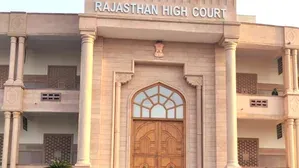
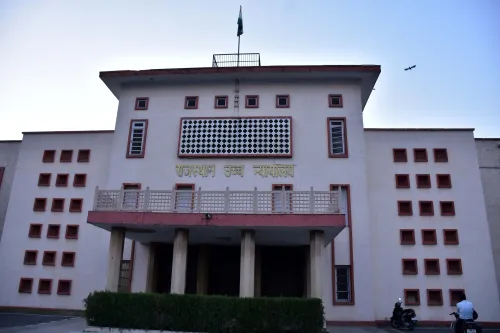
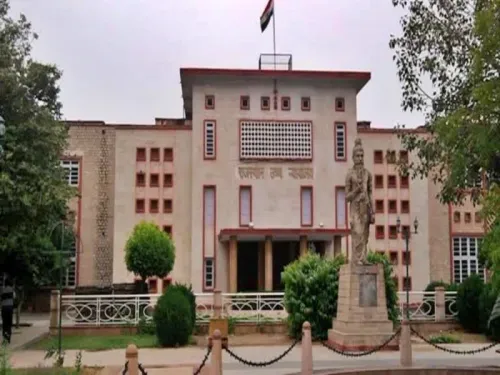
Rajasthan High Court bomb threat: Security tightened in Jaipur, Jodhpur
Synopsis
For at least the 12th time since late 2025, the Rajasthan High Court has been targeted by a bomb threat email — this time hitting both the Jaipur and Jodhpur benches simultaneously. Every threat has been a hoax, yet each one shuts down one of India's busiest state high courts, delays justice for rural litigants, and leaves investigators no closer to identifying the sender.
Key Takeaways
The Jaipur and Jodhpur benches of the Rajasthan High Court received fresh bomb threats via email on 13 July .
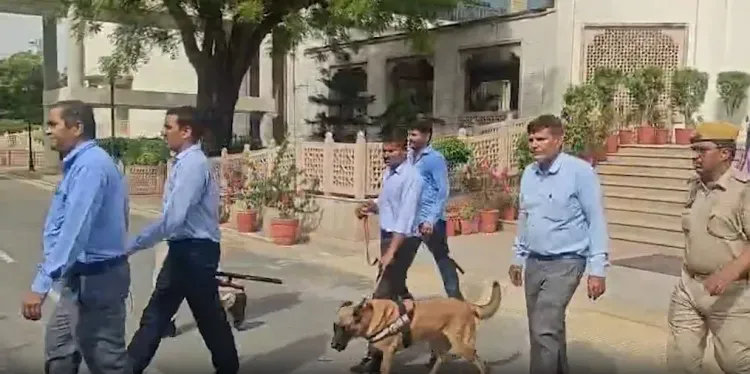
No explosive material was found; authorities are treating the threat seriously and searches were conducted by bomb disposal teams and sniffer dogs.
The court has received more than 12 bomb threat emails since late 2025 ; all have so far proved to be hoaxes.
Cyber investigators are tracing the email's digital trail; officials have not disclosed details of the probe.
Repeated threats have disrupted court proceedings, delayed hearings, and affected litigants travelling from rural Rajasthan .
The legal fraternity has urged authorities to strengthen surveillance, access control, and forensic capabilities at court complexes.
The Jaipur and Jodhpur benches of the Rajasthan High Court received fresh bomb threats via email on Monday, 13 July, triggering an immediate security response and heightened vigilance across both court complexes. Access to the premises was restricted while personnel conducted exhaustive searches; no explosive material had been found at the time of reporting, though authorities said the threat was being treated with utmost seriousness.
What Happened on Monday
The threat email, sent from an unidentified account, was addressed to both benches. Upon receiving it, the High Court administration promptly alerted the police and intelligence agencies. Security personnel evacuated and sanitised sensitive areas of both complexes, while bomb disposal teams and sniffer dogs swept courtrooms, offices, and public spaces. Cyber investigators simultaneously began tracing the email's digital trail.
A Pattern of Repeated Threats
Monday's incident is far from isolated. According to officials, the Rajasthan High Court has received more than 12 bomb threat emails since late 2025. Every threat has so far proved to be a hoax, yet each one has disrupted court proceedings, delayed hearings, and triggered large-scale security operations — raising pointed questions about why those responsible have remained beyond the reach of law enforcement despite repeated investigations.
The Challenge of Tracing Anonymous Threats
Officials have not disclosed details of the ongoing investigation. Cybersecurity experts note that tracing anonymous threat emails is often far more complex than tracking conventional crimes. Investigators typically examine email headers, IP addresses, and server logs, but senders who route communications through multiple networks, privacy-focused services, or overseas infrastructure can significantly complicate identification. Cross-border cases also depend on cooperation from foreign service providers and legal processes that can take considerable time, particularly when servers are located outside India.
Impact on Courts and Litigants
Even when no explosives are found, each bomb threat carries real consequences. Court proceedings are suspended, hearings are postponed, and litigants — many of whom travel long distances from rural Rajasthan — often return home without their cases being heard. Lawyers, court staff, and judges face repeated disruptions, while security agencies conduct mandatory evacuation and search operations. Members of the legal fraternity have argued that the recurring threats consume valuable public resources and undermine access to justice for thousands of people.
What Investigators Are Examining
Security agencies are analysing whether the repeated threats are intended solely to spread fear or to test law enforcement preparedness, and whether the emails are connected or originate from the same source. No official conclusion has yet been announced. The incidents have renewed calls for strengthened cyber investigations, enhanced surveillance systems, improved access control at entry points, and investment in advanced forensic capabilities. Until those responsible are identified, every new threat email is likely to trigger the same costly cycle of evacuation, searches, and disruption at one of Rajasthan's most important judicial institutions.
Point of View
The real cost is borne by ordinary litigants, not the sender. Authorities must move beyond reactive search-and-clear drills and invest in proactive digital forensics; a hoax that reliably shuts down a High Court is not a minor nuisance — it is a functioning instrument of disruption.
NationPress
12 Oct 2026
Frequently Asked Questions
What happened at the Rajasthan High Court on 13 July?
The Jaipur and Jodhpur benches of the Rajasthan High Court received fresh bomb threat emails on 13 July, prompting an immediate security response. Bomb disposal teams and sniffer dogs searched both complexes; no explosive material was found at the time of reporting.
How many bomb threats has the Rajasthan High Court received?
According to officials, the Rajasthan High Court has received more than 12 bomb threat emails since late 2025. Every threat has so far turned out to be a hoax, though each has caused significant disruption to court proceedings.
Why is it difficult to trace the source of these threat emails?
Tracing anonymous threat emails is complex because senders can route communications through multiple networks, privacy-focused services, or overseas servers. Cross-border investigations require cooperation from foreign service providers and legal processes that can take considerable time.
How do bomb threats affect court proceedings and litigants?
Each threat results in suspended proceedings, postponed hearings, and mandatory evacuations. Litigants — many from rural Rajasthan — often travel long distances only to return home without their cases being heard, while court staff and lawyers face repeated disruptions.
What steps are authorities taking to address the recurring threats?
Cyber investigators are examining the email's digital trail, including headers, IP addresses, and server logs. The legal fraternity has urged authorities to enhance surveillance systems, improve access control at entry points, and invest in advanced forensic capabilities to identify anonymous offenders more quickly.