Rajasthan HC orders report on 3,000 madrasas amid reform push

Synopsis
The Rajasthan High Court has asked the state government to account for all 3,000-odd madrasas it oversees — covering teacher qualifications, student records, funding, and curriculum alignment with NEP 2020. With a hearing date of 27 October, the court's intervention could set a significant precedent for madrasa regulation across the state.
Key Takeaways
The Rajasthan High Court ordered the state government to submit a detailed affidavit on the administration and academic monitoring of approximately 3,000 madrasas on 29 September 2026 .
The bench comprises Justice Vinit Kumar Mathur and Justice Chandra Shekhar Sharma ; the next hearing is on 27 October 2026 .
Petitioners proposed unique identification numbers for madrasa students and digital records on the Madrasa Board portal.
Teachers not meeting prescribed qualifications should not receive salaries or honoraria, according to the petitioners.
Proposals include aligning madrasa curricula with NEP 2020 and reviewing grants to non-compliant institutions.
Concerns about non-Muslim children in madrasas were raised, citing NCPCR recommendations and the RTE framework.
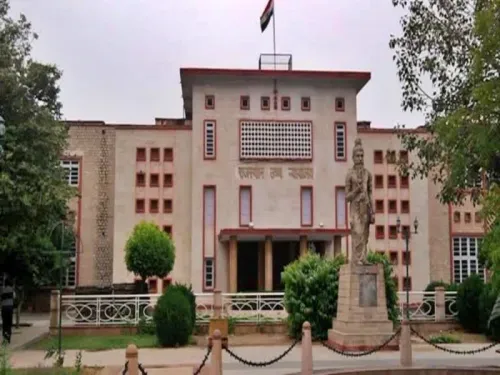
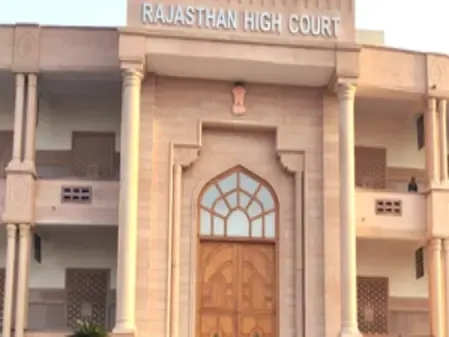
The Rajasthan High Court has directed the state government to submit a detailed affidavit on the management, functioning, monitoring, and educational standards of approximately 3,000 madrasas operating across the state. The order was issued by a division bench comprising Justice Vinit Kumar Mathur and Justice Chandra Shekhar Sharma on 29 September 2026, with the next hearing scheduled for 27 October 2026.
Background and Petitions
The matter came before the court through petitions filed by Pratipal Singh and others, raising concerns about administrative lapses and academic oversight in madrasa institutions across Rajasthan. Advocate Moti Singh Rajpurohit, appearing for the petitioners, presented a range of proposals aimed at bringing madrasa education into closer alignment with mainstream regulatory frameworks.
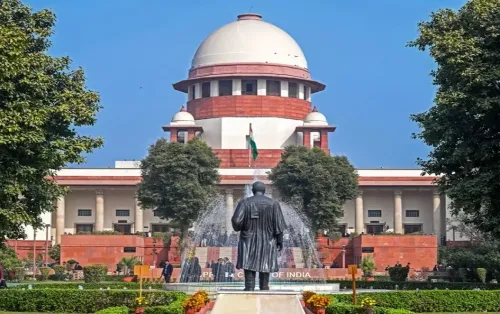
This comes amid a broader national conversation over madrasa oversight, following the Supreme Court's scrutiny of similar legislation in other states, making the Rajasthan court's intervention notable in its scope and timing.
Key Reforms Proposed by Petitioners
The petitioners put forward several structural suggestions for the court's consideration. These include compiling details of madrasas affiliated with the Rajasthan Board of Secondary Education (RBSE) and the Central Board of Secondary Education (CBSE), and conducting a review of the existing registration system for such institutions.
Among the more significant proposals is the implementation of the curriculum prescribed by the Education Department for primary and upper-primary levels, and the introduction of a uniform examination system. The petitioners also advocated maintaining digital records of students on the Madrasa Board portal and issuing a unique identification number to each student to enable systematic monitoring.
Teacher Qualifications and Financial Accountability
The petitions raised pointed concerns about the academic qualifications of madrasa teachers, suggesting that educators who do not meet prescribed standards should not receive salaries or honoraria from the government. The court has asked the state government to clarify its position on this issue.
Additionally, the petitioners called for a review of grants and financial assistance disbursed to madrasa institutions, and proposed that institutions failing to comply with prescribed standards have their registrations reviewed. Conducting uniform examinations through District Institutes of Education and Training (DIET) was also recommended.
NEP Alignment and Child Rights Concerns
The petitions propose aligning madrasa education with the National Education Policy (NEP) 2020, a reform framework that has reshaped curricula across mainstream schools. Separately, the petitions flagged concerns about non-Muslim children enrolled in madrasas, referencing recommendations made by the National Commission for Protection of Child Rights (NCPCR). The petitioners have also sought consideration of general education entitlements under the Right to Education (RTE) framework.
What Happens Next
The Rajasthan High Court has directed the state government to respond comprehensively to all issues and suggestions through a detailed affidavit. The matter is listed for the next hearing on 27 October 2026. The court's directions are aimed at establishing clarity on the existing regulatory framework and the government's proposed roadmap for effective academic supervision of madrasas statewide.
Point of View
Teacher qualifications, curriculum, student records, and minority versus general education rights — making this far more than a routine administrative review. The reference to NCPCR recommendations and the RTE framework signals that the court is open to applying mainstream child-rights standards to religious schools, a legally contentious frontier. What the state government says in its affidavit will be watched closely, since a compliant response could set template conditions that other states cite. Equally, the lack of a government-initiated reform framework before a court had to intervene raises questions about how proactively Rajasthan has managed a sector it funds.
NationPress
30 Sept 2026
Frequently Asked Questions
Why has the Rajasthan High Court sought a report on madrasas?
The court issued its directions in response to petitions filed by Pratipal Singh and others, which raised concerns about administrative lapses and inadequate academic oversight in approximately 3,000 madrasas across Rajasthan. The bench directed the state government to submit a detailed affidavit explaining current and proposed measures for effective supervision.
What are the main reforms proposed in the petitions?
The petitioners have suggested aligning madrasa curricula with NEP 2020, issuing unique identification numbers to students, maintaining digital records on the Madrasa Board portal, and withholding salaries from teachers who do not meet prescribed qualifications. They also called for a review of grants to non-compliant institutions and uniform examinations through DIET centres.
When is the next hearing in this matter?
The Rajasthan High Court has scheduled the next hearing in this matter for 27 October 2026, by which date the state government is expected to file its detailed affidavit responding to all issues raised.
What is the significance of the NCPCR and RTE references in the petition?
The petitions cite NCPCR recommendations and the Right to Education framework in the context of non-Muslim children enrolled in madrasas, raising the question of whether such children are receiving education that meets general national standards. This adds a child-rights dimension to what is primarily framed as an administrative oversight matter.
How many madrasas are currently operating in Rajasthan?
According to the petitions before the Rajasthan High Court, approximately 3,000 madrasas are currently operating across the state. The court's order seeks comprehensive data on their management, functioning, and academic monitoring.