RCA ad-hoc committee suspended by Rajasthan HC after 2.5 years of 'dynasty politics'
Synopsis
What began as a three-month stopgap in March 2024 stretched into a 2.5-year administrative saga at the Rajasthan Cricket Association — cycling through three conveners, four extensions, and a final committee stacked entirely with sons of ruling BJP politicians. It took a Rajasthan High Court order, not government action, to finally end it.
Key Takeaways
The Rajasthan High Court suspended the RCA ad-hoc committee on 2 July 2025 , appointing IAS officer Bhaskar A.
Sawant as administrator.
The ad-hoc regime lasted over two and a half years , surviving three conveners — Jaideep Bihani , Deendayal Kumawat , and Dr Mohit Jaswant Yadav — and four tenure extensions .
The committee was first constituted on 28 March 2024 after RCA president Vaibhav Gehlot resigned on 26 February 2024 .
All five members of the final committee were sons of ruling BJP politicians, drawing 'parivarvad' charges from Leader of Opposition Tika Ram Jully .
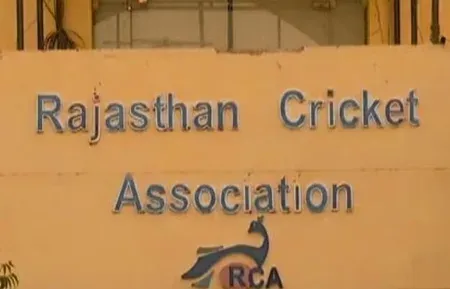
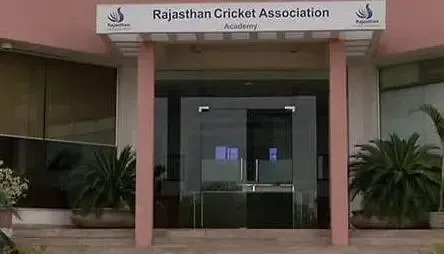
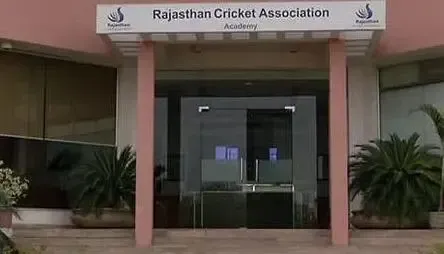
The RCA office at Sawai Mansingh Stadium, Jaipur was sealed on 23 February 2024 over alleged dues of nearly ₹8 crore .
The court directed elections be held at the earliest, ending the longest ad-hoc regime in the association's recent history.
The Rajasthan Cricket Association (RCA) ad-hoc committee — constituted as a stopgap measure in March 2024 — was suspended by the Rajasthan High Court on Wednesday, 2 July 2025, after surviving three conveners, four tenure extensions and mounting allegations of 'parivarvad' (dynastic politics). The court appointed senior IAS officer Bhaskar A. Sawant as administrator and directed that elections be held at the earliest, ending what critics had called one of the longest-running ad-hoc regimes in the association's history.
How the Ad-Hoc Regime Began
The sequence of events was set in motion on 23 February 2024, when the Rajasthan State Sports Council sealed the RCA office at Sawai Mansingh Stadium, Jaipur, citing alleged dues of nearly ₹8 crore and terminating the existing MoU. Three days later, then RCA president Vaibhav Gehlot resigned, dissolving the elected administration and creating an administrative vacuum.
The state government responded on 28 March 2024 by constituting the first ad-hoc committee, appointing BJP MLA Jaideep Bihani as convener with a clear mandate: stabilise the association and conduct elections within three months. The move was initially welcomed as a reform opportunity, but optimism faded quickly.
Extensions, Leadership Churns and Stalled Elections
The committee's first three-month term, due to conclude in June 2024, was extended. Further extensions followed in September 2024, December 2024, and March 2025. With each extension, allegations surfaced that key decisions were being taken unilaterally, that collective meetings had virtually ceased, and that the primary task — holding elections — was being indefinitely deferred.
Facing sustained criticism, the government replaced Bihani with Deendayal (DD) Kumawat as the second convener. The leadership changed; the administrative gridlock did not. Election timelines continued to slip, and assurances from the committee failed to reassure district associations, players, or former office-bearers.
In March 2026, the government reshuffled leadership once more, appointing Dr Mohit Jaswant Yadav as the third convener, while Kumawat and BJP State Spokesperson Pinkesh Jain were dropped from the committee.
The 'Parivarvad' Controversy
The composition of the reconstituted committee drew sharp political fire. All five members of the final ad-hoc panel were sons of ruling Bharatiya Janata Party (BJP) politicians: Mohit Yadav (son of BJP MLA Jaswant Yadav), Dhananjay Singh Khimsar (son of Health Minister Gajendra Singh Khimsar), Arisht Singhvi (grandson of former Minister Chandraraj Singhvi), Ashish Tiwari (son of BJP MP Ghanshyam Tiwari), and Arjun Beniwal (son of MLA Sanjeev Beniwal).
Leader of Opposition Tika Ram Jully publicly flagged the appointments, arguing that the BJP — a party that frequently invokes 'parivarvad' as a charge against rivals — had effectively turned the RCA into a launching pad for relatives of its own politicians. The criticism resonated widely within Rajasthan's cricket community.
Rajasthan High Court Steps In
With no elections in sight and frustration reaching a tipping point, the matter reached the Rajasthan High Court. Judges questioned the rationale behind repeated extensions granted to an interim body and sought an explanation for the continued delay. Observing that an ad-hoc committee could not continue indefinitely, the court suspended the committee, installed Bhaskar A. Sawant as administrator, and ordered elections to be held at the earliest.
This came nearly two and a half years after the resignation of the association's last elected president — a period during which the RCA cycled through three conveners and four extensions without fulfilling the one mandate it was created to execute.
What Happens Next
With the court-appointed administrator now in charge, the immediate priority is expected to be preparing the electoral framework for the RCA. The court's directive signals that judicial oversight will remain active until an elected body is restored. For Rajasthan's cricket community — players, district associations and administrators alike — the intervention represents the accountability mechanism that the state government failed to provide over more than two years.
Point of View
All sons of BJP politicians, appointed by a party that has built a significant part of its political identity around opposing dynastic politics. The Rajasthan High Court did what the state government would not. The deeper question is whether court-mandated elections will produce genuine reform or simply install a new set of political proxies through a democratic veneer.
NationPress
1 Oct 2026
Frequently Asked Questions
Why did the Rajasthan High Court suspend the RCA ad-hoc committee?
The Rajasthan High Court suspended the RCA ad-hoc committee on 2 July 2025 after finding that the interim body had continued for over two and a half years without fulfilling its core mandate of holding elections. The court observed that an ad-hoc committee could not continue indefinitely and appointed IAS officer Bhaskar A. Sawant as administrator, directing elections at the earliest.
What triggered the formation of the RCA ad-hoc committee in 2024?
The ad-hoc committee was formed after RCA president Vaibhav Gehlot resigned on 26 February 2024, following the sealing of the RCA office at Sawai Mansingh Stadium by the Rajasthan State Sports Council over alleged dues of nearly ₹8 crore. The state government constituted the first ad-hoc committee on 28 March 2024 to stabilise the association and conduct elections within three months.
What is the 'parivarvad' controversy surrounding the RCA?
The controversy refers to the composition of the final ad-hoc committee, in which all five members were sons of ruling BJP politicians. Leader of Opposition Tika Ram Jully argued that the BJP — which frequently criticises dynastic politics in rivals — had used the RCA as a platform for relatives of its own ministers and MLAs.
Who were the three conveners of the RCA ad-hoc committee?
The three conveners were BJP MLA Jaideep Bihani (appointed March 2024), Deendayal (DD) Kumawat (appointed after Bihani faced criticism), and Dr Mohit Jaswant Yadav (appointed March 2026). Each change in leadership was accompanied by fresh promises of elections, none of which materialised.
What happens to the RCA now that the court has intervened?
Senior IAS officer Bhaskar A. Sawant has been appointed administrator by the Rajasthan High Court, which has directed that RCA elections be held at the earliest. The administrator is expected to prepare the electoral framework, with judicial oversight remaining active until an elected body is in place.