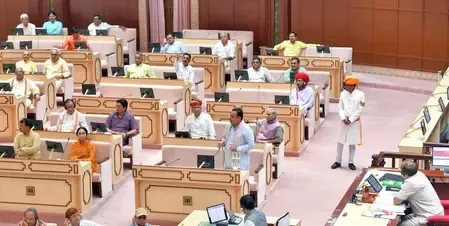
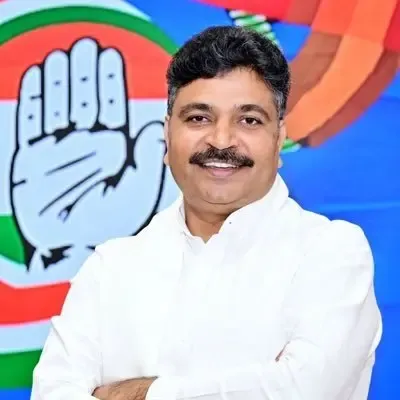
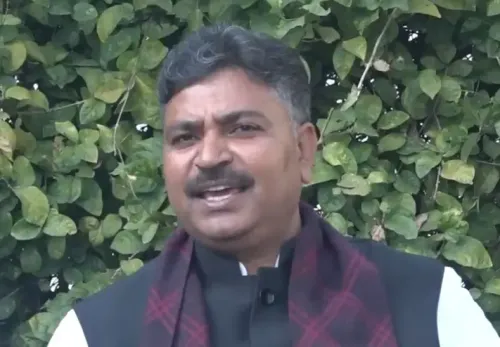
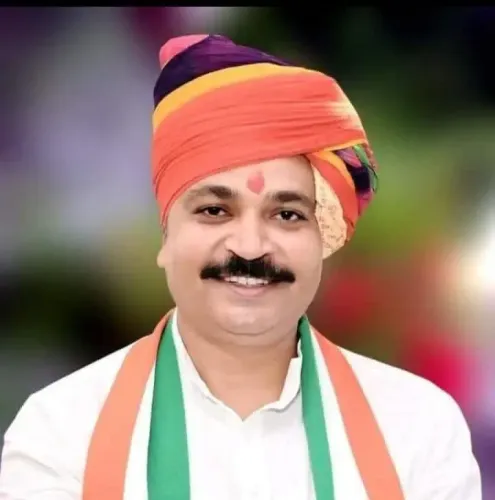
Rajasthan LoP Tika Ram Jully meets Gen Z in Jaipur, vows to raise youth issues in Assembly
Synopsis
On Independence Day, Rajasthan's Leader of Opposition took youth politics off social media and into a live dialogue — with 50 Gen Z students grilling him on paper leaks, AI costs, and crumbling schools. His pledge to carry their concerns into the Assembly on 20 August turns a one-day event into a legislative test.
Key Takeaways
Rajasthan LoP Tika Ram Jully met nearly 50 Gen Z students at Gandhi Vatika, Jaipur on 15 August 2025 .
Jully pledged to raise student concerns — including paper leaks and school infrastructure — in the Rajasthan Assembly session beginning 20 August .
He claimed more than 45,000 schools in Rajasthan need repairs and alleged the state government has not adequately addressed the issue.
Congress is reportedly considering reserving 50 per cent of party opportunities for young people.
Jully floated the idea of developing Jaipur as an IT and AI hub on par with Bengaluru .
On AI access, he said Congress would consider government support for students to afford paid AI tools if it returns to power.
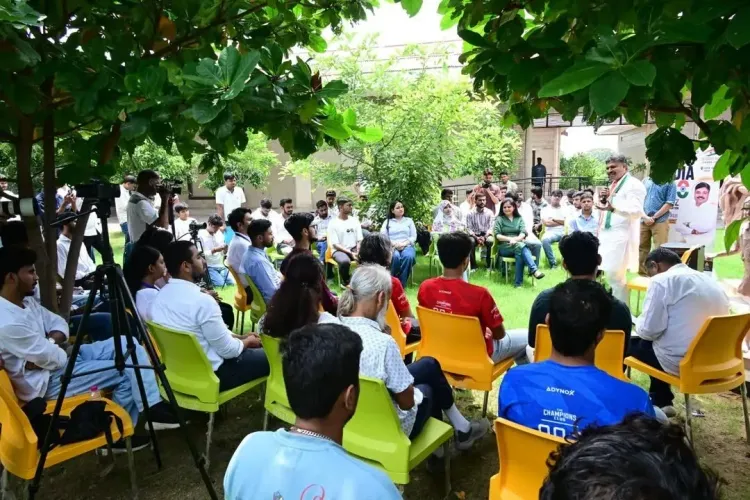
Rajasthan Leader of Opposition Tika Ram Jully on 15 August 2025 held a wide-ranging dialogue with nearly 50 Gen Z students at Gandhi Vatika in Jaipur on Independence Day, engaging on issues from paper leaks and school infrastructure to artificial intelligence access and political participation. Jully committed to placing several of the students' concerns before the Rajasthan Assembly when the session opens on 20 August.
Key Issues Raised by Students
The interaction, organised by People for Democracy, brought together students from different educational streams. Concerns raised spanned examination integrity, AI affordability, teacher shortages, unsafe school buildings, unemployment, and youth entry into public life.
Aysha, a NEET aspirant from Ramganj, pressed Jully on recurring paper leaks and demanded assurances for students. Jully promised to raise the issue in the Assembly and push for a more secure examination framework. 'Students should not suffer because of failures in the system,' he said.
On AI Access and Education Infrastructure
Responding to questions about the growing role of artificial intelligence, Jully noted that many AI tools carry paid subscription costs that are out of reach for most students. He said that if the Indian National Congress (INC) returns to power in Rajasthan, the party would consider government support to help students access paid AI platforms.
On school infrastructure, Jully claimed that more than 45,000 schools in the state require repairs and alleged that the current state government has not adequately addressed the problem. Participants pointed to unsafe buildings, teacher shortages, and ongoing protests by school students as evidence of the crisis.
Youth in Politics and the Jobs Question
Asked how young people inspired by Congress leader Rahul Gandhi's outreach to Gen Z could enter politics, Jully said the party was considering reserving 50 per cent of its opportunities for young people. He encouraged participation in public life but drew a firm line: 'Politics is service. If you are coming into politics considering it a business, don't come.'
On employment, Jully acknowledged that the number of aspirants preparing for government jobs far exceeds available vacancies. He argued the long-term answer lies in skill development, human resource training aligned with career goals, and promotion of small businesses and cottage industries to spread economic opportunity to the grassroots.
Jaipur as a Future IT and AI Hub
Jully pointed to Jaipur's untapped potential in the technology sector, suggesting the city could evolve into an IT and AI hub comparable to Bengaluru. He floated the idea of developing a dedicated technology-oriented district near the state capital. 'Jaipur lacks nothing,' he said.
Historical Reflections on Independence Day
In his opening remarks, Jully recalled the sacrifices of India's freedom struggle and credited a succession of national leaders for the country's development — citing former Prime Minister Jawaharlal Nehru for building foundational institutions, Indira Gandhi for bank nationalisation, Rajiv Gandhi for the IT revolution, Atal Bihari Vajpayee for highways and river-linking, and former Prime Minister Manmohan Singh for steering the economy through a period of severe global stress.
The dialogue was held before a sculpture of Mahatma Gandhi walking behind a young boy carrying Gandhi's stick — a setting Jully used to draw a parallel between Gandhi's guidance of younger generations and the Congress's stated intent to place youth at the forefront of its politics. With the Assembly session days away, the students' concerns now have a formal legislative platform.
Point of View
Giving his promises an immediate legislative hook. But the gap between dialogue and delivery is wide: claiming 45,000 schools need repairs is a serious allegation that demands a sourced government audit, not an opposition assertion. The AI-subsidy promise, conditional on an election win, is aspirational at best. What the interaction does reveal is that Gen Z anxiety around examinations, jobs, and technology access is real and intensifying — and that both the ruling party and the opposition are now competing to own that constituency.
NationPress
30 Sept 2026
Frequently Asked Questions
What did Rajasthan LoP Tika Ram Jully discuss with Gen Z students in Jaipur?
Jully held a dialogue with nearly 50 Gen Z students at Gandhi Vatika in Jaipur on 15 August 2025, covering paper leaks, AI access, school infrastructure, unemployment, skill development, and youth participation in politics. He committed to raising several of these concerns in the Rajasthan Assembly session beginning 20 August.
What did Jully say about paper leaks and examination security?
Responding to NEET aspirant Aysha from Ramganj, Jully promised to raise the paper leak issue in the Rajasthan Assembly and push for measures to make the examination system more secure. He said, 'Students should not suffer because of failures in the system.'
What is the Congress's position on AI access for students?
Jully said many AI tools require paid subscriptions unaffordable for students and indicated that if Congress returns to power in Rajasthan, the party would consider providing government support for students to access paid AI platforms. No specific scheme or budget was announced.
How many Rajasthan schools does Jully claim need repairs?
Jully claimed more than 45,000 schools in Rajasthan require repairs, alleging the current state government has not adequately addressed the problem. Students at the event cited unsafe buildings and teacher shortages as pressing concerns.
What did Jully say about youth entering politics?
Jully said Congress was considering reserving 50 per cent of its opportunities for young people, inspired by Rahul Gandhi's outreach to Gen Z. He cautioned against a transactional approach, saying: 'Politics is service. If you are coming into politics considering it a business, don't come.'