Rajasthan LoP demands Aravalli Committee extend August 31 report deadline
Synopsis
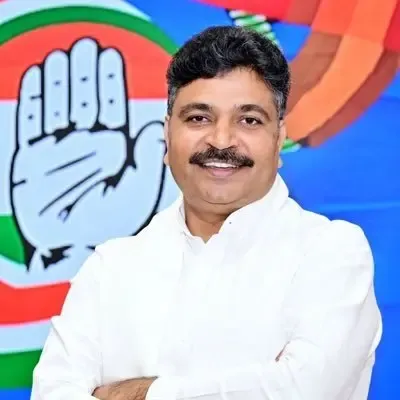
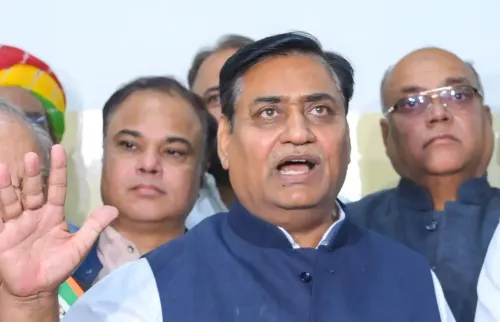
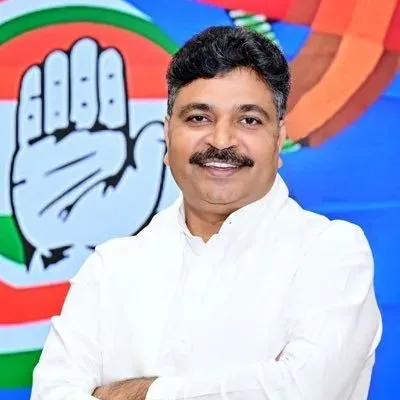
Rajasthan's Leader of the Opposition Tikaram Jully has challenged the Supreme Court-appointed Aravalli Committee's methodology head-on — alleging that key districts were skipped, public hearings were barely publicised, and not a single mining-affected village was visited. His demand for a deadline extension past 31 August 2026 puts the committee's credibility on the line before it reports back to the court.
Key Takeaways
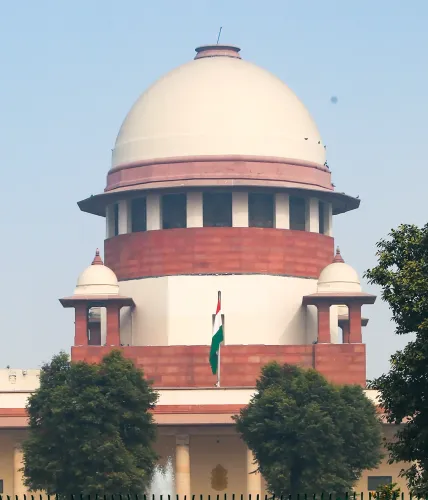
Rajasthan LoP Tikaram Jully has written to the Supreme Court -appointed High-Powered Committee on Aravalli Conservation demanding an extension of the 31 August 2026 report deadline.
Jully alleged that 10 Aravalli-rich districts — including Chittorgarh, Bharatpur, and Kota — were omitted from the interim report submitted to the Supreme Court in October 2025 .
Public hearing representatives were reportedly allotted only two minutes each to speak, with hearings described as inadequately publicised.
The committee allegedly did not visit a single mining-affected village to assess health, environmental, and livelihood impacts.
Jully is calling for dialogue with communities across all 64 Aravalli districts in Rajasthan, Delhi, Haryana, Uttar Pradesh, Gujarat , and the Braj region in Mathura .
Rajasthan Leader of the Opposition Tikaram Jully has written to the Supreme Court-appointed High-Powered Committee on Aravalli Conservation, urging it to extend the deadline for its final report beyond 31 August 2026. In the letter, Jully raised pointed concerns about the committee's methodology during its recent visit to Rajasthan, arguing that a report of this magnitude cannot be finalised without substantive consultation with affected communities.
Key Concerns Raised by the Opposition
Jully questioned why the committee had visited only a handful of districts in Rajasthan despite the Aravalli range spanning a significant portion of the state. He alleged that several Aravalli-rich districts — including Chittorgarh, Sawai Madhopur, Bharatpur, Deeg, Bundi, Baran, Jhalawar, Kota, Karauli, and Dholpur — were omitted from the interim report submitted to the Supreme Court in October 2025.
He further alleged that public hearings were inadequately publicised, limiting community participation. Representatives were reportedly allotted only two minutes each to speak — a constraint Jully described as reducing a matter of serious environmental and social consequence to a mere formality.
Demand for Broader Community Dialogue
Jully stressed that no final decision should be taken before meaningful dialogue is held with affected communities across all 64 Aravalli districts spanning Rajasthan, Delhi, Haryana, Uttar Pradesh, and Gujarat, as well as the Braj region in Mathura. He argued that a comprehensive assessment of the range is impossible without understanding the ground realities facing residents and communities dependent on the ecosystem.
Mining-Affected Villages Left Unvisited
Among the sharpest criticisms in the letter was the allegation that the committee had not visited a single mining-affected village to assess the firsthand impact of mining and stone crushing on health, environment, and livelihoods. Jully asserted that such omissions fundamentally undermine the credibility and completeness of any report the committee might submit.
What the Opposition Is Asking For
Jully has demanded an extension of the report deadline to allow for a thorough, transparent, and meaningful consultation process. He reiterated that the voices of people living in and around the Aravalli region must be formally heard before any recommendations are placed before the Supreme Court. The committee's response to the letter, and whether the Supreme Court will grant any extension, is expected to become clear in the coming days.
Point of View
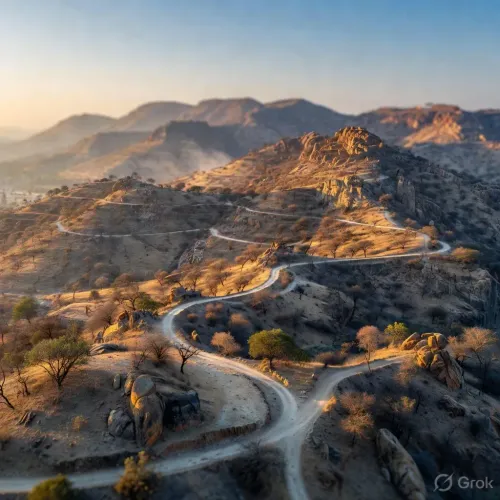
Hearings were tokenistic, and mining villages were never visited — raise legitimate procedural questions that the Supreme Court should weigh before accepting the report. The Aravallis are not a local issue: they are a 692-kilometre ecological spine covering five states, and any conservation framework built on incomplete consultation risks both judicial challenge and community resistance. The two-minute speaking limit at public hearings, if accurate, is particularly hard to defend on a matter of this scale.
NationPress
26 Aug 2026
Frequently Asked Questions
Why is Rajasthan's LoP seeking an extension of the Aravalli Committee report deadline?
Rajasthan Leader of the Opposition Tikaram Jully has sought an extension beyond 31 August 2026, arguing that the committee's methodology was inadequate — key districts were not visited, public hearings were poorly publicised, and no mining-affected villages were assessed. He contends a credible report requires full community consultation across all 64 Aravalli districts.
Which districts does Jully say were left out of the interim Aravalli report?
Jully specifically cited Chittorgarh, Sawai Madhopur, Bharatpur, Deeg, Bundi, Baran, Jhalawar, Kota, Karauli, and Dholpur as Aravalli-rich districts allegedly omitted from the interim report submitted to the Supreme Court in October 2025.
What is the Supreme Court-appointed High-Powered Committee on Aravalli Conservation?
It is a committee appointed by the Supreme Court of India to assess the ecological condition of the Aravalli range and recommend conservation measures. The committee spans the range's footprint across Rajasthan, Delhi, Haryana, Uttar Pradesh, and Gujarat, and was due to submit its final report by 31 August 2026.
What concerns were raised about the public hearings held by the committee?
Jully alleged that information about the public hearings was not adequately publicised, limiting community participation. He also noted that each representative was given only two minutes to speak, which he described as reducing a matter of major environmental and social significance to a formality.
Who are the communities affected by the Aravalli conservation process?
The affected communities include residents and villages across 64 Aravalli districts in Rajasthan, Delhi, Haryana, Uttar Pradesh, and Gujarat, as well as the Braj region in Mathura. Jully has specifically highlighted mining-dependent communities whose livelihoods and health are directly impacted by decisions on the range.