Rajasthan CM Bhajanlal Pushes Yamuna Deal to End Shekhawati's Water Crisis
Synopsis
Rajasthan's CMO confirmed on 25 October 2026 that work is actively under way to meet the water needs of Sikar, Churu, and Jhunjhunu through the Yamuna inter-state water agreement, highlighting CM Bhajanlal Sharma's push to resolve the Shekhawati region's chronic water scarcity.
Key Takeaways
The Chief Minister's Office of Rajasthan confirmed on 25 October 2026 that efforts are ongoing to address water needs in Sikar, Churu, and Jhunjhunu via the Yamuna water agreement.
Chief Minister Bhajanlal Sharma was directly tagged, positioning him as the political face of the initiative.
The three Shekhawati districts face structural water scarcity driven by depleted groundwater and arid climate conditions.
The agreement builds on the baseline 1994 MoU on Yamuna water sharing among Rajasthan, Haryana, Delhi, and Uttar Pradesh.
Exact allocation volumes, canal infrastructure timelines, and Haryana coordination details remain to be officially confirmed.
The announcement signals political will but the key test is translating the agreement into actual canal water delivery to residents.
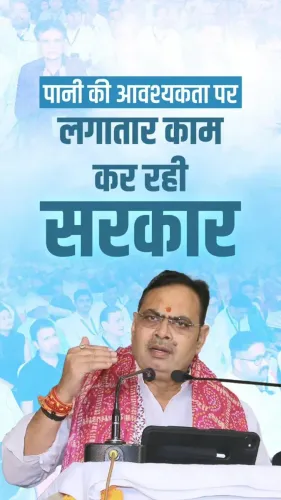
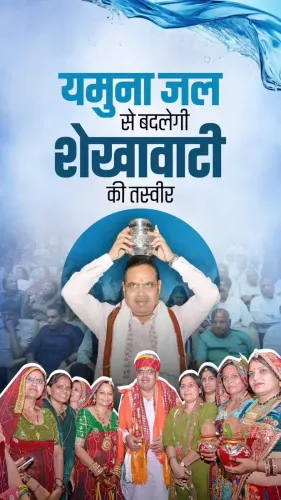
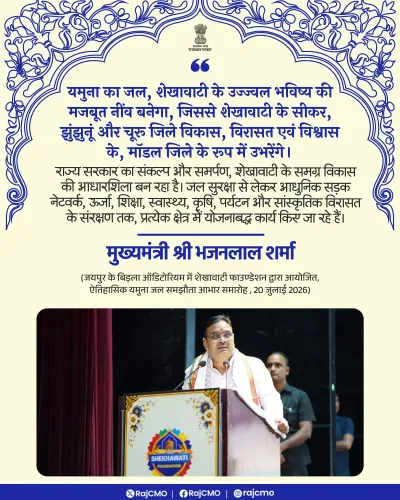
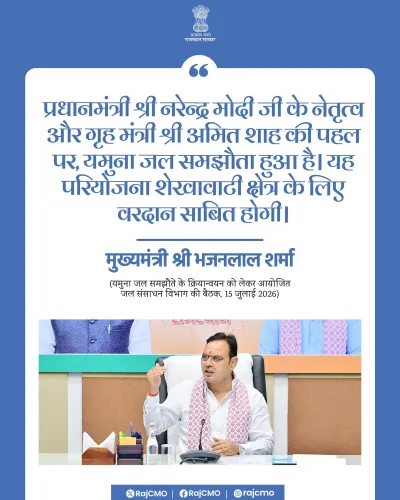
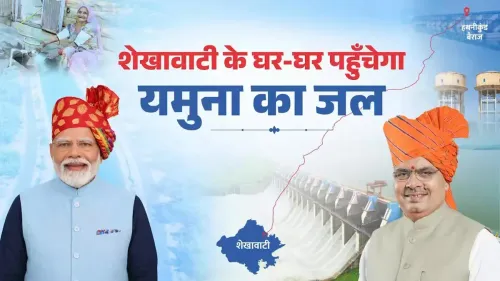
Three districts in Rajasthan's arid Shekhawati belt — Sikar, Churu, and Jhunjhunu — are at the centre of a state-level push to resolve their chronic water shortages through a Yamuna river water agreement. The Chief Minister's Office of Rajasthan posted on Sunday, 25 October 2026, that active work is under way to fulfil the water requirements of these three districts through the inter-state Yamuna water accord, directly tagging Chief Minister Bhajanlal Sharma.
The post, carrying the hashtag #आपणो_अग्रणी_राजस्थान ('Our Leading Rajasthan'), reads: 'यमुना जल समझौते के माध्यम से सीकर, चूरू और झुंझुनूं जिलों की जल आवश्यकताओं को पूरा करने की दिशा में कार्य किया जा रहा है।' ('Work is being done to fulfil the water requirements of Sikar, Churu and Jhunjhunu districts through the Yamuna water agreement.') The phrasing is deliberate — 'work is being done' signals active momentum rather than a completed deal, and it frames CM Sharma as the driving force.
Why Sikar, Churu and Jhunjhunu Cannot Wait
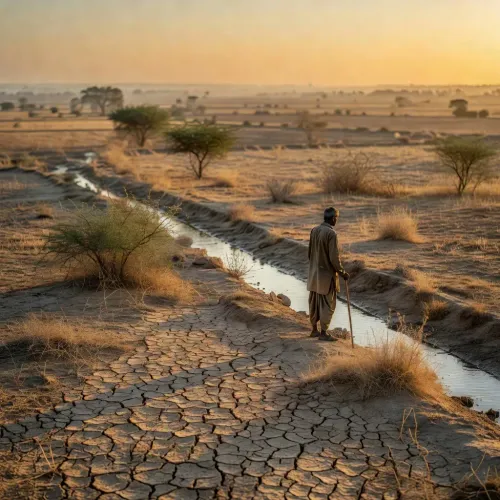
The Shekhawati region's water crisis is not new — it is structural. Churu sits atop one of Rajasthan's most severely depleted groundwater tables, forcing communities and farmers to depend almost entirely on piped surface water from distant sources. Sikar and Jhunjhunu face similar pressure: growing urban populations, intensifying agriculture, and a semi-arid climate that receives far too little rainfall to recharge aquifers fast enough. For generations, this belt has watched its water table sink while demand has only climbed.
Any durable solution requires importing surface water — and the Yamuna, flowing through neighbouring Haryana before reaching Delhi, is the most viable source for Rajasthan's northern tier. The logic of the agreement is straightforward: bring Yamuna allocations west via canal infrastructure, and the Shekhawati districts gain a reliable supply that no amount of groundwater extraction can sustainably provide.
The Yamuna Compact's Long History — and What Remains Unresolved
The foundation of the current push dates to the 1994 Memorandum of Understanding signed among Rajasthan, Haryana, Delhi, and Uttar Pradesh on Yamuna water sharing. That agreement established baseline allocation shares for each participating state — but converting paper shares into actual water flowing through canals has always required sustained political will, inter-state coordination, and central government facilitation. The exact volumes allocated to Rajasthan under the current framework, and the physical progress of any new canal infrastructure, have not been officially confirmed in public records.
What the CMO's post signals is that the Bhajanlal Sharma government is keeping the issue on the front burner — and presenting it as a governance deliverable for its northern constituency. Rajasthan has historically pursued supplementary river water to offset the state's arid profile, and the Shekhawati region has long been at the forefront of those negotiations.
What Needs to Move Next
The announcement points forward, not back. Three concrete milestones will determine whether this momentum translates into water at the tap: finalised canal infrastructure timelines, confirmed water-release schedules from Haryana, and a clear allocation volume from the central coordinating body. Until those specifics are public, residents of Sikar, Churu, and Jhunjhunu have a government commitment — and a reason to watch closely whether the agreement's promises turn into pipelines.
For 3.5 million people across three water-stressed districts, the next update from the Chief Minister's Office will matter as much as this one.
Point of View
The government is converting an inter-state bureaucratic process into a visible governance deliverable. The broader arc here is Rajasthan's decades-long effort to supplement over-exploited groundwater with inter-state river allocations — a pattern that requires sustained central facilitation and Haryana's cooperation. The real credibility test will come when specific timelines and allocation volumes are disclosed, moving the narrative from 'work is being done' to 'water is flowing.'
NationPress
25 Oct 2026
Frequently Asked Questions
What is the Yamuna water agreement for Rajasthan?
It is an inter-state arrangement — rooted in a 1994 MoU among Rajasthan, Haryana, Delhi, and Uttar Pradesh — that allocates a share of Yamuna river water to Rajasthan, with the state now working to direct that allocation towards the water-stressed districts of Sikar, Churu, and Jhunjhunu.
Why are Sikar, Churu, and Jhunjhunu facing water shortages?
All three districts lie in Rajasthan's arid Shekhawati region, where groundwater tables have been severely depleted by decades of over-extraction for agriculture and drinking water, making external surface-water sources essential for long-term supply.
What has CM Bhajanlal Sharma done for water supply in Rajasthan?
Since taking office in December 2023, CM Bhajanlal Sharma's government has been pursuing inter-state water agreements — including the Yamuna accord — to bring reliable surface water to northern Rajasthan's most water-scarce districts.
When will Sikar, Churu, and Jhunjhunu get Yamuna water?
No official timeline has been publicly confirmed yet; the government's 25 October 2026 announcement says work is under way, but canal infrastructure schedules and water-release dates from Haryana are still to be disclosed.
What is the hashtag Aapno Agrani Rajasthan about?
Aapno Agrani Rajasthan ('Our Leading Rajasthan') is the Bhajanlal Sharma government's campaign tagline, used to brand state development initiatives and frame Rajasthan as a front-runner in governance and infrastructure delivery.