How Did Rajasthan's Cultural Tableau Become a Highlight on the 77th Republic Day?
Synopsis
The 77th Republic Day Parade showcased Rajasthan's stunning tableau, drawing massive crowds with its intricate Usta art and cultural displays. A rotating statue, traditional artifacts, and lively folk performances highlighted the region's rich heritage, leaving spectators captivated and proud.
Key Takeaways
Rajasthan's tableau featured Usta art, a traditional gold-inlay craft.
The tableau included a rotating statue of an artist playing the Ravanahatta.
It showcased traditional craftsmanship and vibrant folk culture.
The tableau reached a height of nearly 13 feet.
Gair folk dance performances enhanced the cultural display.
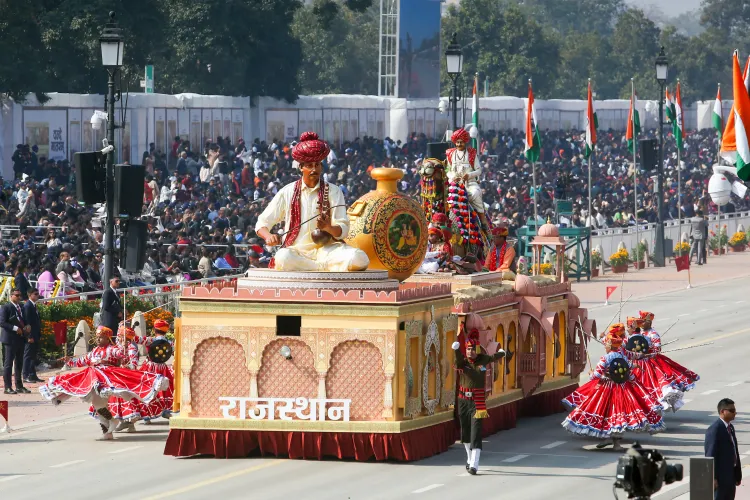
Jaipur, Jan 26 (NationPress) Rajasthan's tableau stood out as a significant attraction during the Republic Day Parade on Kartavya Path in Delhi this Monday, coinciding with the nation's celebration of its 77th Republic Day.
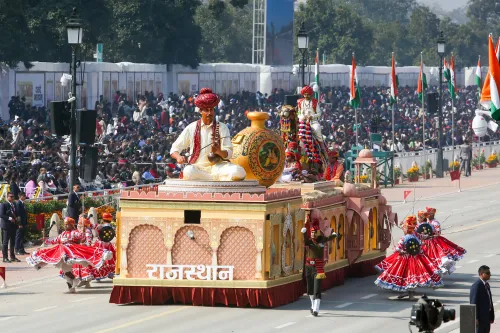
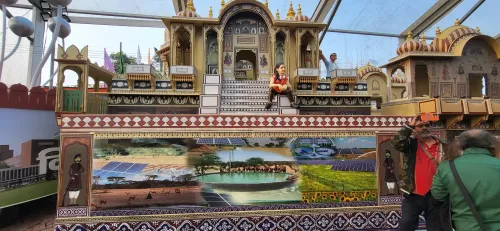
Inspired by the world-famous Usta art of Bikaner, the tableau mesmerized onlookers with its remarkable craftsmanship, cultural depth, and vibrant aesthetics.
The forefront of the tableau showcased a 180-degree rotating statue of an artist skillfully playing the Ravanahatta, one of the oldest and most cherished folk instruments from Rajasthan.
Flanking this centerpiece, beautifully adorned surahis (water pitchers), flasks, and lamps, embellished with Usta art, were displayed within ornate frames, creating a stunning visual spectacle. This section of the tableau soared to nearly 13 feet in height.
The trailer segment presented a rotating traditional flask, also decorated with Usta art, alongside intricate depictions of artisans engaged in traditional craftsmanship, showcasing the vibrant living traditions tied to this art form.
At the back, a large statue of a camel and its rider symbolized the desert landscape and rich folk life that Rajasthan is known for.
Intricate leafy gold work adorned the arches on both sides, amplifying the grandeur and visual allure of the tableau.
Enhancing the experience, artists performing the Gair folk dance around the tableau animated Rajasthan's cultural identity, creating a dynamic fusion of movement, music, and tradition.
Ultimately, the tableau showcased a vibrant blend of traditional artistry, folk culture, and royal heritage, garnering acclaim from both spectators and dignitaries alike.
Usta art is a time-honored royal gold-inlay craft originally practiced on camel hide.
Thought to have its origins in Iran, this art form flourished during the Mughal era and was introduced to Bikaner during the reign of Maharaja Rai Singh, where local artisans infused it with a unique regional flair.
The craft employs 24-carat gold leaf and natural pigments, and has since evolved to include wood, marble, glass, and wall decor.
Bikaner’s Usta art has also been awarded a Geographical Indication (GI) tag, recognizing its authenticity, cultural significance, and heritage value.
Point of View
Rajasthan's tableau at the 77th Republic Day Parade beautifully encapsulated the essence of India's diverse cultural heritage. It serves as a reminder of our rich traditions and the importance of preserving them for future generations, fostering national pride and unity.
NationPress
6 Oct 2026
Frequently Asked Questions
What instruments were featured in the tableau?
The tableau prominently featured a rotating statue of an artist playing the Ravanahatta, an iconic folk instrument from Rajasthan.
What does the tableau symbolize?
The tableau symbolizes Rajasthan's rich cultural heritage, showcasing traditional artistry, folk culture, and the region's vibrant lifestyle.
How tall was the tableau?
The tableau rose to a height of nearly 13 feet, making it a striking visual spectacle during the parade.
What cultural performances accompanied the tableau?
Artists performing the Gair folk dance around the tableau added a lively dimension to the cultural representation of Rajasthan.