Rajnath Singh inaugurates Indian War Memorial in Seoul, honours Korean War veterans
Synopsis
India's often-overlooked role in the Korean War finally has a permanent monument. Defence Minister Rajnath Singh's inauguration of the Indian War Memorial at Imjingak Park — on the very ground where India's Custodian Force sheltered 22,000 prisoners of war in 1954 — puts a largely forgotten chapter of Indian military history back on the map, just as New Delhi and Seoul deepen their Special Strategic Partnership.
Key Takeaways
Defence Minister Rajnath Singh inaugurated the Indian War Memorial at Imjingak Park, Seoul on 21 May 2025 .
The memorial honours the 60 Para Field Ambulance and the Custodian Force of India (CFI) , who served during the Korean War .
It was built as part of events marking the 75th anniversary of the Korean War and stands where 'HIND NAGAR' once housed nearly 22,000 prisoners of war from September 1954 .
The Republic of Korea's Ministry of Patriots and Veterans Affairs dedicated this month in honour of Colonel Rangaraj .
The inauguration concluded Singh's four-day visit to Vietnam and South Korea , reinforcing the India–South Korea Special Strategic Partnership .
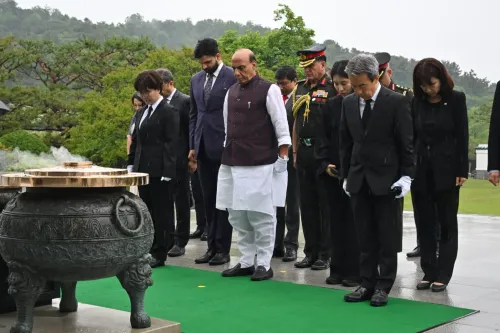
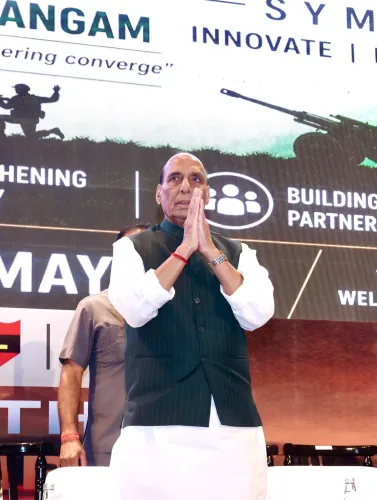
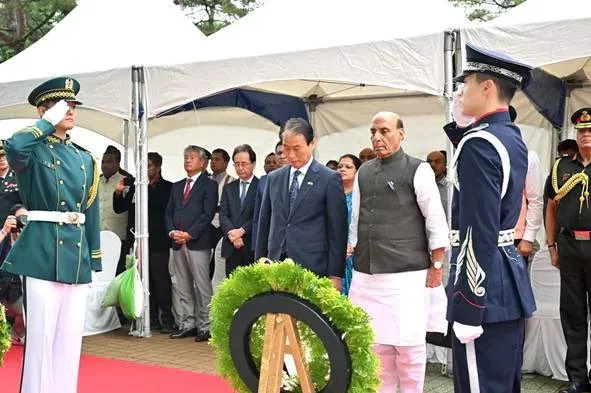
Defence Minister Rajnath Singh on Thursday, 21 May inaugurated the Indian War Memorial at Imjingak Park in Seoul, South Korea, paying solemn tribute to Indian soldiers who served during the Korean War. The memorial was unveiled as part of commemorative events marking the 75th anniversary of the conflict, honouring the courage and humanitarian service of Indian personnel.
What the Memorial Represents
The Indian War Memorial stands as a lasting tribute to the 60 Para Field Ambulance of the Indian Army and the Custodian Force of India (CFI), whose contributions during the Korean War combined medical assistance with peacekeeping duties. The memorial has been erected at Imjingak Park — the same site where the CFI established 'HIND NAGAR' in September 1954, which housed nearly 22,000 prisoners of war until their peaceful repatriation.
Ceremony and Dignitaries
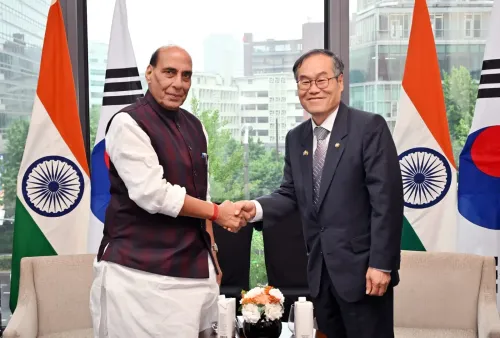
Singh was joined by the Republic of Korea's Minister of Patriots and Veterans Affairs for the unveiling ceremony. The two ministers jointly laid a wreath at the memorial, paying homage to the Indian soldiers whose service is remembered with deep respect and gratitude by the Korean people. The event was attended by senior officials from both nations, military representatives, veterans, members of the diplomatic community, and distinguished guests. Notably, the Ministry of Patriots and Veterans Affairs of Korea dedicated this month in honour of Colonel Rangaraj, underscoring the depth of Korean acknowledgement for India's wartime role.
What Rajnath Singh Said
Singh highlighted the enduring legacy of India's contribution to peace and humanitarian assistance on the Korean Peninsula. He stated that the shared history and sacrifices of both nations continue to serve as a strong foundation for the India–South Korea Special Strategic Partnership. He added that commemorating the role of Indian troops strengthens people-to-people understanding and renews attention to the historic bonds between the two countries. Singh also extended appreciation to the Korean government for its support in establishing the memorial.
India's Role in the Korean War: A Lesser-Known Chapter
India did not fight as a combatant in the Korean War but played a pivotal humanitarian and custodial role. The 60 Para Field Ambulance provided medical care to wounded soldiers on both sides, while the CFI managed the repatriation of prisoners of war — a mission that required extraordinary diplomatic sensitivity during the height of the Cold War. This chapter of India's international engagement has remained relatively obscure in mainstream historical discourse, making the memorial's inauguration a meaningful act of recognition.
Conclusion of a Landmark Visit
The inauguration of the Indian War Memorial also marked the conclusion of Singh's four-day official visit to Vietnam and South Korea — a tour underscoring India's deepening defence and strategic ties across the Indo-Pacific region. As both nations look to strengthen bilateral cooperation, the memorial is expected to serve as a permanent symbol of shared values and historical solidarity.
Point of View
000 prisoners at one of the Cold War's most delicate junctures, yet this chapter barely features in Indian school curricula or public consciousness. That South Korea chose to dedicate a month in honour of Colonel Rangaraj signals how much more seriously Seoul has preserved this history than New Delhi has. For the Modi government, the memorial also serves a strategic purpose: as India courts South Korea as a defence and technology partner in the Indo-Pacific, a shared wartime legacy becomes useful diplomatic currency. The real test is whether this moment of remembrance translates into deeper institutional cooperation — or remains a well-photographed wreath-laying.
NationPress
25 Sept 2026
Frequently Asked Questions
What is the Indian War Memorial in South Korea?
The Indian War Memorial is a newly inaugurated monument at Imjingak Park in Seoul, built to honour the contributions of the 60 Para Field Ambulance and the Custodian Force of India (CFI) during the Korean War. It was unveiled on 21 May 2025 as part of events marking the 75th anniversary of the Korean War.
What role did India play in the Korean War?
India served in a humanitarian and custodial capacity rather than as a combatant. The 60 Para Field Ambulance provided medical care to soldiers on both sides, while the Custodian Force of India managed the repatriation of nearly 22,000 prisoners of war from 'HIND NAGAR' after the armistice in 1954.
Why was the memorial built at Imjingak Park?
Imjingak Park is the site where the Custodian Force of India established 'HIND NAGAR' in September 1954, housing approximately 22,000 prisoners of war until their peaceful repatriation. Building the memorial there directly connects the monument to the historical ground where Indian personnel served.
Who attended the inauguration ceremony?
The ceremony was attended by Defence Minister Rajnath Singh and the Republic of Korea's Minister of Patriots and Veterans Affairs, along with senior officials from both countries, military representatives, veterans, and members of the diplomatic community.
How does the memorial relate to India–South Korea ties?
Singh stated that the shared wartime history serves as a strong foundation for the India–South Korea Special Strategic Partnership. The memorial is expected to strengthen people-to-people understanding and reinforce bilateral defence and strategic cooperation between the two nations.