Rajnath Singh: India-ASEAN defence ties key to Indo-Pacific stability
Synopsis
Defence Minister Rajnath Singh used the inaugural ASEAN–India Defence Think Tank Forum to lay out a detailed blueprint for India-ASEAN security partnership — from joint navy exercises and underwater monitoring to drone and radar co-production — framing 2026's 'ASEAN-India Year of Maritime Cooperation' as the moment to turn shared goals into concrete action.
Key Takeaways
Defence Minister Rajnath Singh addressed the inaugural ASEAN–India Defence Think Tank Forum in New Delhi on 14 October 2026 .
He called for deeper cooperation in maritime security , defence technology , military synergy , and the defence industry to maintain Indo-Pacific stability.
Singh stressed the importance of the ASEAN Defence Ministers' Meeting-Plus (ADMM-Plus) and called for strengthening, not competing with, regional forums.
2026 has been designated the 'ASEAN-India Year of Maritime Cooperation' , which Singh described as a key opportunity to translate shared goals into concrete action.
India is open to defence co-production partnerships with ASEAN nations in patrol vessels , radars , air defence systems , helicopters , and drones .
Singh clarified that 'Atmanirbhar Bharat' strengthens domestic capability while remaining open to bilateral defence cooperation.
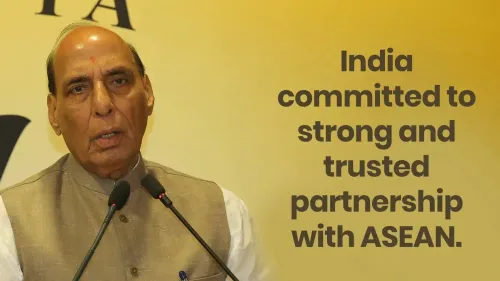
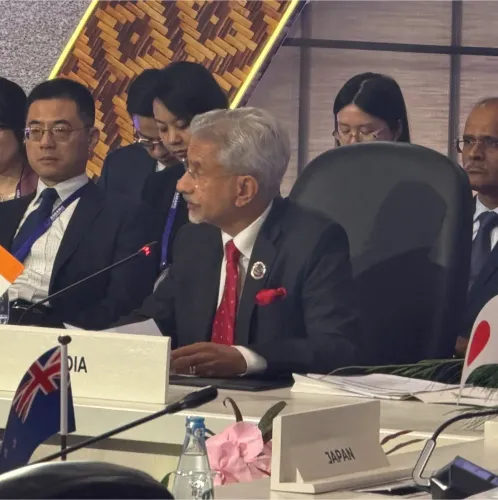
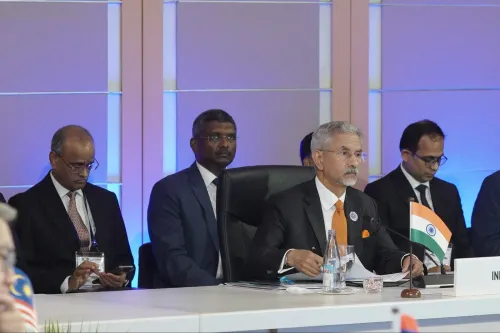
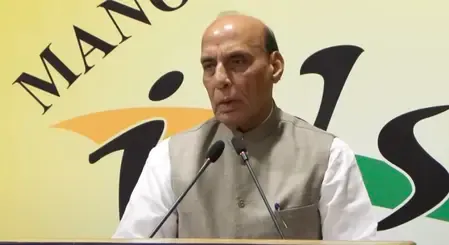
Defence Minister Rajnath Singh on Wednesday, 14 October 2026, called for deeper India-ASEAN (Association of Southeast Asian Nations) cooperation in maritime security, defence technology, military synergy, and the defence industry to preserve peace and stability across the Indo-Pacific. Addressing the inaugural session of the ASEAN–India Defence Think Tank Forum in New Delhi, Singh reaffirmed India's readiness to engage with ASEAN as a 'trusted and equal partner.'
Key Remarks at the Forum
Singh stressed that maritime domain awareness sits at the heart of regional security. 'Sharing maritime domain awareness, enhancing synergy between navies and coast guards, and collaborating on monitoring underwater activities are crucial for maintaining peace and stability in the region,' he said.
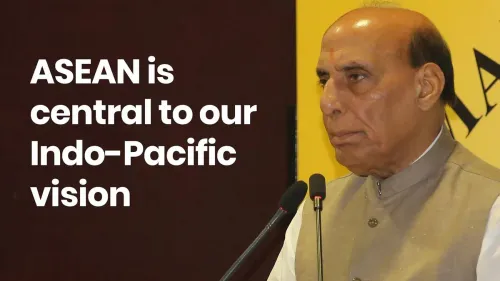
He underlined that both India and ASEAN share a common interest in an open, inclusive Indo-Pacific, and that ASEAN plays a central role in India's Indo-Pacific policy. He noted that India's 'Act East' policy and the strategic visions of 'SAGAR' and 'Mahasagar' promote open, multipolar cooperation — frameworks that can be advanced through ASEAN-led forums.
On Dialogue and Regional Order
Singh called for keeping channels of dialogue permanently open, arguing that differences must be addressed 'in a timely and peaceful manner to prevent them from escalating into disputes.' He was emphatic that the regional order should not compel any country to choose sides, adding that all nations should be free to work together.
He accorded particular importance to the ASEAN Defence Ministers' Meeting-Plus (ADMM-Plus), describing it as a platform where India's approach and ASEAN's Indo-Pacific outlook can 'complement each other.' He urged that cooperation among regional forums be strengthened rather than allow competitive dynamics to emerge.
Maritime Cooperation and the 2026 Initiative
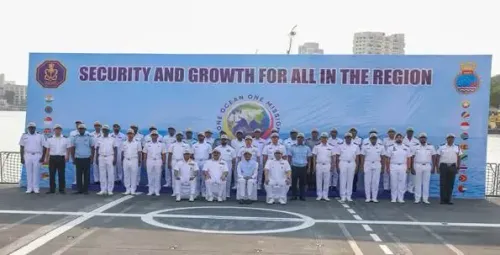
The Defence Minister highlighted the need to improve maritime information exchange, deepen navy-and-coast-guard cooperation, and build joint emergency-response capabilities. He called for concerted action — in accordance with international law — against threats including piracy, smuggling, illegal fishing, and other dangers at sea.
Singh noted that the designation of 2026 as the 'ASEAN-India Year of Maritime Cooperation' presents a significant opportunity to 'translate shared objectives into concrete action.' He urged that humanitarian assistance and disaster relief be made a regular feature of the defence dialogue, alongside maritime security.
Defence Technology and Atmanirbhar Bharat
Beyond procurement, Singh advocated for joint development, joint production, maintenance, repair, technical upgrades, training, and long-term technical support as pillars of a more durable defence partnership. He said such an approach would develop local skills, boost domestic defence industries, and make supply chains more resilient.
He clarified that India's 'Atmanirbhar Bharat' (Self-Reliant India) initiative aims to strengthen domestic capabilities — not to close off cooperation. India, he said, is ready to explore partnerships with ASEAN nations across sectors including patrol vessels, radars, air defence systems, helicopters, and drones. He added that any technology cooperation must ensure protection of sensitive information and respect for intellectual property rights.
India's Broader Indo-Pacific Vision
Singh articulated a vision of an Indo-Pacific where nations — 'large and small alike' — retain the freedom to make sovereign decisions, safeguard their interests, and pursue development peacefully. 'National security is strengthened when countries collaboratively develop their capabilities, respect international law, and foster mutual trust through dialogue,' he said.
The forum marks a new institutional platform for structured defence thinking between India and ASEAN, and its outcomes are expected to feed into the broader ASEAN-India Year of Maritime Cooperation agenda through 2026.
Point of View
New Delhi is positioning itself as the non-coercive alternative without naming the threat directly. The push for joint production over arms procurement also reflects a strategic evolution: India is no longer just a defence buyer pitching to become a seller, but angling to be a manufacturing partner — a framing that aligns with Southeast Asian governments' own industrial ambitions. The real test will be whether the 'ASEAN-India Year of Maritime Cooperation' yields binding commitments or remains another well-worded framework.
NationPress
14 Oct 2026
Frequently Asked Questions
What did Rajnath Singh say at the ASEAN–India Defence Think Tank Forum?
Defence Minister Rajnath Singh called for strengthened India-ASEAN cooperation in maritime security, defence technology, and joint production to maintain peace and stability in the Indo-Pacific. He reaffirmed India's commitment to ASEAN-led forums, particularly the ADMM-Plus, and described 2026 as a landmark year for maritime cooperation.
What is the ASEAN-India Year of Maritime Cooperation 2026?
2026 has been designated the 'ASEAN-India Year of Maritime Cooperation,' an initiative Singh described as an opportunity to translate shared maritime security objectives into concrete action. It is expected to cover humanitarian assistance, disaster relief, and joint naval exercises as regular agenda items.
What defence sectors is India proposing to collaborate on with ASEAN?
India has proposed cooperation with ASEAN nations across patrol vessels, radars, air defence systems, helicopters, drones, and related technologies. Singh stressed that partnerships should go beyond procurement to include joint development, production, maintenance, and long-term technical support.
How does India's 'Act East' policy relate to ASEAN defence ties?
India's 'Act East' policy represents a long-term commitment to equal partnership with Southeast Asia and forms the strategic backbone of its ASEAN engagement. Singh linked it with the 'SAGAR' and 'Mahasagar' visions, all of which promote open, multipolar cooperation in the Indo-Pacific.
Why does India place importance on the ADMM-Plus forum?
Singh described the ASEAN Defence Ministers' Meeting-Plus (ADMM-Plus) as a platform where India's and ASEAN's Indo-Pacific approaches can complement each other. He argued that strengthening cooperation through such regional forums is preferable to fostering competition among them.