Rajnath Singh pays tribute to Maharaja Bir Bikram on 118th birth anniversary
Synopsis
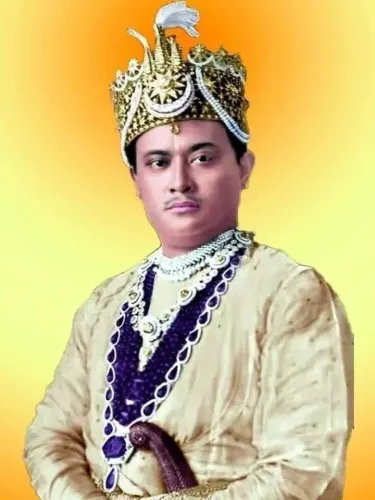
Union Defence Minister Rajnath Singh paid tribute to Maharaja Bir Bikram Kishore Manikya Bahadur on his 118th birth anniversary, honouring the Manikya ruler's legacy of agricultural, educational, healthcare and infrastructure reforms in pre-independence Tripura.
Key Takeaways
Rajnath Singh paid tribute to Maharaja Bir Bikram Kishore Manikya Bahadur on his 118th birth anniversary on August 19, 2026 .
The Maharaja ruled Tripura from 1923 to 1947 under the Manikya dynasty, one of the subcontinent's oldest royal houses.
Singh credited him with advancing agriculture, healthcare, education, infrastructure and communication in the princely state.
The Maharaja is also remembered for promoting inclusiveness and harmony among Tripura's diverse communities.
Tripura acceded to India in 1949 , two years after the Maharaja's reign ended.
The tribute aligns with the BJP-led government's broader effort to recognise pre-independence rulers from Northeast India outside the mainstream nationalist narrative.
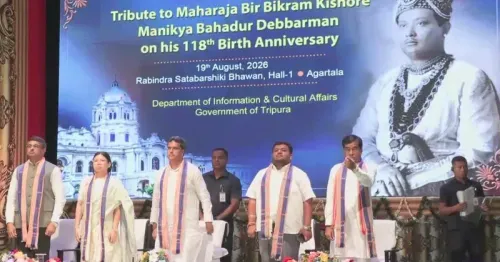
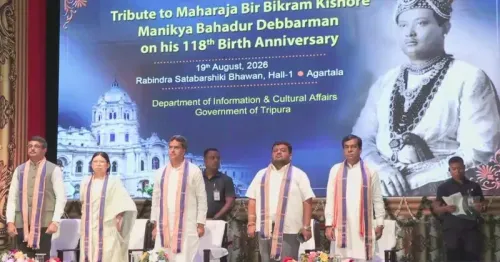
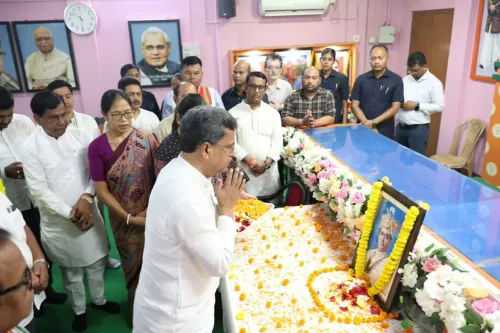
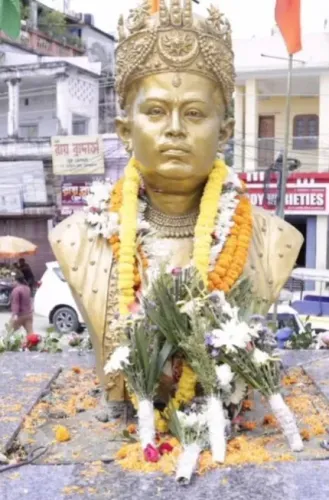
A princely ruler who never held a seat in Parliament yet shaped the destiny of an entire northeastern state — Union Defence Minister Rajnath Singh on Wednesday, August 19, 2026, paid heartfelt tribute to Maharaja Bir Bikram Kishore Manikya Bahadur on his 118th birth anniversary, calling him the 'Architect of Modern Tripura.'
A reign that rewired Tripura's foundations
Maharaja Bir Bikram Kishore Manikya Bahadur ruled the princely state of Tripura from 1923 to 1947 under the Manikya dynasty — one of the oldest royal houses in the subcontinent. During his tenure, the state saw deliberate, multi-front reform: agriculture was reorganised, healthcare and education institutions were established, and infrastructure and communication networks were extended into a region that colonial administration had largely left to its own devices.
Singh, in his post, noted that the Maharaja 'took several steps for the all-round development of Tripura' and 'promoted inclusiveness and harmony among different communities' — a dimension of his legacy that carries particular resonance in a state marked by its ethnic and tribal plurality.
Why central ministers keep looking northeast
Singh's tribute fits a recognisable pattern: senior central ministers have periodically honoured pre-independence rulers from India's Northeast, framing their governance as the foundational layer beneath post-independence development. The BJP-led government has made a conscious effort to spotlight historical figures from the region who fall outside the dominant Congress-era nationalist narrative — positioning such rulers as co-architects of a broader, more plural national story.
Tripura, which acceded to India in 1949, carries the Manikya legacy into its modern identity. The Maharaja's administrative choices — land revenue reforms, early investment in public health, the push for formal education — are widely credited with giving the state a developmental head-start that post-independence governments built upon.
As Singh put it: 'His remarkable legacy continues to inspire generations.' That is not merely ceremonial language — in a state where history, identity, and political allegiance remain tightly braided, such recognition from the country's Defence Minister lands with weight.
Point of View
Broadening the party's historical canvas. Recognising a Manikya ruler's developmental legacy also reinforces the Centre's Northeast-first messaging at a time when infrastructure investment and social cohesion in the region remain active policy priorities. The framing of a princely ruler as a 'moderniser' — rather than an anachronism — subtly argues that good governance predates the post-1947 state. For Tripura specifically, where tribal identity and political contestation run deep, such acknowledgements from senior Union ministers carry symbolic capital that translates into electoral goodwill.
NationPress
4 Oct 2026
Frequently Asked Questions
Who was Maharaja Bir Bikram Kishore Manikya Bahadur?
Maharaja Bir Bikram Kishore Manikya Bahadur was the ruler of the princely state of Tripura from 1923 to 1947 under the Manikya dynasty. He is credited with significant reforms in agriculture, healthcare, education, and infrastructure, earning the title 'Architect of Modern Tripura.'
Why is Rajnath Singh paying tribute to the Maharaja of Tripura?
Union Defence Minister Rajnath Singh marked the 118th birth anniversary of Maharaja Bir Bikram on August 19, 2026, honouring his legacy of all-round development and community harmony in pre-independence Tripura.
When did Tripura accede to India?
Tripura acceded to India in 1949, two years after Maharaja Bir Bikram's reign ended in 1947.
What is the Manikya dynasty?
The Manikya dynasty is one of the oldest royal houses in the Indian subcontinent and ruled Tripura for centuries before the state's accession to India in 1949. Maharaja Bir Bikram was among its most celebrated rulers.
Why does the BJP highlight Northeast Indian rulers in tributes?
The BJP-led central government has made a pattern of recognising pre-independence rulers and historical figures from the Northeast who fall outside the Congress-era nationalist narrative, framing their governance as foundational to India's broader developmental story.