Amit Shah pays tribute to 'Architect of Modern Tripura'

Synopsis
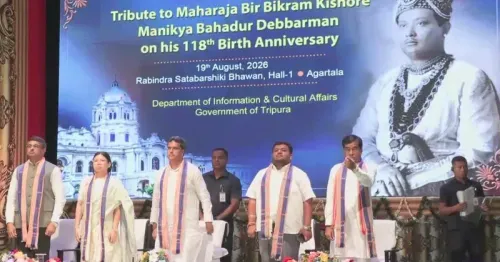
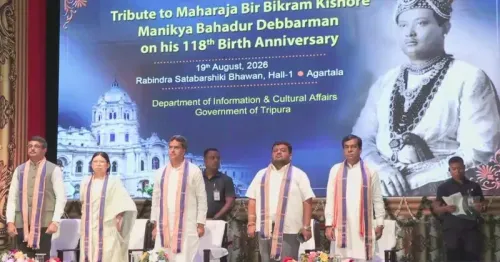
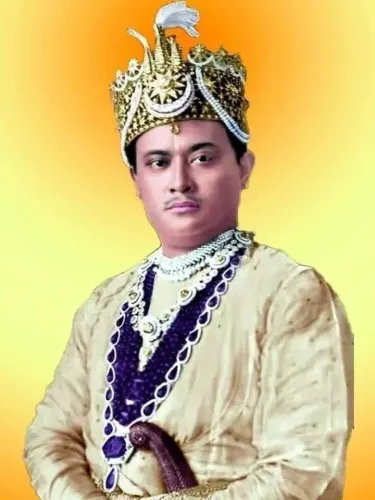
Union Home Minister Amit Shah on 19 August 2026 paid tribute to Maharaja Bir Bikram Kishore Manikya Bahadur on his birth anniversary, honouring the ruler credited with transforming Tripura's education, infrastructure, and administration before the state's 1949 merger with India.
Key Takeaways
Union Home Minister Amit Shah paid tribute to Maharaja Bir Bikram Kishore Manikya Bahadur on his birth anniversary on 19 August 2026 .
The Maharaja is widely known as the 'Architect of Modern Tripura' for his reforms in education, infrastructure, and administration.
He ruled the Tripura princely state from 1923 until his death in 1947 , and the state merged with India in 1949 .
Shah's tribute was bilingual — English and Bengali — signalling outreach to Tripura's dominant linguistic community.
The BJP has governed Tripura since 2018 and regularly invokes regional historical figures to anchor its development narrative in the Northeast.
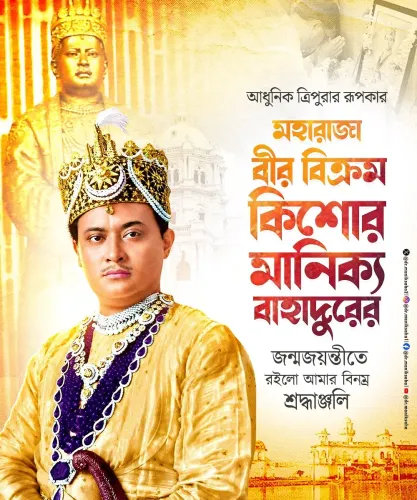
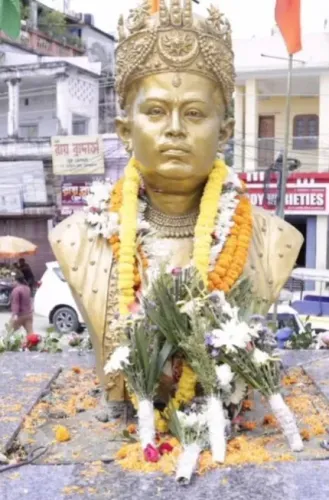
A ruler who never lived to see his kingdom join independent India, Maharaja Bir Bikram Kishore Manikya Bahadur is remembered more than seven decades after his death as the man who built the bones of modern Tripura. On his birth anniversary, Union Home Minister Amit Shah offered tributes on Wednesday, 19 August 2026, honouring the Maharaja's legacy of education, infrastructure, and administration.
Shah described the Maharaja as a 'visionary ruler who provided pro-people governance,' invoking the title by which Tripura's historians know him best — the 'Adhunik Tripurar Sthapati' ('Architect of Modern Tripura'). In the Bengali portion of his post, the Home Minister added that the Maharaja's 'enduring legacy continues to inspire our resolve to build a developed Tripura.'
The ruler who modernised a princely state
Bir Bikram Kishore Manikya Bahadur ascended to the throne of the Tripura princely state in 1923 and ruled until his death in 1947 — the very year India gained independence. During his reign, he introduced sweeping administrative reforms, expanded educational institutions, and built infrastructure that was considered advanced for a small northeastern princely state of that era. He also facilitated early aviation facilities in the region, a detail that underscores how far-sighted his development agenda was.
He did not live to sign the instrument of accession. Tripura merged with the Indian Union in 1949, two years after his death, and attained full statehood in 1972. Yet the institutions and systems he built outlasted the princely order itself.
BJP's Northeast heritage playbook — and Tripura's present
BJP leaders have made a consistent practice of issuing tributes to pre-independence regional rulers from the Northeast, using such occasions to draw a line between historical governance models and the party's current development agenda. The pattern is particularly pointed in Tripura, where the BJP has governed since 2018. Shah's reference to 'our vision for a developed Tripura' is a direct link between the Maharaja's legacy and the party's ongoing state-level governance narrative.
For Tripura's residents, the Maharaja remains a figure of genuine civic pride — the man whose decisions about roads, schools, and administration shaped what the state became. Shah's tribute, bilingual in English and Bengali, signals that this pride is being actively woven into the BJP's political identity in the state.
The foundations a king laid in the 1930s are still being cited as the blueprint. That, by itself, is the measure of the legacy.
Point of View
The Home Minister positions BJP rule as a continuation of Tripura's own historical arc rather than an outside political force. The Northeast has become a key frontier for the party, and honouring regional rulers on their jayantis is a low-cost, high-resonance tool for deepening cultural legitimacy. The Bengali-language section of the post, in particular, speaks directly to Tripura's majority community in their own tongue — a deliberate signal of rootedness.
NationPress
3 Oct 2026
Frequently Asked Questions
Who was Maharaja Bir Bikram Kishore Manikya Bahadur?
Maharaja Bir Bikram Kishore Manikya Bahadur was the ruler of the Tripura princely state from 1923 until his death in 1947. He is credited with modernising Tripura through reforms in education, infrastructure, and administration, earning him the title 'Architect of Modern Tripura.'
Why is Amit Shah paying tribute to the Tripura Maharaja?
Union Home Minister Amit Shah paid tribute on the Maharaja's birth anniversary, or Jayanti, on 19 August 2026, honouring his contributions to Tripura's development and connecting his legacy to the BJP's vision for a developed Tripura.
When did Tripura merge with India?
Tripura merged with the Indian Union in 1949, two years after Maharaja Bir Bikram's death in 1947. The state attained full statehood in 1972.
What did Maharaja Bir Bikram do for Tripura?
He introduced administrative reforms, expanded educational institutions, developed infrastructure, and facilitated early aviation facilities in Tripura during his reign from 1923 to 1947.
Why does the BJP pay tribute to pre-independence Northeast rulers?
BJP leaders regularly honour pre-independence regional rulers from the Northeast to highlight local governance legacies, reinforce cultural heritage, and connect the party's current development agenda to historical figures respected by local communities.