Rajnath Singh Addresses ADMM-Plus Meeting in Cebu
Synopsis
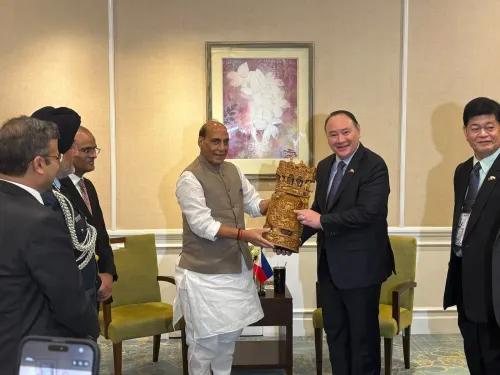
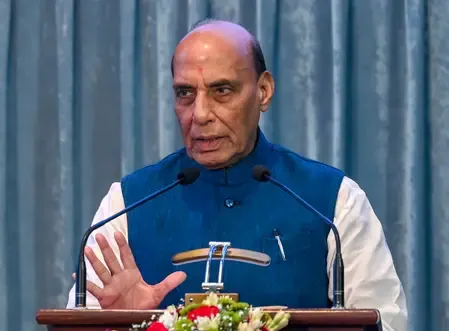
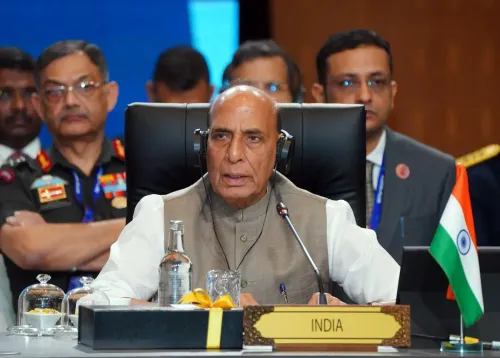
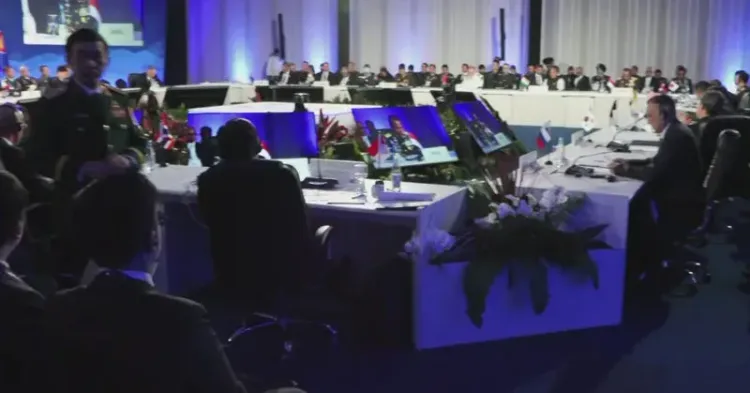
Union Defence Minister Rajnath Singh addressed the ADMM-Plus forum in Cebu, Philippines, on 29 October 2026. The annual multilateral platform for ASEAN and eight dialogue partners — India has attended every edition since 2010 — covers maritime security, counter-terrorism, and regional stability under India's Act East Policy.
Key Takeaways
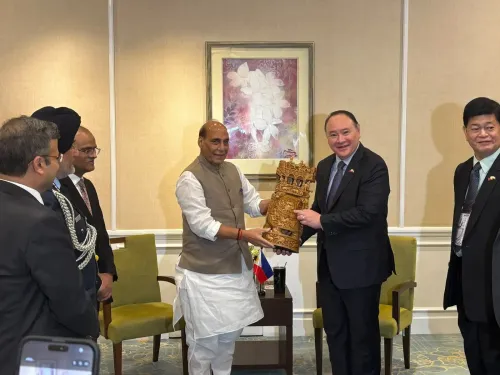
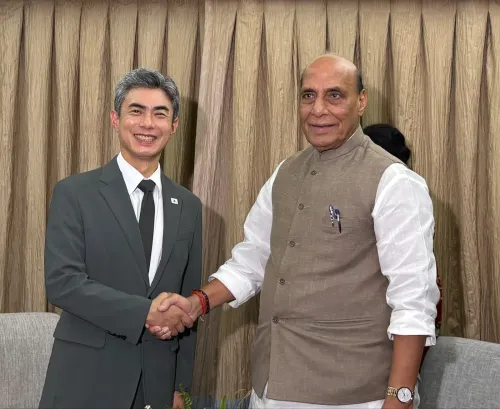
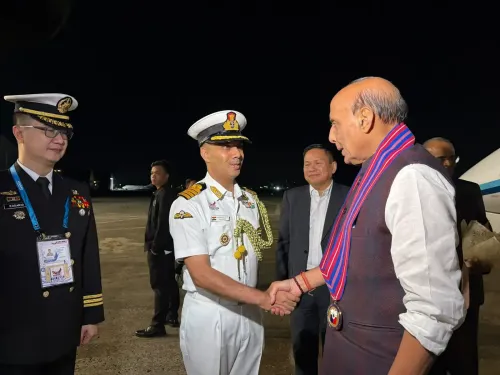
Rajnath Singh addressed the ADMM-Plus meeting in Cebu, Philippines on 29 October 2026 .
The ADMM-Plus is an annual defence dialogue among ten ASEAN members and eight dialogue partners , including India.
India has participated in every ADMM-Plus session since the forum's founding in 2010 .
The forum covers counter-terrorism, maritime security, humanitarian assistance, and regional stability.
The engagement advances India's Act East Policy , which drives defence diplomacy across Southeast and East Asia.
Joint statements and follow-on exercise announcements from the Cebu session will indicate the meeting's practical outcomes.
India's defence diplomacy touched down in the Philippines on Thursday, 29 October 2026, as Union Defence Minister Rajnath Singh took the floor at the ASEAN Defence Ministers' Meeting Plus (ADMM-Plus) in Cebu — one of the Indo-Pacific's most consequential multilateral security gatherings.
What the ADMM-Plus forum is — and why India shows up
The ADMM-Plus brings together defence ministers from the ten ASEAN nations and eight dialogue partners, India among them, to coordinate on counter-terrorism, maritime security, humanitarian assistance, and regional stability. India has participated in every edition of the forum since its launch in 2010, reflecting a long-term strategic investment rather than a one-off appearance.
The forum sits at the intersection of several of India's most active foreign-policy priorities: deepening ties with Southeast Asia under the Act East Policy, shaping the rules-based order in the Indo-Pacific, and maintaining relevance inside ASEAN-centred security architecture that rivals — and often complements — bilateral defence arrangements.
Cebu as a strategic signal — India and the Philippines
The choice of Cebu is itself a context worth noting. The Philippines has in recent years expanded defence cooperation with partners who share an interest in a free and open Indo-Pacific, and its hosting of the ADMM-Plus underscores Manila's growing centrality in regional security conversations. For New Delhi, engaging robustly at a Philippines-hosted forum carries quiet diplomatic weight beyond the meeting room.
India's participation typically feeds into agreed frameworks on cyber security, peacekeeping operations, and humanitarian-disaster response — areas where ASEAN partners have consistently sought capacity-building partnerships with larger dialogue members.
Act East in uniform
Rajnath Singh's presence in Cebu is the uniformed face of a policy that began as 'Look East' and has since evolved into an assertive, defence-led engagement across Southeast and East Asia. India's Act East Policy now encompasses joint exercises, port access agreements, defence exports, and ministerial-level dialogues — of which ADMM-Plus is a flagship. Every address at such forums doubles as a signal to dialogue partners about India's reliability as a security partner and its stake in stable sea lanes that carry a large share of its own trade.
The joint statements and any action plans emerging from the Cebu session — particularly on maritime cooperation and counter-terrorism — will be worth tracking as a measure of how much tangible architecture is being built behind the diplomatic symbolism.
Point of View
Combined with its expanding bilateral defence ties with Philippines, Vietnam, and Indonesia, positions New Delhi as a credible Indo-Pacific security partner rather than a peripheral observer. The real test of the Cebu meeting will be whether the working groups it produces translate into operational exercises and capacity-building programmes, or remain aspirational language in a joint communiqué.
NationPress
29 Oct 2026
Frequently Asked Questions
What is the ADMM-Plus meeting?
The ADMM-Plus, or ASEAN Defence Ministers' Meeting Plus, is an annual multilateral forum that brings together defence ministers from the ten ASEAN nations and eight dialogue partners — including India, the United States, China, Japan, Australia, Russia, South Korea, and New Zealand — to coordinate on regional security, counter-terrorism, maritime cooperation, and humanitarian response.
Why is Rajnath Singh attending the ADMM-Plus in the Philippines?
As Union Defence Minister, Rajnath Singh represents India at high-level multilateral defence forums. India has attended every ADMM-Plus session since 2010 as part of its Act East Policy, which prioritises defence diplomacy with Southeast and East Asian nations.
What is India's Act East Policy and how does ADMM-Plus fit in?
India's Act East Policy is a strategic framework for deepening economic, security, and diplomatic ties with Southeast and East Asia. ADMM-Plus is one of its flagship platforms, alongside bilateral agreements, joint exercises, and port access arrangements with ASEAN partner nations.
Where is Cebu and why is it hosting the ADMM-Plus?
Cebu is a major city in the central Philippines. The Philippines, as an ASEAN member and the current host nation, chose Cebu for the 2026 edition of the ADMM-Plus meeting.
What outcomes can be expected from the Cebu ADMM-Plus session?
Typical ADMM-Plus outputs include joint communiqués on maritime security, counter-terrorism, and humanitarian assistance, as well as announcements of joint exercises or capacity-building programmes. The specific outcomes of the 2026 Cebu session are yet to be confirmed.