Rajnath Singh Advocates Public-Private Partnerships for Sports Economy Growth

Synopsis
Defence Minister Rajnath Singh emphasizes the importance of public-private partnerships in revitalizing India's sports economy. He highlights initiatives that pave the way for a thriving sports culture and a promising future for young athletes.
Key Takeaways
Public-private partnerships are crucial for India's sports economy.
Initiatives like 'Khelo India' and 'Target Olympic Podium Scheme' are paving the way for athlete development.
Polo is recognized as a ‘Heritage Sport’ in India.
The Indian Army plays a key role in promoting Polo.
Legislations are enhancing transparency in sports governance.
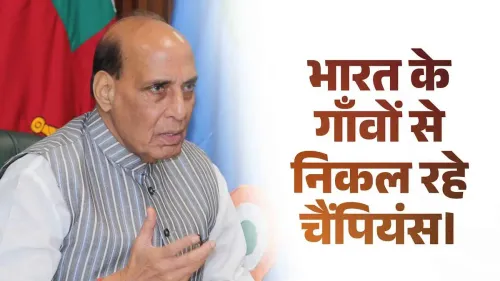
New Delhi, March 15 (NationPress) Defence Minister Rajnath Singh has advocated for an increased emphasis on public-private partnerships to invigorate India's sports economy.
Speaking at a Polo tournament funded by corporate sponsors, the Defence Minister remarked, “The government is implementing various initiatives to cultivate a sports culture in the country, ensuring that athletes and youth have access to ample opportunities, resources, and the respect they deserve.”
Rajnath Singh expressed confidence that India will soon establish a formidable global presence in sports, particularly in Polo, if the government, private enterprises, and community organizations collaborate effectively.
He highlighted that Polo is entrenched in the nation's sporting heritage, with roots spanning thousands of years, and deserves recognition as a ‘Heritage Sport’ of India.
Additionally, he acknowledged the Indian Army's significant role in nurturing talented Polo players and safeguarding its rich tradition, according to a statement.
“In partnership with the Indian Polo Association, the Indian Army has been essential in maintaining this legacy's vibrancy and relevance. I am optimistic that through collaboration, we will nurture a positive environment for Polo and other sports in India, enabling our youth to shine and bring pride to the nation,” he stated.
Rajnath Singh pointed out that initiatives like 'Khelo India' and the 'Target Olympic Podium Scheme', along with unprecedented advancements in sports infrastructure, have provided young individuals with new avenues to thrive and progress.
He mentioned that the 'National Sports Governance Act' and the 'Khelo Bharat Policy' are anticipated to significantly benefit talented athletes while promoting greater transparency and accountability within sports organizations.
The Minister emphasized that just as private investment has invigorated sectors like industrialization, technology, and education, industry stakeholders will facilitate the establishment of a professional framework, a long-term vision, and a sustainable support system.
This, he added, would grant athletes access to superior coaching, world-class facilities, and opportunities for international-level training.
Point of View
Rajnath Singh's call for enhanced public-private partnerships in sports reflects a proactive approach to fostering a robust sports culture. It underscores the importance of collaboration among various sectors to elevate India’s global standing in sports.
NationPress
26 Sept 2026
Frequently Asked Questions
What is the purpose of public-private partnerships in sports?
Public-private partnerships aim to enhance investment, resources, and opportunities in sports, fostering a vibrant sports culture and improving facilities for athletes.
What initiatives has the Indian government introduced for sports?
The government has launched initiatives like 'Khelo India' and the 'Target Olympic Podium Scheme' to promote sports and provide better training facilities for athletes.
Why is Polo considered a Heritage Sport in India?
Polo has deep historical roots in India, spanning thousands of years, and is recognized for its cultural significance in the nation's sporting traditions.
How does the Indian Army contribute to Polo?
The Indian Army collaborates with the Indian Polo Association to nurture talent and keep the rich heritage of Polo alive in India.
What benefits does the National Sports Governance Act offer?
The Act aims to enhance transparency and accountability in sports organizations while providing significant benefits to athletes.