Rajnath Singh credits Aatmanirbharta for Operation Sindoor's success
Synopsis
Defence Minister Rajnath Singh's visit to the Eastern Air Command in Shillong wasn't a routine stop — it was a pointed message. By crediting Aatmanirbharta for Operation Sindoor's success, Singh framed India's self-reliance drive as not just economic policy but active military doctrine, with the northeast at its strategic core.
Key Takeaways
Defence Minister Rajnath Singh visited Eastern Air Command HQ in Shillong, Meghalaya on 20 June 2026 .
Singh credited India's Aatmanirbharta (self-reliance) push as a key factor behind the success of Operation Sindoor .
He identified hybrid threats, cyber warfare, drones and supply chain security as critical emerging challenges for Indian defence.
Singh called the northeastern states a crucial pillar of India's security and a cornerstone of the Act East Policy .
The Defence Minister also highlighted the growing role of women in the armed forces as both institutional progress and a cultural milestone.
Air Chief Marshal A.P.
Singh and Air Marshal Inderpal Singh Walia were present at the event.
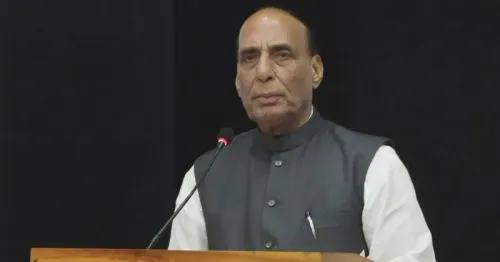
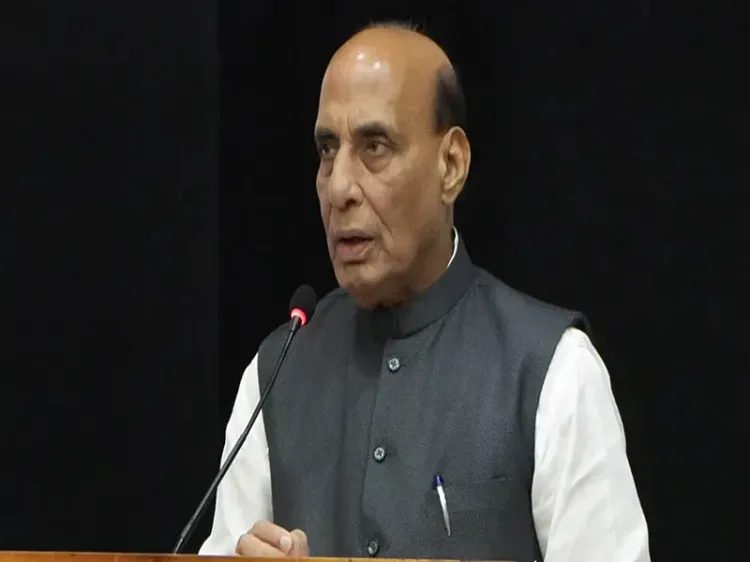
Defence Minister Rajnath Singh on Saturday, 20 June 2026 credited India's self-reliance push — Aatmanirbharta — as a decisive factor behind the success of Operation Sindoor, speaking at the headquarters of the Eastern Air Command (EAC) in Shillong, Meghalaya. Addressing air warriors of the EAC, Singh called the operation a historic demonstration of India's growing strategic strength.
What Rajnath Singh Said
'Through Operation Sindoor, we demonstrated to terrorists and their handlers that India will not compromise on its security and sovereignty,' Singh said. 'The capability, vigilance and firm resolve of our defence forces have once again showcased India's growing strength to the world. Formations such as the Eastern Air Command have emerged as active partners in this broader national vision.'
Singh also underscored the need for technological agility, strategic foresight and institutional innovation to maintain robust preparedness amid the uncertainties of the present-day world order.
Emerging Threats and Modern Warfare
Addressing the assembled air warriors, the Defence Minister identified hybrid threats, cyber challenges, information warfare, logistics resilience, supply chain security and drones as critical elements in the constantly evolving nature of warfare. He asserted that traditional preparedness alone is no longer sufficient for the defence forces to meet these challenges.
Singh reiterated the imperative for India to achieve full Aatmanirbharta — self-reliance in defence — to secure the nation entirely on its own terms.
Eastern Air Command's Role Highlighted
Calling the EAC an essential pillar of security for India's eastern frontier, Singh commended the command for its pivotal role in strengthening national security. 'Whether on the battlefield, during peacetime deployment, disaster response, high-altitude operations or border management, the Eastern Air Command has consistently demonstrated professionalism, courage and commitment in every situation,' he said.
The Defence Minister also underlined the strategic importance of the northeastern region, stating that the northeastern states are not merely part of India's geographical boundaries but a crucial pillar of the country's security, prosperity and strategic power. He linked the region directly to India's Act East Policy, noting that its importance has grown further as India strengthens its global role.
Women in Defence Forces
Singh highlighted the growing participation of women in the armed forces, framing it as both an institutional advance and a reflection of India's cultural values. 'The growing role of women in the defence forces represents more than just institutional advancement. It is a testament to the cultural values for which India is known around the world,' he said.
Senior Officers Present
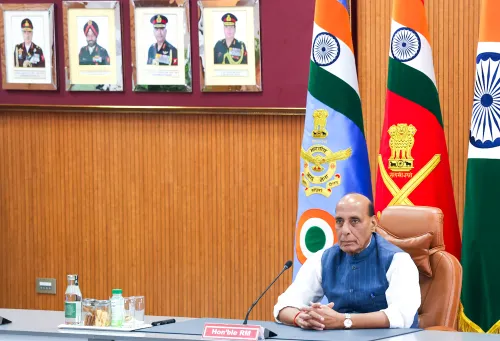
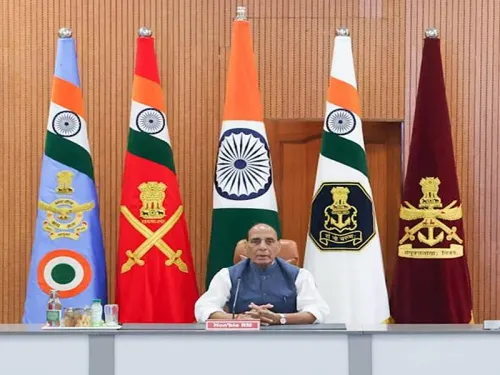
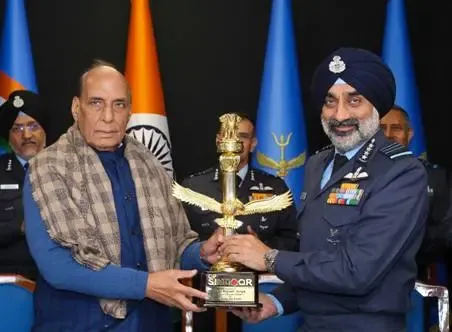
The event was attended by Air Chief Marshal A.P. Singh, Chief of the Air Staff, and Air Marshal Inderpal Singh Walia, Air Officer Commanding-in-Chief of the EAC, along with other senior officers of the Indian Air Force (IAF). Singh is scheduled to celebrate International Day of Yoga 2026 with EAC air warriors on Sunday, 21 June. His visit signals continued high-level attention to India's eastern defence architecture in the aftermath of Operation Sindoor.
Point of View
Not just westward. Whether the EAC visit translates into concrete capability upgrades — or remains a morale exercise — will be the real measure of intent.
NationPress
21 Jun 2026
Frequently Asked Questions
What did Rajnath Singh say about Operation Sindoor?
Defence Minister Rajnath Singh said Operation Sindoor was a historic success enabled by India's Aatmanirbharta (self-reliance) drive, stating it demonstrated that India will not compromise on its security and sovereignty. He made these remarks at the Eastern Air Command headquarters in Shillong on 20 June 2026.
What is the Eastern Air Command and why is it significant?
The Eastern Air Command (EAC) is the Indian Air Force formation responsible for India's eastern frontier, including the northeastern states. Singh called it an essential pillar of national security and a key component of India's Act East Policy, noting its role in battlefield operations, disaster response, and border management.
Why did Rajnath Singh visit Shillong in June 2026?
Singh visited the Eastern Air Command headquarters in Shillong on 20 June 2026 to address air warriors and is scheduled to participate in International Day of Yoga 2026 celebrations with EAC personnel on 21 June. The visit also served as a platform to discuss post-Operation Sindoor defence priorities.
What emerging threats did Rajnath Singh highlight?
Singh identified hybrid threats, cyber challenges, information warfare, logistics resilience, supply chain security, and drone warfare as critical and evolving elements of modern conflict. He stressed that traditional military preparedness alone is insufficient to counter these challenges.
What did Singh say about women in the defence forces?
Singh said the growing role of women in the Indian armed forces represents more than institutional advancement — it reflects the cultural values for which India is globally recognised. He framed their increasing participation as evidence that India embraces modernity without abandoning its core principles.