Rajnath Singh hails Lok Sabha passage of anti-paper-leak bill

Synopsis
The Lok Sabha passed the Public Examinations (Prevention of Unfair Means) Amendment Bill, 2026 on 29 July, introducing Special Fast Track Courts, stricter punishments, and time-bound investigations to combat paper leaks and organised examination fraud. Union Defence Minister Rajnath Singh welcomed the development and praised Dr. Jitendra Singh for piloting the bill.
Key Takeaways
The Lok Sabha passed the Public Examinations (Prevention of Unfair Means) Amendment Bill, 2026 on 29 July 2026 after extensive debate.
The bill mandates Special Fast Track Courts and time-bound investigations for cases of paper leaks and organised exam fraud.
It also provides for Special Public Prosecutors and an expedited appellate mechanism to speed up justice.
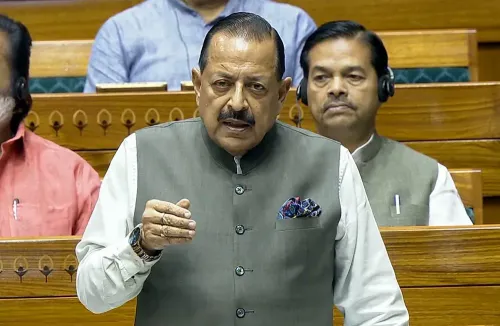
Jitendra Singh piloted the bill in the Lok Sabha, fielding questions from MPs during the debate.
The amendment builds on the original Public Examinations (Prevention of Unfair Means) Act, 2024 , adding sharper enforcement tools.
Operationalisation of the fast-track courts and investigation timelines will be the key measure of the law's real-world impact.
Every year, millions of young Indians stake months — sometimes years — of preparation on a single competitive exam. When that exam is compromised, it is not just a paper that leaks; it is trust. On Wednesday, 29 July 2026, the Lok Sabha passed the Public Examinations (Prevention of Unfair Means) Amendment Bill, 2026, sending a legislative signal that organised examination fraud will no longer be treated as a manageable nuisance.
Union Defence Minister Rajnath Singh welcomed the bill's passage after what he described as 'an extensive debate', calling it 'a significant step forward towards further strengthening the integrity of India's examination system.' He specifically praised Dr. Jitendra Singh, the minister who piloted the bill on the floor of the House, for explaining 'all aspects' of the legislation and giving 'insightful answers to the various points raised by certain MPs during the discussion.'
What the amended law puts on the table
The bill introduces a cluster of enforcement mechanisms designed to close the gap between crime and consequence. It provides for stricter punishments, the creation of Special Fast Track Courts, time-bound investigations, the appointment of Special Public Prosecutors, and an expedited appellate mechanism — all aimed at ensuring that those behind paper leaks and organised fraud are 'swiftly brought to justice,' in the minister's words.
The architecture is deliberate: speed at every stage. Fast-track adjudication, dedicated prosecutors, and capped investigation timelines together attempt to prevent the slow attrition that has historically allowed exam-fraud cases to dissolve into procedural delay.
A 2024 law that needed sharper teeth
The amendment builds on the Public Examinations (Prevention of Unfair Means) Act, 2024, which Parliament passed as a direct response to a wave of high-profile paper leak incidents that rattled national recruitment examinations. That original law introduced criminal provisions for the first time into the examination-integrity framework. The 2026 amendment signals that the initial deterrence was not considered sufficient — and that the government is willing to go further.
Recurring leaks in competitive exams have cost lakhs of aspirants their shot at government jobs, triggering protests and eroding public confidence in the recruitment machinery. The legislative response has consistently combined new penal provisions with institutional reform, betting that the credibility of public examinations can be rebuilt through both fear of punishment and speed of justice.
What comes next for exam aspirants
The real test of the law will be operational. The key watch-point now is how quickly the Special Fast Track Courts are constituted and whether the time-bound investigation mandate translates into actual prosecutions. Legislation that looks strong on paper has, in the past, struggled against an overstretched judicial and investigative infrastructure. Whether this amendment changes that calculus is the question every exam aspirant across the country will be watching.
For now, the bill is through the lower house. The machinery of deterrence is, at least on paper, sharper than it has ever been.
Point of View
The legislative strategy shifts from symbolic prohibition to structural enforcement. The political calculus is clear: exam aspirants are a vast, vocal constituency, and repeated paper leak scandals have become an electoral liability. Whether the amendment delivers on its promise will depend entirely on executive follow-through — constituting the courts, staffing the prosecutors, and enforcing investigation deadlines — which no bill can guarantee on its own.
NationPress
29 Jul 2026
Frequently Asked Questions
What is the Public Examinations (Prevention of Unfair Means) Amendment Bill, 2026?
It is a law passed by the Lok Sabha on 29 July 2026 that amends the 2024 anti-paper-leak act to introduce stricter punishments, Special Fast Track Courts, time-bound investigations, Special Public Prosecutors, and an expedited appellate mechanism for cases of exam fraud and paper leaks in public examinations.
What are Special Fast Track Courts under this bill?
Special Fast Track Courts are dedicated judicial bodies mandated under the bill to hear and decide examination fraud cases quickly, reducing the delays that have historically allowed such cases to drag on for years.
Who piloted the Public Examinations Amendment Bill in Lok Sabha?
Dr. Jitendra Singh piloted the bill in the Lok Sabha, explaining its provisions and responding to questions raised by MPs during the debate.
How is the 2026 amendment different from the 2024 exam law?
The original 2024 act introduced criminal provisions for unfair means in public examinations for the first time. The 2026 amendment strengthens enforcement by adding fast-track courts, time-bound investigations, special prosecutors, and a faster appeals process.
Will the new exam fraud law stop paper leaks in India?
The law creates a stronger legal framework with faster adjudication and stricter penalties, but its effectiveness will depend on how quickly the Special Fast Track Courts are set up and whether investigation timelines are actually enforced on the ground.