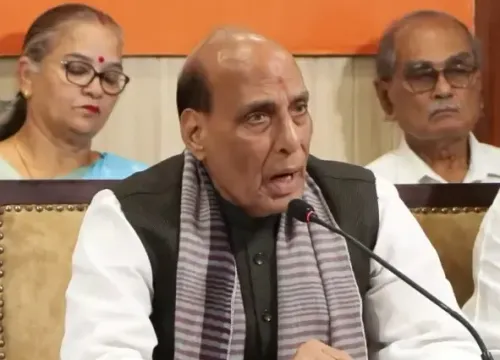
Rajnath Singh hits Congress over Emergency, 1984 riots
Synopsis
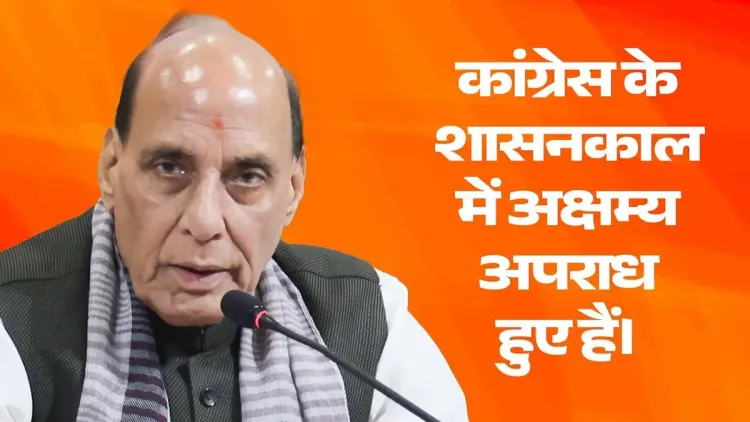
Union Defence Minister Rajnath Singh on 16 October invoked the 1975 Emergency, 1984 anti-Sikh violence and 1990 Ayodhya firing to accuse Congress of hypocrisy on democracy, calling on the party to introspect before claiming to defend the Constitution.
Key Takeaways
Rajnath Singh posted a sharp attack on Congress on 16 October 2026 , citing three specific historical episodes.
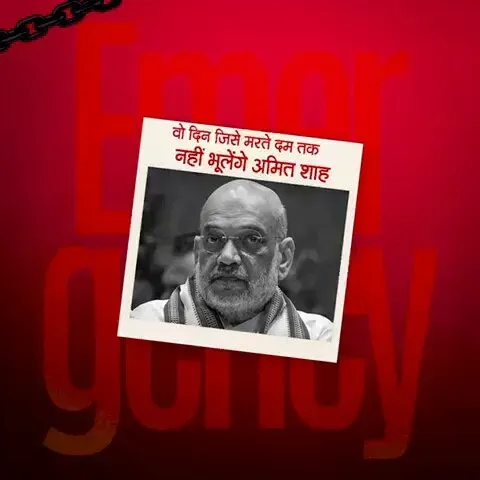
The 1975 Emergency was declared by Indira Gandhi and lasted 21 months , suspending civil liberties and press freedom.
The 1984 anti-Sikh violence followed Indira Gandhi's assassination and carried long-standing allegations of Congress complicity.
The 1990 Ayodhya firing targeted kar sevaks during the Ram Janmabhoomi agitation — a reference with deep resonance for BJP's base.
Singh also alleged a present-day 'assault on constitutional institutions,' pairing historical charges with a contemporary accusation.
BJP leaders have consistently deployed these three episodes to challenge Congress's democratic credentials across parliamentary debates and election campaigns.
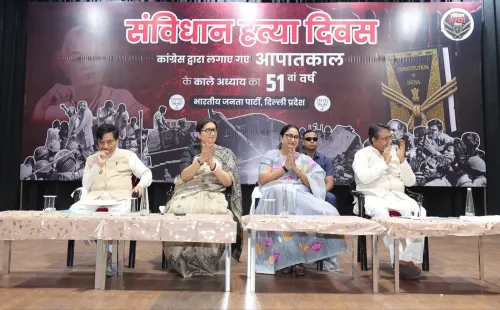
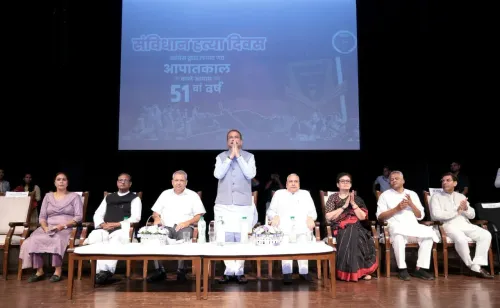
Three historical episodes — Emergency of 1975, the anti-Sikh violence of 1984, and the firing on kar sevaks at Ayodhya in 1990 — sit at the centre of a sharp political broadside fired by Union Defence Minister Rajnath Singh on Friday, 16 October 2026. Singh invoked what he called Congress's 'dark chapters' to challenge the opposition party's right to lecture on democracy and the Constitution.
Posting in Hindi on X, Rajnath Singh wrote: '1975 ki Emergency, 1984 mein Sikhon ka narasanhar, 1990 mein Rambhakt karsevakron par golibari aur aaj samvaidhanik sansthaaon par prahaar, Congress ka itihas aise kai kaale adhyaayon se bhara hai.' ('The Emergency of 1975, the massacre of Sikhs in 1984, the firing on Ram devotee kar sevaks in 1990, and today's assault on constitutional institutions — Congress history is filled with such dark chapters.') He added that the party, which constantly invokes democracy and the Constitution, must first undertake 'introspection of its own past and present conduct.'
The three episodes Singh placed in the dock
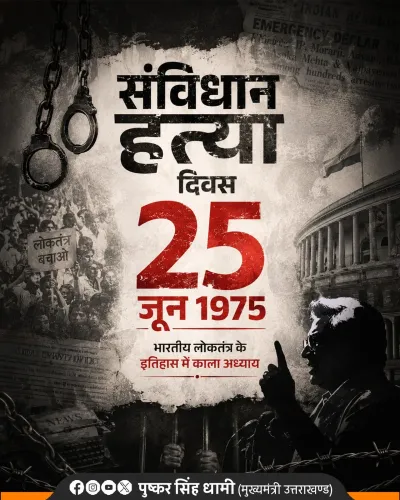
Each reference carries specific historical weight. The Emergency was declared on 25 June 1975 by the Indira Gandhi-led Congress government, suspending civil liberties, gagging the press and triggering mass arrests for 21 months — widely regarded as independent India's starkest authoritarian interlude. The anti-Sikh violence erupted in October–November 1984 following Indira Gandhi's assassination and resulted in widespread killings across several cities, with persistent allegations of complicity by Congress-linked figures that have dogged the party for four decades. The 1990 Ayodhya firing refers to police action against kar sevaks during the Ram Janmabhoomi agitation — an incident that remains viscerally charged for Hindu nationalist sentiment.
Together, the three form a recurring BJP prosecutorial triad deployed to frame Congress as a party whose democratic rhetoric collides with its own authoritarian record. Singh added a fourth, contemporary charge: an unnamed 'assault on constitutional institutions today' — a reference whose specific trigger could not be independently verified from available information.
A well-worn sword, sharpened again
This is not the first time Rajnath Singh — one of the BJP's most senior and measured voices — has reached for this arsenal. BJP leaders have consistently invoked these episodes in parliamentary debates, election campaigns, and social media exchanges to contest Congress's self-positioning as the guardian of India's constitutional order. The pattern reflects a deep fault line in Indian political discourse: two national parties, each claiming the mantle of constitutional fidelity, battling over whose historical record is less damaging.
What gives Friday's post an edge beyond routine political combat is the explicit pairing of historical grievance with a present-day accusation. By tethering 1975, 1984, and 1990 to an alleged current-day transgression, Singh frames Congress not as a reformed party with a troubled past, but as one engaged in a continuous pattern — a narrative device with obvious electoral utility as both parties position themselves ahead of future contests.
Senior Congress leaders are expected to respond; the exchange will likely ripple through parliamentary proceedings and the broader opposition–ruling-alliance sparring that has defined this political season.
For a Defence Minister who rarely throws rhetorical punches without calculation, this post is a signal — history, he is telling the country, is not yet settled business.
Point of View
Singh elevates the attack from nostalgia to live indictment — a more potent framing. The choice of a senior, relatively restrained figure like Singh, rather than a more combative BJP voice, lends the broadside institutional weight. It signals that the party intends this narrative to be a mainstream, prime-time argument rather than fringe provocation, with clear implications for how the ruling alliance plans to contest the opposition's democratic legitimacy ahead of any electoral cycle.
NationPress
16 Oct 2026
Frequently Asked Questions
What did Rajnath Singh say about Congress on 16 October 2026?
Rajnath Singh posted on X accusing Congress of filling its history with 'dark chapters' — specifically the 1975 Emergency, the 1984 anti-Sikh violence, and the 1990 firing on kar sevaks at Ayodhya — and called on the party to introspect before invoking democracy and the Constitution.
What was the 1975 Emergency in India?
The Emergency was declared on 25 June 1975 by Prime Minister Indira Gandhi 's Congress government, suspending civil liberties, imposing press censorship and enabling mass arrests. It lasted 21 months and is widely seen as independent India's most significant suspension of democratic norms.
Why does BJP keep raising the 1984 anti-Sikh riots?
BJP leaders regularly raise the 1984 anti-Sikh violence — which followed Indira Gandhi's assassination and saw widespread killings with alleged Congress-linked complicity — to challenge the party's democratic and secular credentials and highlight a long-unresolved historical grievance.
What is the 1990 Ayodhya firing incident?
In 1990 , police opened fire on kar sevaks gathered at Ayodhya during the Ram Janmabhoomi agitation, resulting in deaths. The incident is frequently cited by BJP as an example of Congress-era governments suppressing Hindu religious sentiment through force.
Is Congress expected to respond to Rajnath Singh's post?
Senior Congress leaders are expected to respond to the attack; such exchanges between the two parties over historical records typically continue across social media, press conferences and parliamentary proceedings in the days following.