Rajnath Singh: Sanskrit can guide the world, Ayodhya a civilisational light
Synopsis
Defence Minister Rajnath Singh used the inauguration of a Sanskrit college in Ayodhya to make a sweeping case for Sanskrit as the world's mathematical language — and for Ayodhya as not merely a pilgrimage site but a civilisational consciousness. The visit, complete with Ram Mandir darshan and temple prayers, reflects the sharpening of an official cultural narrative linking ancient Indian learning to modern national identity.
Key Takeaways
Rajnath Singh inaugurated the new building of Shri Narayan Sanskrit Mahavidyalaya in Ayodhya on 5 October 2026 .
Singh called Sanskrit 'the mathematical language of the world' and said it still has the potential to guide global knowledge and science.
He recalled ordering a compulsory Sanskrit paper as Education Minister of Uttar Pradesh in 1991 , a decision later reversed — which he said 'still pains' him.
Singh described Ayodhya as 'a consciousness, a culture, and a civilisation in itself,' not merely a pilgrimage site.
Earlier in the day, he visited the Ram Mandir and Hanumangarhi , and participated in the Shri Guru Purnima Mahamahotsav .
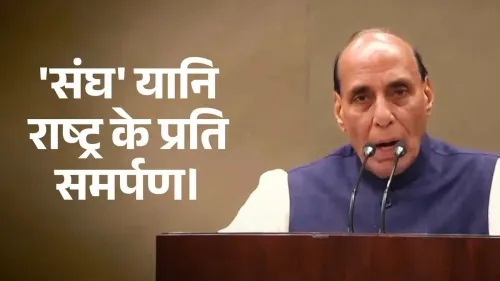
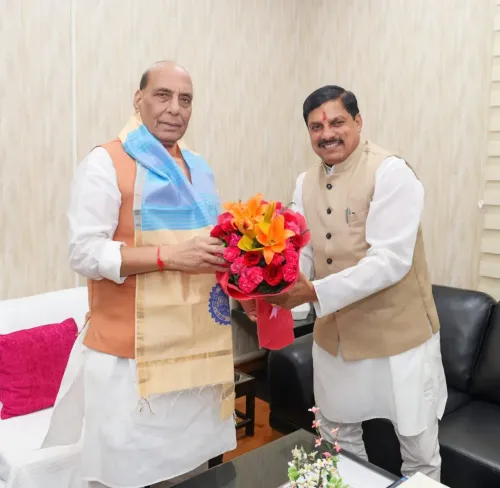
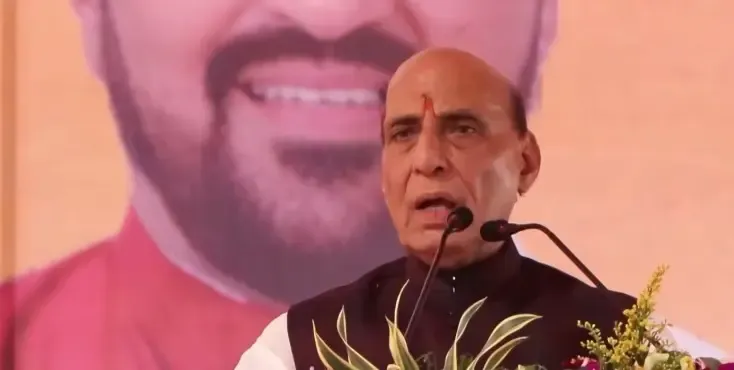
Union Defence Minister Rajnath Singh on Monday, 5 October 2026, attended the inauguration of the newly constructed building of Shri Narayan Sanskrit Mahavidyalaya in Ayodhya, delivering a passionate defence of Sanskrit as a language with the enduring capacity to guide global knowledge and science.
Singh on Sanskrit's Global Potential
'Sanskrit has taken India's knowledge and science to great heights and still has the potential to guide the world,' Singh told the gathering. He described his affinity for the language as deep, even as he acknowledged limited personal expertise in it. He went further, asserting that Sanskrit is, in effect, the mathematical language of the world — a claim he said he could support with concrete examples.
Singh also invoked Vedic Mathematics, recounting his own background as a student of Physics, Mathematics, and Chemistry. 'As far as Vedic Mathematics is concerned, I can say that Vedic Mathematics is still unparalleled,' he said, drawing applause from the audience of scholars and educators.
A Policy Decision from 1991 That Still Pains Him
The Defence Minister recalled a decision he took during his tenure as Education Minister of Uttar Pradesh in 1991, when he directed that a Hindi question paper — then split equally between Hindi and Sanskrit — be made entirely in Sanskrit and declared compulsory. The policy, however, was reversed by the subsequent government. 'That still pains me, and that is why I have come to this programme,' Singh said, offering a candid glimpse into the personal conviction behind his attendance at the event.
Ayodhya as Civilisational Consciousness
Moving beyond the academic, Singh offered a sweeping characterisation of Ayodhya itself. He said he does not view the city merely as a pilgrimage destination. 'Ayodhya is a consciousness in itself. Ayodhya is a culture in itself. Ayodhya is a civilisation in itself,' he said. Drawing on metaphor, he added: 'Just as the sun rises in the east and illuminates the entire world, in the same way, the light of dharma, justice and dignity has emanated from this city of Ayodhya and illuminated the whole of India and the entire world.'
The remarks position Ayodhya not merely as a religious site but as a civilisational reference point — a framing that has become more prominent in official discourse since the consecration of the Ram Mandir earlier in 2024.
Temple Visits and Prayers
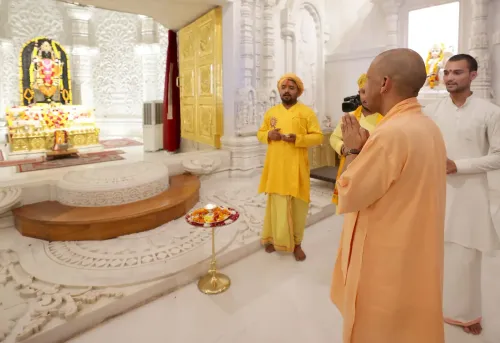
Earlier in the day, Singh visited the Ram Mandir in Ayodhya, sharing photographs on the social media platform X. He said he felt 'fortunate' after having darshan of Shri Ram Lalla and Shri Hanumanji and prayed for India's progress and the welfare of its people. He also visited Hanumangarhi and offered prayers there, participating in the Shri Guru Purnima Mahamahotsav during his stay in the temple town.
A Broader Appeal
Closing his address, Singh made what he called a 'humble request' to those present, urging reflection on the direction the country is being taken. 'This pain is in my heart; please think about it,' he said — a remark that, while unspecific, was widely read as a call to reaffirm India's classical intellectual heritage. The visit underscores a broader governmental narrative linking ancient Indian learning systems — Sanskrit, Vedic Mathematics, classical texts — to contemporary national identity.
Point of View
He is reinforcing an official narrative that links India's classical heritage to its contemporary national ambition. What mainstream coverage tends to miss is the policy subtext: his 1991 Sanskrit-compulsory order, reversed by a succeeding government, frames this visit as unfinished ideological business. The question is whether such cultural assertions translate into durable institutional support for Sanskrit education, or remain eloquent but episodic.
NationPress
5 Oct 2026
Frequently Asked Questions
Why did Rajnath Singh visit Ayodhya on 5 October 2026?
Rajnath Singh visited Ayodhya to attend the inauguration of the newly constructed building of Shri Narayan Sanskrit Mahavidyalaya. He also visited the Ram Mandir, Hanumangarhi, and participated in the Shri Guru Purnima Mahamahotsav.
What did Rajnath Singh say about Sanskrit?
Singh called Sanskrit the mathematical language of the world and said it has taken India's knowledge and science to great heights, adding that it still has the potential to guide the world. He also described Vedic Mathematics as unparalleled, drawing on his background as a student of Physics, Mathematics, and Chemistry.
What policy did Rajnath Singh introduce as UP Education Minister in 1991?
As Education Minister of Uttar Pradesh in 1991, Singh ordered that a question paper then split between Hindi and Sanskrit be made entirely in Sanskrit and made compulsory for students. The decision was later repealed by a subsequent government, something Singh said still pains him.
How did Rajnath Singh describe Ayodhya?
Singh said he does not consider Ayodhya merely a pilgrimage site, describing it as 'a consciousness in itself, a culture in itself, and a civilisation in itself.' He compared its spiritual influence to the sun rising in the east and illuminating the world.
Did Rajnath Singh post about his Ayodhya visit on social media?
Yes, Singh shared photographs of his Ram Mandir visit on social media platform X, saying he felt fortunate after having darshan of Shri Ram Lalla and Shri Hanumanji and that he prayed for India's progress and the welfare of its people.