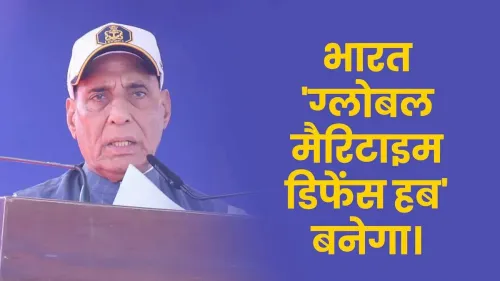
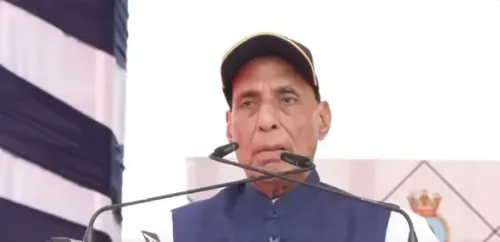
Rajnath Singh launches Fleet Support Ship FSS-1 in Visakhapatnam, keel laid for FSS-5
Synopsis
India's naval ambitions took a concrete step forward as Defence Minister Rajnath Singh launched FSS-1 — the first of five 43,500-tonne Fleet Support Ships — just 18 months after steel cutting in Visakhapatnam. On the same day, HAL's Koraput Division delivered its 2,000th aero-engine, with a ₹218 crore second production line for Shakti engines commissioned to power the Dhruv and Prachand helicopter fleets.
Key Takeaways
Defence Minister Rajnath Singh launched Fleet Support Ship-1 (FSS-1) at Hindustan Shipyard Limited, Visakhapatnam on 5 October 2026 .
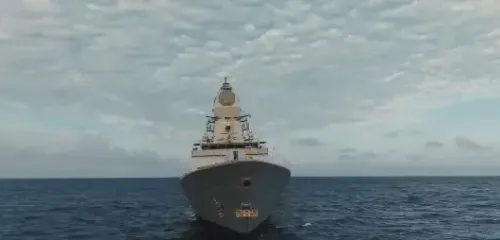
FSS-1 entered the Bay of Bengal just 18 months after steel cutting — one of five 43,500-tonne vessels being built for the Indian Navy .
The keel of FSS-5 was also laid, and the upgraded Slipway-4 and 300-tonne Goliath Crane were inaugurated, enabling ships of up to 45,000 DWT .
Andhra Pradesh CM N.
Chandrababu Naidu and Chief of the Naval Staff Admiral Krishna Swaminathan attended the ceremony.
Singh also inaugurated HAL Koraput 's 2,000th aero-engine delivery milestone in Odisha , marking nearly six decades of aerospace manufacturing.
A second Shakti engine production line was commissioned at HAL Koraput with a ₹218 crore investment to support the Dhruv and Prachand helicopter programmes.
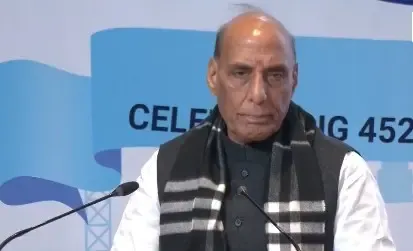
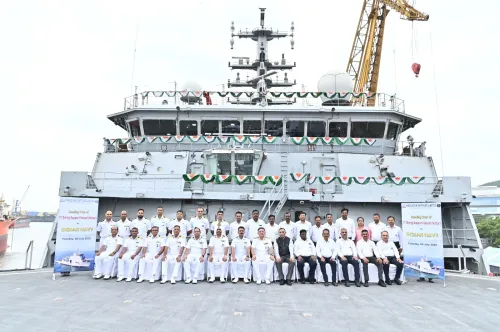
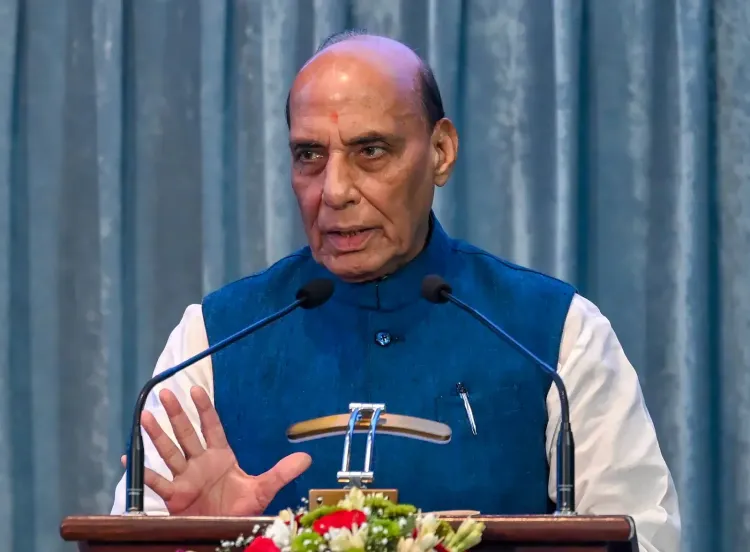
Defence Minister Rajnath Singh on Tuesday, 5 October 2026, launched Fleet Support Ship-1 (FSS-1) at Hindustan Shipyard Limited (HSL) in Visakhapatnam, marking a significant milestone in India's indigenous naval shipbuilding programme. The vessel entered the waters of the Bay of Bengal just 18 months after steel cutting, underscoring the shipyard's accelerating delivery tempo.
What Was Launched and What Was Inaugurated
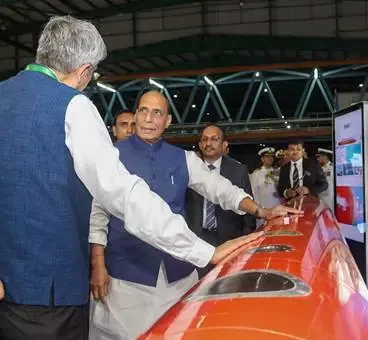
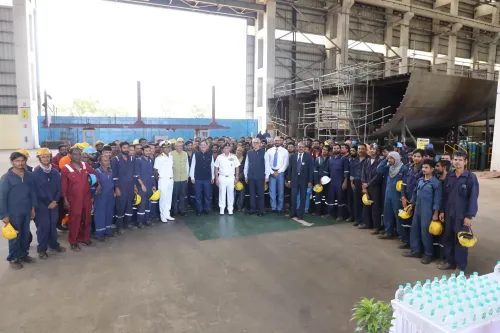
Beyond the FSS-1 launch, Singh also laid the keel of Fleet Support Ship-5 (FSS-5), signalling the programme's steady progression toward series production. He additionally inaugurated the upgraded Slipway-4 and a new 300-tonne Goliath Crane at the shipyard. According to an official release, the upgraded Slipway-4 — with its extended length and enhanced load-bearing capability — will enable HSL to build and launch vessels of up to 45,000 DWT, significantly expanding the facility's capacity to handle large and complex platforms.
Strategic Role of the Fleet Support Ships
FSS-1 is the first of five Fleet Support Ships being constructed for the Indian Navy. Each vessel displaces 43,500 tonnes and is designed to replenish warships at sea, extending the Navy's operational endurance and reach across the Indian Ocean Region (IOR). The programme is widely regarded as critical to India's ambition of sustaining blue-water naval operations without dependence on foreign logistics vessels.
Dignitaries in Attendance
The ceremony was attended by Andhra Pradesh Chief Minister N. Chandrababu Naidu, Admiral Krishna Swaminathan, Chief of the Naval Staff, and Sanjeev Kumar, Secretary (Defence Production), among other senior officials. The event drew together the political, military, and industrial leadership driving India's defence-manufacturing push.
HAL's 2,000th Aero-Engine Milestone in Odisha
Singh also visited Odisha on the same day to inaugurate a milestone event marking the delivery of the 2,000th aero-engine by Hindustan Aeronautics Limited (HAL)'s Koraput Division. The occasion highlighted nearly six decades of HAL Koraput's contribution to India's aerospace and defence manufacturing. A second production line for Shakti engines was also established at the division, backed by an investment of ₹218 crore. The additional capacity is intended to meet the growing demands of indigenous helicopter platforms, including the Dhruv Advanced Light Helicopter and the Prachand Light Combat Helicopter.
Taken together, Tuesday's events reflect what officials describe as the government's broader vision of transforming India from a buyer of defence equipment into a designer, developer, and manufacturer of defence systems — with indigenous propulsion capability highlighted as a strategically critical component of that transition.
Point of View
A credibility gap that has haunted India's defence shipbuilding for decades. Yet five ships across one shipyard remain modest against China's fleet replenishment scale. The HAL Koraput milestone adds another data point: India is building propulsion sovereignty sector by sector, but the pace of the second production line — ₹218 crore for Shakti engines — suggests incremental investment rather than a decisive leap. The test will be whether these milestones translate into reduced import dependence in actual procurement figures over the next five years.
NationPress
5 Oct 2026
Frequently Asked Questions
What is Fleet Support Ship FSS-1 and why does it matter for the Indian Navy?
FSS-1 is the first of five 43,500-tonne Fleet Support Ships being built indigenously for the Indian Navy at Hindustan Shipyard Limited in Visakhapatnam. These vessels are designed to replenish warships at sea with fuel, ammunition, and supplies, extending the Navy's operational reach across the Indian Ocean Region without requiring ships to return to port.
When was FSS-1 launched and how long did it take to build?
FSS-1 was launched on 5 October 2026 at Visakhapatnam, just 18 months after steel cutting began. This timeline is considered a significant achievement for India's indigenous naval shipbuilding programme.
What new infrastructure was inaugurated at Hindustan Shipyard Limited?
Defence Minister Rajnath Singh inaugurated the upgraded Slipway-4 and a 300-tonne Goliath Crane at HSL Visakhapatnam. Together, these upgrades enable the shipyard to build and launch vessels of up to 45,000 DWT, significantly expanding its capacity for large and complex naval platforms.
What is the significance of HAL Koraput's 2,000th aero-engine milestone?
The delivery of HAL Koraput's 2,000th aero-engine marks nearly six decades of aerospace manufacturing by the division and reflects India's growing propulsion self-reliance. A second Shakti engine production line, backed by a ₹218 crore investment, was also commissioned to meet demand from indigenous helicopter platforms including the Dhruv and Prachand.
Who attended the FSS-1 launch ceremony in Visakhapatnam?
The event was attended by Andhra Pradesh Chief Minister N. Chandrababu Naidu, Chief of the Naval Staff Admiral Krishna Swaminathan, and Sanjeev Kumar, Secretary (Defence Production), along with other senior officials from the defence and naval establishment.