Rajnath Singh writes on electoral integrity and misinformation
Synopsis
Union Defence Minister Rajnath Singh has published a Hindi editorial arguing for fact-based discourse amid what he calls manufactured narratives, addressing the SIR electoral roll debate and defending the credibility of India's election institutions.
Key Takeaways
Rajnath Singh published an editorial in Jagran on 19 October 2026 on electoral integrity and misinformation.
The piece addresses the ongoing debate around Special Intensive Revision (SIR) of electoral rolls by the Election Commission of India .
Singh argues that repeated, manufactured allegations risk being accepted as fact, making evidence-based discourse more urgent.
The intervention follows an established pattern of senior BJP leaders publishing rebuttals to opposition claims of institutional bias in elections.
Singh's reach as a former UP Chief Minister , former Home Minister , and current Defence Minister gives the editorial significant political weight.
Opposition responses and any Election Commission clarifications on SIR procedures are the next developments to watch.
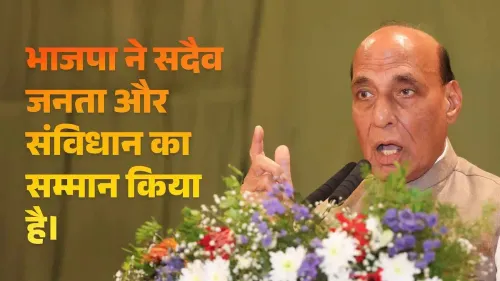
When fabricated narratives are repeated loudly enough, they risk being mistaken for truth — and that, Union Defence Minister Rajnath Singh argues, is precisely when fact-based public discourse becomes non-negotiable. In an editorial published in Jagran on Monday, 19 October 2026, Singh weighed in on what he called the politics of misleading information, the ongoing debate around the Special Intensive Revision (SIR) of electoral rolls, and the imperative of protecting the credibility and impartiality of India's electoral institutions.
Writing in Hindi, Singh framed the piece as a direct response to a moment he sees as politically charged: 'बार-बार दोहराए गए आरोपों और मनगढ़ंत नैरेटिव को सच के रूप में स्थापित करने का प्रयास' — 'repeated allegations and manufactured narratives being projected as truth.' His remedy: engage on the facts, not the noise.
The SIR debate and why it has become a flashpoint
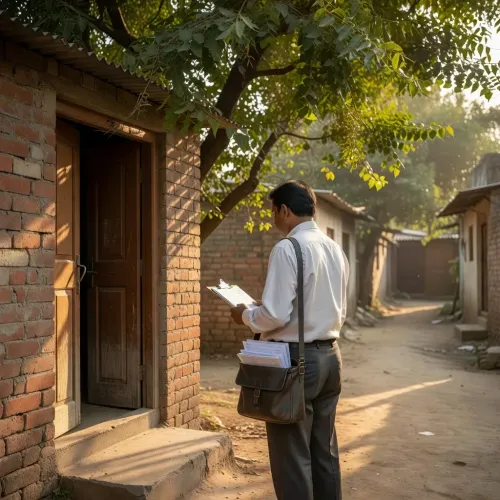
At the centre of Singh's editorial is the Special Intensive Revision of electoral rolls — a process the Election Commission of India undertakes periodically to clean, update, and verify voter lists ahead of elections. The process has periodically drawn opposition fire, with critics alleging selective deletions or additions that benefit the ruling dispensation. Singh's intervention signals that the government views these claims as a coordinated misinformation campaign, not a legitimate policy critique.
The Election Commission of India, as a constitutionally autonomous body, has defended its roll-revision exercises as routine, rules-bound, and subject to multi-party scrutiny. But in the current political climate, procedural debates around voter lists carry outsized weight — especially with multiple state assembly elections on the horizon.
A familiar BJP playbook, executed at the highest level
This is not the first time a senior BJP leader has taken to the opinion pages to push back against what the party characterises as a 'post-truth' assault on India's democratic institutions. The pattern is well-established: when opposition noise around electoral manipulation reaches a certain pitch, a heavyweight from the ruling party publishes a detailed, by-line rebuttal — not a press conference soundbite, but a considered editorial aimed at the Hindi-reading heartland.
Singh is uniquely positioned for this role. A former Chief Minister of Uttar Pradesh, former Union Home Minister, and now Defence Minister, he commands authority across security, governance, and political credibility. Publishing in a major Hindi-language newspaper ensures the message reaches the same demographic that is most directly affected by voter-roll debates — rural and semi-urban voters across the Hindi belt.
Post-truth politics and the stakes for Indian democracy
Singh's broader argument — that the normalisation of false narratives corrodes democratic discourse — taps into a global conversation about information integrity. In India's context, the stakes are specific: a country of nearly a billion voters, conducting elections at a scale unmatched anywhere on earth, cannot afford sustained public distrust in the bodies that run them.
Whether opposition parties respond with counter-arguments or dismiss the piece as government-sponsored deflection will shape the next phase of this debate. The Election Commission itself may face renewed pressure to publicly clarify SIR procedures and outcomes. Either way, Singh has ensured the conversation moves — at least for a news cycle — onto terrain the government has chosen.
In Indian politics, controlling the narrative frame is often the first battle. Rajnath Singh, with a single editorial, has declared exactly where he intends to fight it.
Point of View
He is speaking directly to the demographic most targeted by voter-roll anxieties — and framing institutional trust as a patriotic, not partisan, concern. The timing suggests the government is tracking opposition messaging on electoral integrity as a potentially damaging pre-election narrative. If the SIR debate intensifies into the next state election cycle, this editorial may mark the opening move in a sustained government counter-narrative campaign.
NationPress
19 Oct 2026
Frequently Asked Questions
What did Rajnath Singh write in his Jagran editorial?
Rajnath Singh wrote about the politics of misinformation, the debate surrounding the Special Intensive Revision of electoral rolls, and the need to preserve the credibility and impartiality of India's electoral institutions.
What is the Special Intensive Revision (SIR) of electoral rolls?
The Special Intensive Revision is a process conducted by the Election Commission of India to update, verify, and clean voter lists ahead of elections. It has been a source of political controversy, with opposition parties at times alleging selective manipulation of voter data.
Why is Rajnath Singh writing about elections when he is the Defence Minister?
Singh is one of the BJP's most senior leaders, with a background as former Chief Minister of Uttar Pradesh and former Home Minister. Senior party figures regularly publish opinion pieces on political and governance issues beyond their ministerial portfolio, especially during periods of heightened electoral debate.
What is post-truth politics and why is Singh raising it?
Post-truth politics refers to an environment where emotional appeals or repeated false claims carry more public weight than verifiable facts. Singh invoked the concept to argue that fabricated narratives about India's electoral institutions are being normalised, and that fact-based counter-arguments are essential.
What should we watch after Rajnath Singh's editorial?
Key developments to track include opposition party responses to the editorial's arguments, any official clarifications from the Election Commission of India on SIR procedures, and how the electoral integrity debate evolves ahead of upcoming state elections.