Rajya Sabha passes Bankers' Books Evidence Bill 2026 amid Opposition walkout
Synopsis
India's Parliament has scrapped a 135-year-old banking evidence law — but the Rajya Sabha did it with the Opposition out of the room. The Bankers' Books Evidence Bill 2026 modernises how digital bank records are admitted in court, yet the walkout means the government passed landmark financial legislation without a substantive floor debate.
Key Takeaways
The Rajya Sabha passed the Bankers' Books Evidence Bill, 2026 by voice vote on 10 August .
The Bill replaces the Bankers' Books Evidence Act of 1891 , a 135-year-old colonial-era law.
It updates the legal framework to recognise digitally stored bank records as valid court evidence.
Finance Minister Nirmala Sitharaman said the Bill ensures 'full privacy and safeguards' for account holders.
Leader of Opposition Mallikarjun Kharge and other Opposition members walked out before debate could conclude.
The Bill, already passed by the Lok Sabha , now awaits presidential assent to become law.
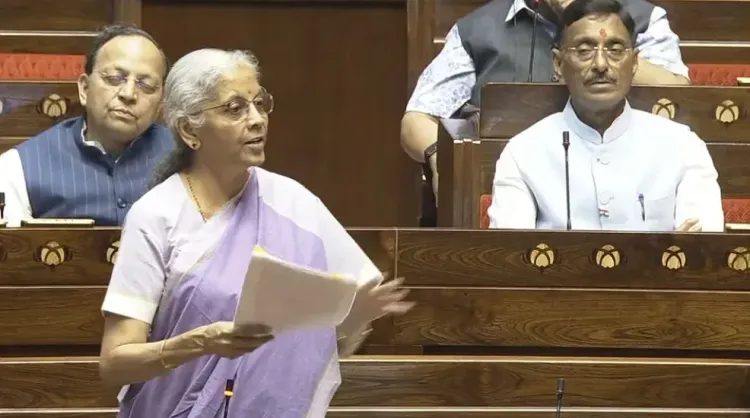
The Rajya Sabha on Monday, 10 August passed the Bankers' Books Evidence Bill, 2026, by a voice vote after Opposition members walked out, cutting short what was expected to be a detailed legislative debate. The Bill, already cleared by the Lok Sabha, now awaits presidential assent before becoming law.
What the Bill Does
The legislation seeks to replace the Bankers' Books Evidence Act of 1891 — a 135-year-old law enacted when bank records existed solely in physical form. Its original purpose was to permit certified copies of bank ledgers to serve as evidence in court, sparing bank officials from producing original documents. The new Bill modernises this framework to account for records that are now created, stored, and maintained entirely in digital form.
Union Finance Minister Nirmala Sitharaman, who moved the Bill for consideration, said the legislation has been designed to protect 'full privacy and safeguards' for account holders while aligning evidence rules with contemporary digital banking practices. The government argued that the 19th-century framework was no longer adequate for a banking ecosystem driven by core banking systems and electronic records.
Proceedings in the House
The session was marked by repeated disruptions. The House faced multiple adjournments earlier in the day after Vice-Chairman Harivansh Narayan Singh's attempt to call the Finance Minister was disrupted within two minutes by Opposition protests. The House eventually reassembled, and the Vice-Chairman again called upon Sitharaman to move the Bill.
Opposition members continued raising slogans as the Bill was tabled. The Vice-Chairman told Leader of Opposition Mallikarjun Kharge that he would be permitted to speak under rules framed in 1952 if he confined his remarks to the Bill. A heated exchange followed. Kharge raised his voice, shouting 'chanda chor…,' though his words were drowned out in the din. Opposition members subsequently walked out before substantive discussion could take place.
Members Who Spoke
Despite the walkout, several members addressed the House on the Bill, including Mohammad Nadimul Haque of the All India Trinamool Congress (AITC) from West Bengal, Arun Singh of the Bharatiya Janata Party (BJP) from Uttar Pradesh, Manas Ranjan Mangaraj of the Biju Janata Dal (BJD) from Odisha, S. Niranjan Reddy of the YSRCP from Andhra Pradesh, Rajendra Hiralal Jain of the Nationalist Congress Party (NCP) from Maharashtra, Bhashyam Rama Krishna of the Telugu Desam Party (TDP) from Andhra Pradesh, Ravi Chandra Vaddiraju of the VRS from Telangana, L.K. Sudheesh of the DMDK from Tamil Nadu, Dr M. Dhanapal of the AIADMK from Tamil Nadu, and Dr Jyoti Nagnath Waghmare of the Shiv Sena from Maharashtra. Members who spoke broadly welcomed the technological update while also raising concerns around data privacy and safeguards embedded in the new law.
Why This Matters
India's banking sector has undergone a sweeping digital transformation over the past decade, yet the evidentiary framework governing bank records had remained anchored to colonial-era legislation. The new Bill is expected to reduce procedural friction in financial litigation and bring India's banking evidence law in line with global standards. Notably, questions around data privacy in digital banking records have become increasingly significant as cyber fraud cases and financial disputes before courts have multiplied. The passage of the Bill — despite the Opposition's walkout — marks a legislative step toward resolving that gap.
What Comes Next
Having cleared both Houses of Parliament, the Bill will now be sent for presidential assent. Upon enactment, banks and financial institutions will need to align their record-keeping and evidence submission practices with the updated legal framework. Regulatory guidance from the Reserve Bank of India (RBI) on implementation timelines is expected to follow.
Point of View
Not just a procedural footnote. The 1891 Act's replacement is long overdue — digital bank records have been in a legal grey zone for years — but the absence of rigorous floor scrutiny means data privacy provisions and implementation safeguards go untested by adversarial questioning. Parliament's oversight function exists precisely for moments like this. A walkout that hands the government an uncontested passage on financial legislation is a loss for accountability, regardless of which side triggered it.
NationPress
10 Aug 2026
Frequently Asked Questions
What is the Bankers' Books Evidence Bill 2026?
The Bankers' Books Evidence Bill 2026 is a legislation passed by the Rajya Sabha on 10 August to replace the 135-year-old Bankers' Books Evidence Act of 1891. It updates the legal framework governing how bank records — now largely digital — are admitted as evidence in court proceedings.
Why was the 1891 Bankers' Books Evidence Act being replaced?
The original 1891 law was designed for an era when bank records were maintained in physical ledgers, and it allowed certified copies of those ledgers to be used in court. With banking now almost entirely digital, the existing framework was considered outdated and inadequate for records created and stored electronically.
Why did the Opposition walk out during the Bill's passage?
Opposition members, including Leader of Opposition Mallikarjun Kharge, continued raising slogans and disrupted proceedings before a detailed debate could take place. A heated exchange with Vice-Chairman Harivansh Narayan Singh preceded the walkout. The specific political grievance prompting the protest was not formally placed on record during the Bill's consideration.
What happens now that the Bill has passed both Houses?
Having been cleared by both the Lok Sabha and the Rajya Sabha, the Bill will be sent for presidential assent. Once enacted, banks and financial institutions will need to align their record-keeping and court submission practices with the new law, with regulatory guidance from the RBI expected to follow.
What privacy protections does the new Bill include?
Finance Minister Nirmala Sitharaman stated that the Bill has been designed to protect 'full privacy and safeguards' for account holders. Members who spoke during the debate also raised data privacy concerns, though specific provisions were not detailed in the proceedings reported.