Nitesh Rane urges Hindus to buy Diwali goods from Hindu vendors
Synopsis
Maharashtra Minister Nitesh Rane called on Hindus to buy Diwali goods only from shopkeepers who say 'Jai Shri Ram', wear a tilak, and can recite the Hanuman Chalisa — and argued that the Kumbh Mela in Nashik should be exclusively for Hindus, mirroring restrictions he claims exist at Muslim religious events. The remarks arrive in a politically charged pre-festival environment.
Key Takeaways
Maharashtra Minister Nitesh Rane on 27 October urged Hindus to purchase Diwali goods only from shopkeepers who say 'Jai Shri Ram' , wear a tilak, and can recite the Hanuman Chalisa .
He drew a parallel with Islamic practice, arguing that if buying from a non-Muslim is considered 'Haram' in Islam, Hindus buying from Hindu shopkeepers is equally valid.
Rane called for the upcoming Simhastha Kumbh Mela in Nashik to be restricted exclusively to Hindus, including all commercial activity at the venue.
He separately defended the Devendra Fadnavis government's advance ₹5,000 payout to farmers ahead of Diwali, calling it unprecedented in Maharashtra's history.
The government's decision to grant Fisheries the status of Agriculture was also highlighted as a historic step for farmers and fishermen.
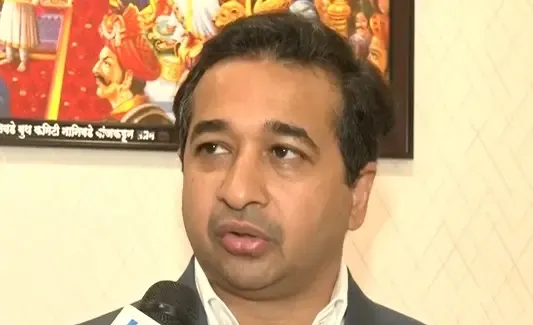
Maharashtra Minister Nitesh Rane on Tuesday, 27 October called on the Hindu community in Mumbai to purchase Diwali goods exclusively from shopkeepers who say 'Jai Shri Ram', wear a tilak, and can recite the Hanuman Chalisa — remarks that are likely to stir political controversy in the run-up to the festival season.
What Rane Said
Addressing reporters, Rane drew a parallel with Islamic practice, asking whether any Hindu is permitted to set up shops during Ramadan. 'Buying products from a Kafir is considered a sin (Haram) in Islam. Similarly, if the Hindu community seeks to buy goods from Hindu shopkeepers, there's nothing wrong with it,' he said.
He went further, stating: 'I would urge the Hindu community that, while shopping for the occasion of Diwali, you should buy goods from shopkeepers who say Jai Shri Ram, wear a tilak on their foreheads, and know how to recite the Hanuman Chalisa or the Maha Aarti. Only then should you buy goods from them.'
He added: 'Otherwise, if one wishes to entertain Jihad, then they can buy from anyone who is not a Hindu; this is what I believe.'
Kumbh Mela Remarks
Rane also weighed in on the upcoming Simhastha Kumbh Mela in Nashik, arguing that just as Hindus are reportedly not permitted to attend Muslim religious gatherings such as the Ijtima or events tied to the Ulema — and are barred from Mecca during the Hajj — the same exclusivity principle should apply at the Kumbh Mela.
'Since the Kumbh Mela is an event rooted in Sanatan Hindu Dharma, only Hindus should be present there. Furthermore, the shops should belong to Hindus, and all commercial activities should be conducted exclusively by Hindus,' he stated. Addressing AIMIM leaders, Rane remarked: 'You should first invite Hindus to your religious gathering like the Ulema and then lecture us.'
Critics argue that such calls for faith-based commercial segregation risk deepening communal fault lines ahead of a major festival, and may run counter to constitutional guarantees of equal trade and commerce. This comes amid a broader pattern of religiously charged political statements in Maharashtra ahead of civic and state electoral cycles.
Farmer Support and Fisheries Decision
On a separate note, Rane defended the Devendra Fadnavis-led state government's decision to provide ₹5,000 in advance financial assistance to farmers ahead of Diwali. He asserted that no previous government in Maharashtra's history had extended comparable support to the farming community.
'Farmers have been given initial assistance of ₹5,000, and further support will be provided to them as well,' he said. He also highlighted the government's move to grant Fisheries the status of Agriculture, describing it as a historic decision that would allow farmers and fishermen to celebrate the Diwali festival with greater financial security.
Broader Context
Nitesh Rane, a cabinet minister in the Mahayuti alliance government and a member of the Bharatiya Janata Party (BJP), has previously made headlines for communally charged statements. Notably, calls for Hindu-only commercial participation in festivals have surfaced in several BJP-governed states in recent years, drawing both support from right-leaning groups and sharp condemnation from opposition parties and civil society. Whether formal complaints or legal challenges follow these latest remarks remains to be seen.
Point of View
And courts have consistently held that calls for community-based commercial boycotts occupy contested legal ground. What is striking this time is the explicit invocation of 'Jihad' as the consequence of buying from non-Hindu vendors — language that moves well beyond cultural assertion into incitement territory, and one that the state government has not, at least publicly, distanced itself from. The Kumbh Mela remarks add a second flashpoint: the Nashik Simhastha draws millions and has historically been an open public event; any formal exclusion policy would face immediate judicial scrutiny.
NationPress
27 Oct 2026
Frequently Asked Questions
What did Maharashtra Minister Nitesh Rane say about Diwali shopping?
Rane urged the Hindu community to buy Diwali goods only from shopkeepers who say 'Jai Shri Ram', wear a tilak, and can recite the Hanuman Chalisa or the Maha Aarti. He argued this was no different from Islamic practices that reportedly discourage buying from non-Muslims.
What did Rane say about the Kumbh Mela in Nashik?
Rane said that since the Simhastha Kumbh Mela is rooted in Sanatan Hindu Dharma, only Hindus should attend, and all shops and commercial activity at the event should be run exclusively by Hindus. He drew a comparison with Ijtima gatherings and the Hajj pilgrimage, which he said Hindus are not permitted to attend.
What did Rane say about financial assistance to farmers?
Rane stated that the Devendra Fadnavis government has given farmers an advance payout of ₹5,000 ahead of Diwali, calling it unprecedented in Maharashtra's history. He added that further support would follow, and highlighted the government's decision to grant Fisheries the status of Agriculture.
Why are Rane's remarks politically significant?
Critics argue that calls for faith-based commercial segregation during a major festival risk inflaming communal tensions and may conflict with constitutional rights to trade freely. The remarks arrive in a politically sensitive period in Maharashtra, and opposition parties are expected to respond sharply.