Bawana MLA Ravinder Indraj Singh pushes village connectivity in PWD meet
Synopsis
Delhi Cabinet Minister Ravinder Indraj Singh used a PWD infrastructure meeting to push a pointed demand: the proposed 11.70 km Kanjhawala–Mangolpuri Elevated Corridor must serve Bawana's villages, not just through-traffic. His call for phased construction, village entry-exit points, and future-capacity planning signals that outer Delhi's rural belt is asserting itself in the capital's infrastructure conversation.
Key Takeaways
Ravinder Indraj Singh , Bawana MLA and Delhi Cabinet Minister, submitted suggestions to the PWD on 24 August .
The Kanjhawala–Mangolpuri Elevated Corridor is approximately 11.70 km long, targeting congestion in West and North-West Delhi .
Singh demanded village-level entry-exit points, pedestrian facilities, and traffic safety measures along the corridor.
A phased construction plan was requested to minimise disruption to local commuters during the build phase.
PWD officials were directed to incorporate MLA inputs during the DPR finalisation stage.
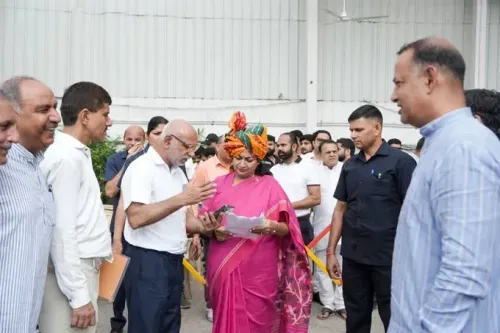
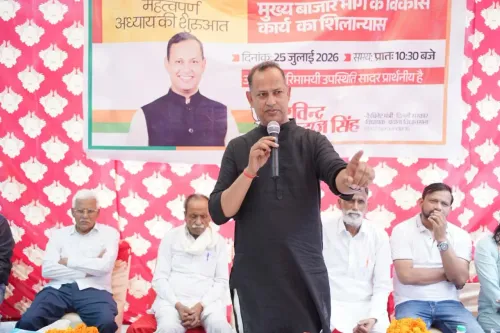
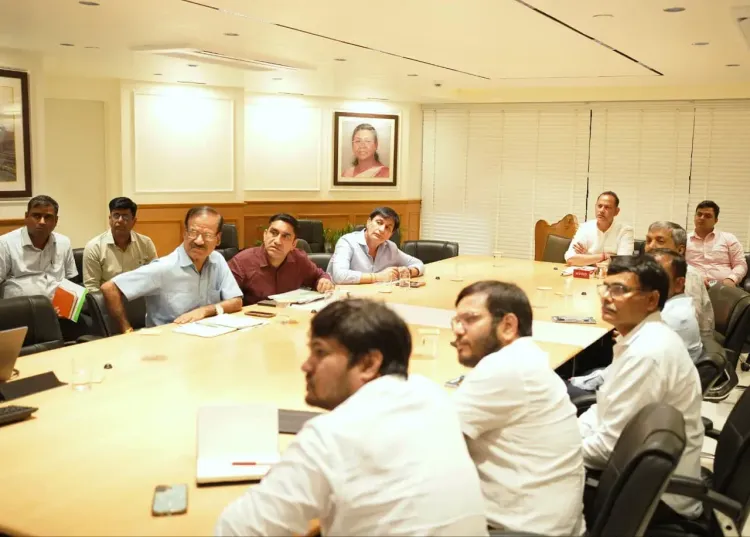
Bawana MLA and Delhi Cabinet Minister Ravinder Indraj Singh on Monday, 24 August submitted a set of formal suggestions to the Public Works Department (PWD) at the Delhi Secretariat, pressing for village-level access and pedestrian safety to be built into two major elevated corridor projects proposed for North-West and West Delhi. The inputs centred on the Kanjhawala–Mangolpuri Elevated Corridor and a separate proposed elevated corridor over the auxiliary drainage channel in the Bawana area.
Key Projects on the Table
The Kanjhawala–Mangolpuri Elevated Corridor is planned at approximately 11.70 km in length. According to an official statement, the corridor is designed to ease traffic congestion on key arterials in West and North-West Delhi and improve overall transport convenience for commuters in the region. The PWD meeting was convened with multiple MLAs to deliberate on major infrastructure proposals aimed at strengthening road networks in Delhi's outer and rural zones.
What the Minister Demanded
Singh stressed that the Bawana Assembly constituency is home to a large number of villages and a sizeable rural population, and that local connectivity must be accorded the highest priority in any infrastructure planning of this scale. He called for appropriate entry and exit points for villages along the corridor's alignment, alongside adequate traffic safety measures and dedicated pedestrian facilities.
The minister also urged that the project's benefits not be confined to through-traffic on the main corridor, but must extend to surrounding villages and daily commuters. He pushed for a phased construction plan so that local traffic movement and routine commuting are not disrupted during the build phase.
Long-Term Capacity and Future Traffic
Singh flagged the need for a thorough assessment of the corridor's capacity, keeping in view anticipated traffic growth in the coming years. He argued that Bawana, Kanjhawala, and adjacent rural areas have historically lacked adequate road connectivity, and that aligning the projects with local ground realities would be a meaningful step toward balanced regional development.
Directions to PWD Officials
The minister directed PWD officials to ensure that, during the upcoming stages of the Detailed Project Report (DPR) implementation, inputs from local elected representatives and on-ground realities are duly incorporated before the project design is finalised. He underlined that embedding these considerations would allow the corridor to serve the specific needs of the Bawana constituency while benefiting the broader population of Outer Delhi.
With DPR finalisation still ahead, the extent to which these suggestions shape the final project design will be closely watched by residents and civic groups in North-West Delhi.
Point of View
But Singh's intervention points to a recurring tension in Delhi's infrastructure planning: large corridor projects are typically designed for metropolitan through-traffic, with village-level access treated as an afterthought. Bawana's semi-rural character makes it particularly vulnerable to being bypassed by its own infrastructure. Whether PWD's DPR process has the institutional flexibility to absorb MLA-level inputs in a meaningful way — rather than as a procedural checkbox — is the real question. Outer Delhi's development deficit is well-documented; the corridor's final alignment will reveal how seriously that deficit is being taken.
NationPress
10 Oct 2026
Frequently Asked Questions
What is the Kanjhawala–Mangolpuri Elevated Corridor?
The Kanjhawala–Mangolpuri Elevated Corridor is a proposed road infrastructure project approximately 11.70 km in length, designed to reduce traffic congestion on major roads in West and North-West Delhi and improve transport connectivity in the region.
What suggestions did Ravinder Indraj Singh give to the PWD?
Singh called for village-level entry and exit arrangements, pedestrian facilities, traffic safety measures, and a phased construction plan to avoid disrupting daily commutes. He also asked for a long-term capacity assessment factoring in future traffic growth.
Why is village connectivity a priority for the Bawana constituency?
The Bawana Assembly constituency has a large number of villages and a significant rural population that have historically lacked adequate road connectivity. Singh argued that any major infrastructure project in the area must prioritise local access rather than focusing solely on through-traffic.
What is the next step for the elevated corridor projects?
PWD officials have been directed to incorporate inputs from local MLAs and ground realities during the upcoming Detailed Project Report (DPR) finalisation stage before the project design is confirmed.
Which areas benefit from the proposed elevated corridor?
The corridor primarily targets commuters in West and North-West Delhi, including residents of Bawana, Kanjhawala, and surrounding rural areas that currently face significant road connectivity gaps.