RBI hikes repo rate 25 bps to 5.50%, shifts stance to Calibrated Tightening
Synopsis
The RBI has slammed the door on near-term rate cuts. With the repo rate hiked to 5.50% and the stance shifted to Calibrated Tightening, Governor Sanjay Malhotra has sent an unambiguous signal: fighting inflation is now the only game in town, and borrowers should brace for elevated EMIs with no relief in sight.
Key Takeaways
RBI Governor Sanjay Malhotra announced a 25 basis point repo rate hike to 5.50 per cent on 7 October 2026 .
The MPC voted unanimously to raise rates, shifting the policy stance to 'Calibrated Tightening' .
Rate cuts are explicitly off the table in the near term; forward action is limited to a hike or a pause.
Headline CPI inflation is projected to average 5.8 per cent over the next three quarters; core inflation at 4.94 per cent for FY2026.
The SDF rate stands at 5.25 per cent ; the MSF rate and Bank Rate at 5.75 per cent .
The economy remains broadly resilient, though softness is noted in non-durable goods and domestic passenger traffic .
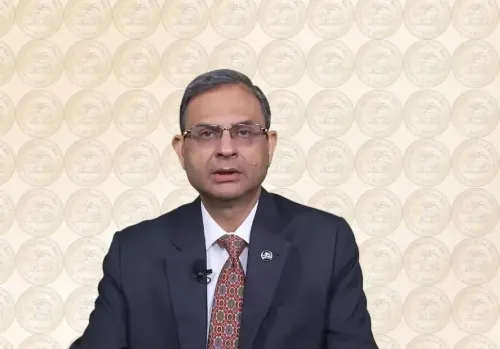
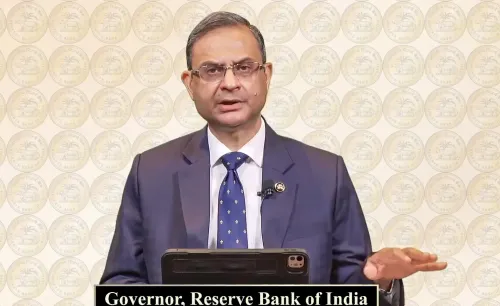
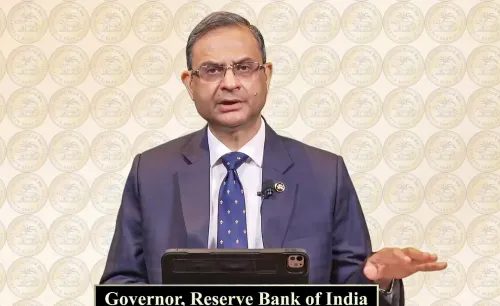
Reserve Bank of India (RBI) Governor Sanjay Malhotra on Wednesday, 7 October 2026 ruled out near-term rate cuts and announced a shift in the monetary policy stance to 'Calibrated Tightening', signalling that the rate cycle has firmly turned. The Monetary Policy Committee (MPC) voted unanimously to raise the policy repo rate by 25 basis points to 5.50 per cent, following a three-day meeting.
With the stance now at Calibrated Tightening, forward policy action is confined to either a further repo rate hike or a pause — a rate cut is explicitly off the table for the foreseeable future.
Key Policy Decisions
The MPC's unanimous decision lifts the repo rate to 5.50 per cent. Accordingly, the Standing Deposit Facility (SDF) rate stands adjusted to 5.25 per cent, while the Marginal Standing Facility (MSF) rate and the Bank Rate are now at 5.75 per cent.
Governor Malhotra said the duration and extent of any further rate hike cycle would depend on actual growth and inflation developments, with particular attention to underlying inflation, the broadening of price pressures, and second-round effects of supply shocks.
Inflation Projections
The central bank projected headline CPI inflation to average almost 5.8 per cent over the next three quarters — a level comfortably above the RBI's medium-term target of 4 per cent, and one that justifies the hawkish tilt. Core inflation is projected at 4.94 per cent for the current financial year.
'We also decided that headline CPI inflation is expected to average almost 5.8 per cent in the next three quarters and core inflation is projected at 4.94 per cent for this financial year,' Malhotra said after the meeting.
Growth Outlook Remains Resilient
Despite the tightening bias, Governor Malhotra expressed confidence in the underlying economy. Private consumption remained broadly resilient, supported by discretionary spending, and fixed investment stayed strong, as evidenced by several high-frequency indicators, he noted.
Some pockets of softness were, however, flagged. 'Some weakness is, however, observed in segments such as non-durable goods and domestic care passenger traffic,' Malhotra said. Services sector activity remained steady and broad-based, driven by buoyant domestic and external demand. Both manufacturing PMI and services PMI remained in expansionary territory in Q2.
What the Stance Change Means
The shift to Calibrated Tightening is a material signal. Under the previous stance, a pivot to cuts remained theoretically possible; that option is now formally closed. This move aligns the RBI with a broader global trend of central banks prioritising inflation control over growth support — a posture the US Federal Reserve, the Bank of England, and the European Central Bank have each adopted in recent cycles.
For borrowers, the 25 bps hike translates into higher EMIs on floating-rate home, auto, and personal loans. For savers, it offers marginally better returns on deposits. Markets will now focus on whether the MPC delivers another hike at the next meeting or opts to pause and assess incoming data.
Point of View
The RBI is essentially acknowledging that inflation is sticky and broad-based, not a transient supply blip. The Calibrated Tightening label is carefully chosen: it preserves optionality for a pause while foreclosing the cut narrative entirely. What remains unaddressed is the second-round transmission risk — if core inflation at 4.94% proves stubborn, another hike becomes probable, and the growth pockets already showing weakness in non-durables and passenger traffic could deteriorate faster than the MPC's base case allows.
NationPress
7 Oct 2026
Frequently Asked Questions
What did the RBI decide at its October 2026 MPC meeting?
The RBI's Monetary Policy Committee unanimously voted to hike the policy repo rate by 25 basis points to 5.50 per cent on 7 October 2026 and shifted the policy stance to 'Calibrated Tightening'. Rate cuts are explicitly ruled out in the near term.
What does 'Calibrated Tightening' stance mean?
It means the RBI's next policy move can only be a further repo rate hike or a pause — a rate cut is not an option under this stance. The shift signals the central bank's priority is bringing inflation under control before considering any easing.
What is the RBI's inflation forecast?
The RBI projects headline CPI inflation to average almost 5.8 per cent over the next three quarters. Core inflation is projected at 4.94 per cent for the current financial year, both significantly above the RBI's 4 per cent medium-term target.
How does the rate hike affect borrowers?
A 25 basis point hike in the repo rate typically leads to higher EMIs on floating-rate home loans, auto loans, and personal loans, as banks pass on the increased cost of funds. With the stance now at Calibrated Tightening, borrowers should not anticipate relief in the near term.
What is the outlook for the Indian economy according to the RBI?
The RBI views the Indian economy as broadly resilient, with private consumption and fixed investment holding up. However, Governor Malhotra flagged some softness in non-durable goods and domestic passenger traffic, suggesting uneven momentum beneath the headline numbers.