Red Fort blast linked to AQIS: BJP's Shringla backs UN report, flags Bangladesh border risk

Synopsis
A UN Security Council monitoring team has officially attributed the Red Fort suicide car bombing — which killed 11 — to AQIS, and warned the outfit is building cells in Bangladesh. BJP's Harsh Vardhan Shringla, a former Foreign Secretary and Bangladesh envoy, is now sounding the alarm: India's porous border with an increasingly radicalised Bangladesh may be the country's next terrorism flashpoint.
Key Takeaways
The UN Analytical Support and Sanctions Monitoring Team officially attributed the Red Fort suicide car bombing to Al-Qaida in the Indian Subcontinent (AQIS) .
The blast killed 11 people last November and the UN report warns AQIS is becoming an increasingly decentralised threat.
BJP MP Harsh Vardhan Shringla , former Foreign Secretary and ex-envoy to Bangladesh, endorsed the UN findings and flagged India's porous border with Bangladesh as a vulnerability.
Shringla alleged that former Chief Adviser Mohammed Yunus released wanted terrorists and created conditions conducive to extremism in Bangladesh.
The UN report separately warned that AQIS is attempting to exploit Bangladesh to establish operational cells.
Jamaat-e-Islami retains 'considerable influence' in Bangladesh, according to Shringla, adding to India's border security concerns.
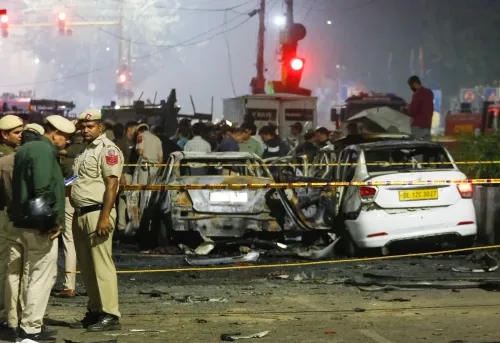
Bharatiya Janata Party (BJP) Member of Parliament Harsh Vardhan Shringla on Thursday, 13 August endorsed a United Nations report attributing the Red Fort suicide car bombing — which killed 11 people last November — to Al-Qaida in the Indian Subcontinent (AQIS), while warning that India's porous border with Bangladesh poses a serious terrorism risk to the country.
What the UN Report Found
The UN Analytical Support and Sanctions Monitoring Team, which reports to the UN Security Council, officially attributed the Red Fort blast to AQIS in its latest assessment. The report further warned that AQIS is evolving from a loosely organised group into a more decentralised terrorist organisation, and flagged concern about the outfit attempting to exploit Bangladesh to establish operational cells.
Shringla's Reaction
Shringla, a former Indian Foreign Service (IFS) officer who has served as India's Ambassador to the United States and as Foreign Secretary, stressed the credibility of the UN monitoring body. 'These are people who are specialists in counter-terrorism, who are specialists in dealing with terrorist organisations, and so they do a lot of research, they do a lot of investigation on these issues,' he said.
On the specific AQIS threat, Shringla said: 'I think if they have said that AQIS is trying to establish links in India, including with the people who are responsible for the blast at the Red Fort, then of course, we have to take it with a certain level of seriousness and we have to obviously try and ensure that activities of these terrorist organizations are not allowed in our country.'
Bangladesh Border Vulnerability
Shringla, who also previously served as India's envoy to Bangladesh, directed sharp criticism at former Chief Adviser Mohammed Yunus, alleging that his administration enabled a surge in extremist activity. 'Bangladesh has now become a place where a lot of extremists and terrorists have become rampant because the previous government of Mohammed Yunus released a lot of wanted terrorists and had also created an atmosphere which is conducive for such terrorists to take root in that country,' he said.
He further noted that Jamaat-e-Islami retains 'considerable influence' in Bangladesh, compounding the security concern for India. 'Because of the porous borders, these people can enter India, so we have to be very careful and vigilant that our security and integrity is not compromised,' Shringla cautioned.
The Broader Security Context
This comes amid growing unease in New Delhi over the security situation in Bangladesh following a period of political turbulence. The UN report's finding that AQIS is attempting to establish cells in Bangladesh adds an international dimension to what Indian security officials have flagged as a bilateral concern. Notably, the Red Fort — a symbol of Indian sovereignty — being targeted by a designated terrorist organisation has amplified the political urgency of the issue.
Shringla also called for coordinated action, saying India must 'work with the Bangladesh authorities because it is not in their interest also to have terrorists operating in their territory.' How that bilateral security cooperation unfolds will be closely watched in the weeks ahead.
Point of View
It is a calibrated signal. What mainstream coverage underplays is the structural dimension — India has long struggled to seal its eastern border, and no political will from either side has meaningfully changed that. The real question is whether this UN report becomes the basis for a concrete bilateral security framework, or remains another data point in an increasingly strained India-Bangladesh relationship.
NationPress
28 Sept 2026
Frequently Asked Questions
What did the UN report say about the Red Fort blast?
The UN Analytical Support and Sanctions Monitoring Team officially attributed the Red Fort suicide car bombing, which killed 11 people last November, to Al-Qaida in the Indian Subcontinent (AQIS). The report also warned that AQIS is evolving into a more decentralised terrorist organisation and is attempting to establish cells in Bangladesh.
Who is Harsh Vardhan Shringla and why does his statement matter?
Harsh Vardhan Shringla is a BJP MP and former Indian Foreign Service officer who served as India's Foreign Secretary and Ambassador to the United States, and also as envoy to Bangladesh. His endorsement of the UN report carries weight given his direct experience in counter-terrorism diplomacy and South Asian affairs.
What is the concern about Bangladesh's border with India?
Shringla warned that India's porous border with Bangladesh could allow extremists and terrorists to enter Indian territory. He alleged that the former Yunus administration released wanted terrorists and fostered conditions that allowed radical groups, including those with Jamaat-e-Islami links, to gain a foothold in Bangladesh.
What is AQIS and why is it considered a threat to India?
Al-Qaida in the Indian Subcontinent (AQIS) is a designated terrorist organisation that operates across South Asia. The UN report warns it is shifting toward a decentralised structure and is actively trying to establish links and cells within India and Bangladesh, making it a growing cross-border security concern.
What action did Shringla call for?
Shringla called for heightened vigilance along the India-Bangladesh border and urged bilateral cooperation with Bangladeshi authorities, arguing that unchecked terrorism in Bangladesh is also against Bangladesh's own national interest.