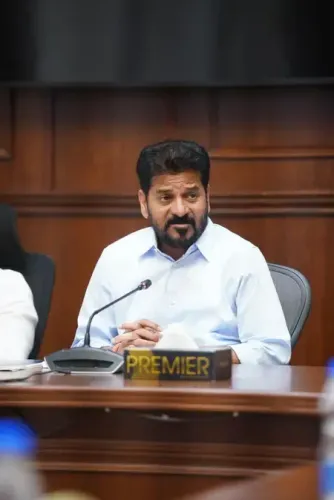
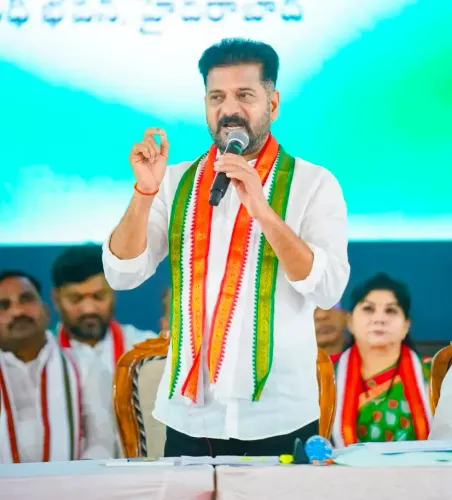
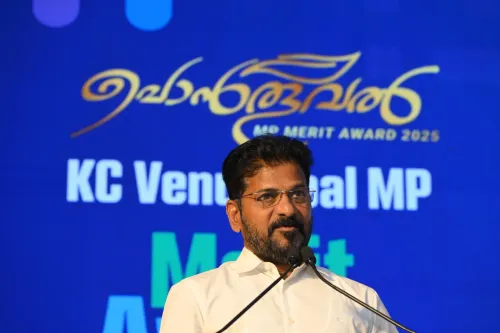
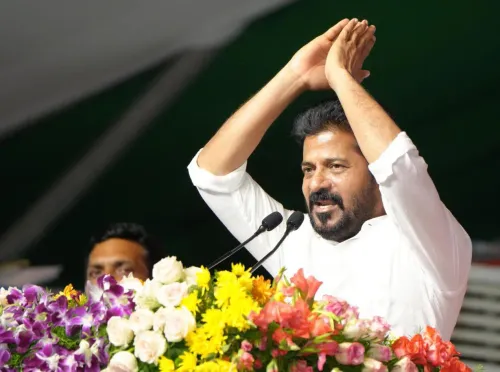
Telangana CM Revanth Reddy pushes to lower poll age limit to 21
Synopsis
Telangana Chief Minister Revanth Reddy wants 21-year-olds eligible to contest Assembly and Lok Sabha elections — and he is not just talking. A special state session is planned for August to pass a resolution demanding the constitutional change, putting the Congress-led government on record for one of the more ambitious youth-representation pushes in recent Indian political history.
Key Takeaways
Revanth Reddy has demanded lowering the minimum candidacy age for Assembly and Lok Sabha elections from 25 to 21 years .
A special session of the Telangana Legislative Council and Assembly is planned for the first week of August to pass a formal resolution.
Revanth Reddy cited that more than 50% of countries, including Germany , Great Britain , and Singapore , permit candidacy at 21 .
Approximately 30% of India's population is Generation Z , according to the Chief Minister's remarks.
He also called for equal infrastructure investment in Telangana on par with Gujarat , referencing projects like the Regional Ring Road and Adilabad Airport .
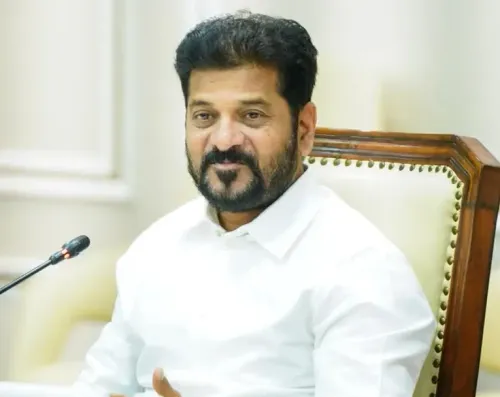
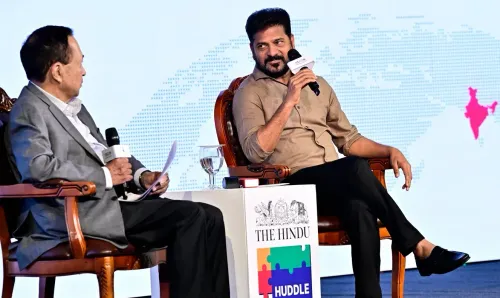
Telangana Chief Minister A. Revanth Reddy has called for lowering the minimum age for contesting Assembly and Lok Sabha elections from 25 years to 21 years, arguing that the current threshold shuts out a generation already trusted with civil service and civic leadership roles. The demand, made in Hyderabad on 26 July, is backed by a plan to pass a state legislature resolution in the first week of August and forward it to the Centre.
What Revanth Reddy Is Demanding
The Chief Minister has called for a statutory amendment that would allow candidates aged 21 and above to contest elections to the Legislative Assembly and Lok Sabha, while raising the Rajya Sabha threshold to 25 years — up from the current 30 years. He argued that the existing age structure is inconsistent with other democratic responsibilities already assigned to young Indians.
'At the age of 21, we are appointing people as IAS, IPS, and other civil servants, making them mayors and district panchayat chairpersons. Then why not Assembly and Lok Sabha?' Revanth Reddy said.
The International and Constitutional Context
Revanth Reddy pointed to global precedents to bolster his case. He noted that in more than 50% of countries — citing Germany, Great Britain, and Singapore among others — the minimum age for legislative candidacy is 21 years. He also invoked the legacy of former Prime Minister Rajiv Gandhi, who reduced the voting age from 21 to 18 years through the 61st Constitutional Amendment, arguing that a parallel reduction in the contestation age is now overdue.
'Earlier, our voting age was 21 years and the minimum age to contest Assembly elections and Lok Sabha was 25 years, and everything was functioning properly. But when the voting age was reduced to 18 years, now it is time to reduce the age limit for contesting elections as well,' he said.
The Gen Z Argument
Central to Revanth Reddy's pitch is demography. He noted that approximately 30% of India's population belongs to Generation Z, and argued that this cohort deserves a direct legislative voice rather than representation mediated through older politicians. 'They should get opportunities to serve as MLAs, MPs, state ministers, and central ministers,' he said.
State Session and Centre Demand
A special session of the Telangana Legislative Council and Assembly is to be convened in the first week of August to pass a formal resolution on the age-limit reduction, which will then be transmitted to the Union government. Revanth Reddy separately pressed the Centre for parity in infrastructure investment, demanding that Telangana receive the same developmental attention as Gujarat, citing pending decisions on projects including the Regional Ring Road, Metro Rail, Musi River development, Adilabad Airport, and a bullet train alignment. He also expressed ambition for Telangana to contribute 10% of India's economy as part of the Viksit Bharat 2047 vision and a projected $30 trillion national economy.
Whether the Centre acts on the resolution remains to be seen, but the move signals a deliberate push by the Indian National Congress-led Telangana government to position youth representation as a national electoral reform priority ahead of future legislative cycles.
Point of View
And the BJP has shown no appetite for this particular reform. The comparison to the 61st Amendment is apt but incomplete — Rajiv Gandhi had brute parliamentary numbers; Revanth Reddy does not. If this stays a resolution and never becomes a bill, it risks being remembered as symbolism over substance.
NationPress
25 Oct 2026
Frequently Asked Questions
What is Telangana CM Revanth Reddy demanding on election age limits?
He is calling for the minimum age to contest Assembly and Lok Sabha elections to be reduced from 25 to 21 years, and for the Rajya Sabha threshold to be set at 25 years. He wants Parliament to amend the relevant law to reflect these changes.
Why does Revanth Reddy want the candidacy age lowered to 21?
He argues that 21-year-olds are already appointed as IAS and IPS officers and elected as mayors, making the 25-year bar for legislators inconsistent. He also notes that roughly 30% of India's population is Gen Z and deserves direct legislative representation.
What action is Telangana planning to push this demand?
A special session of the Telangana Legislative Council and Assembly is to be convened in the first week of August to pass a formal resolution, which will then be sent to the Union government.
How does India compare internationally on candidacy age?
According to Revanth Reddy, more than 50% of countries — including Germany, Great Britain, and Singapore — allow candidates to contest legislative elections at 21 years of age, making India's 25-year threshold relatively high by global standards.
What other demands did Revanth Reddy make alongside the age-limit push?
He called on the Centre to invest in Telangana's infrastructure on par with Gujarat, citing pending projects including the Regional Ring Road, Metro Rail, Musi River development, Adilabad Airport, and a bullet train alignment. He also expressed a goal of Telangana contributing 10% to India's economy under the Viksit Bharat 2047 framework.