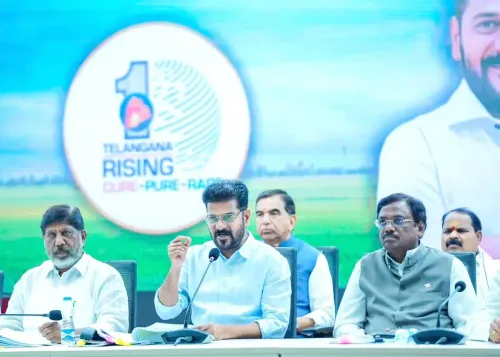
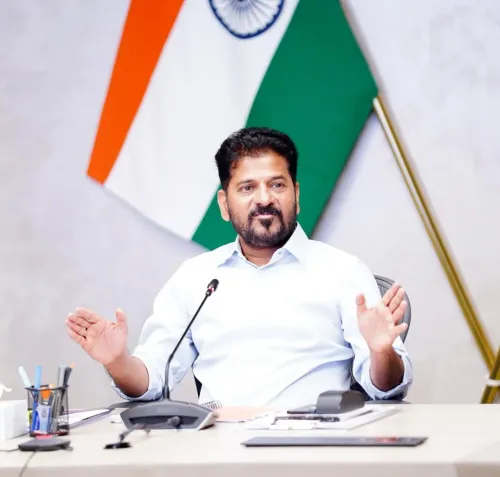
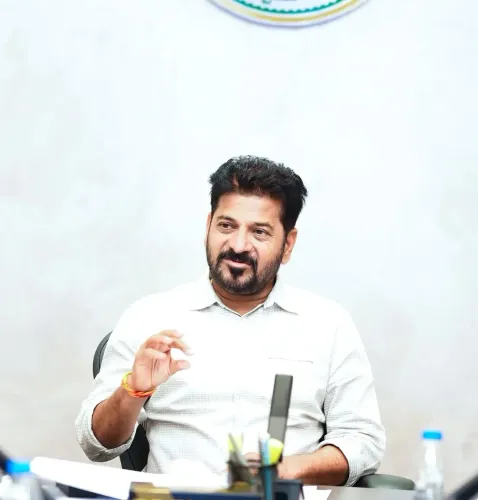
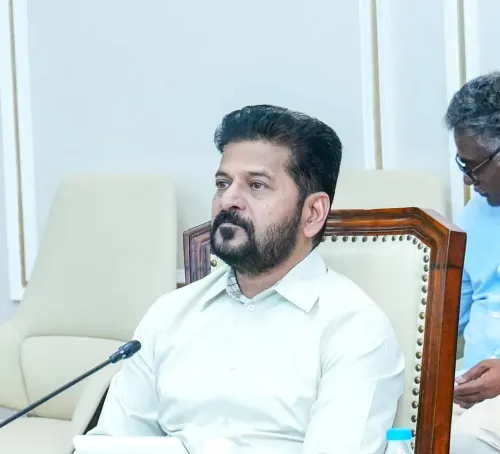
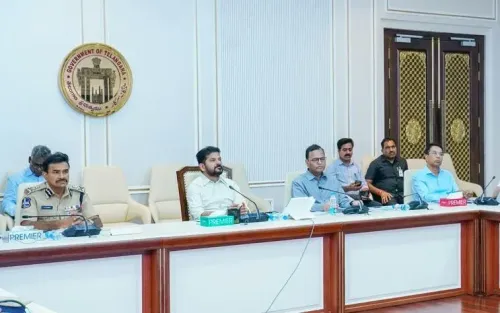
Revanth Reddy chairs El Niño drought meet, calls Nov 1 Delhi rally on SIR
Synopsis
Telangana Chief Minister A. Revanth Reddy chaired an El Niño drought preparedness meeting at Praja Bhavan, directing officials to secure drinking water, fodder and employment guarantee work, while calling for mass Telangana participation at a November 1 Delhi protest against the Special Intensive Revision of electoral rolls.
Key Takeaways
Revanth Reddy chaired an El Niño and SIR review at Praja Bhavan on October 23, 2026 .
Officials directed to prioritise drinking water supply, electricity conservation, cattle fodder and farmers' welfare amid drought conditions.
The Employment Guarantee Scheme to be activated so every eligible rural household receives work during the El Niño-linked drought.
CM declared voting rights as the 'foundation of democracy' and urged protection of eligible poor voters against SIR deletions.
Telangana residents called to attend a November 1 protest rally at Ramlila Maidan, Delhi against SIR.
Telangana has previously activated MGNREGA-linked drought relief in deficient monsoon years including 2015-16 and 2019 .
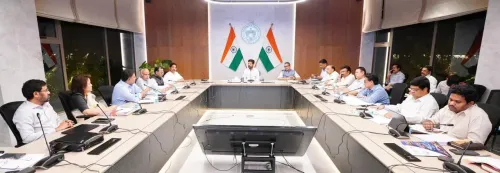
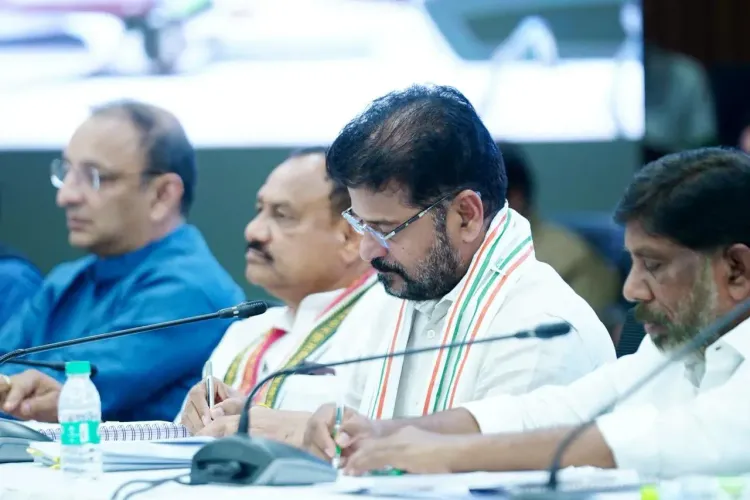
With drought clouds gathering over Telangana and a political storm brewing over electoral rolls, Telangana Chief Minister A. Revanth Reddy chaired a high-level review meeting at Praja Bhavan on Friday, October 23, directing officials and elected representatives to mount a coordinated response to El Niño-driven drought conditions — and simultaneously issued a call for a mass rally in Delhi to protest the Special Intensive Revision (SIR) of voter rolls.
What the Praja Bhavan meeting directed
Revanth Reddy told the gathering that people's representatives and bureaucrats must work together — 'samashtigā panicheyāli' (collectively) — to effectively counter the drought conditions associated with El Niño. His directives were concrete and urgent: drinking water supply must be secured, electricity consumption must be conserved, cattle fodder must be arranged, and farmers' welfare must receive focused attention.
Critically, he instructed that the Employment Guarantee Scheme — Telangana's implementation of the rural wage employment framework modelled on MGNREGA — be activated to ensure every eligible household receives work. 'Solve problems as they arise, and keep communicating the facts to the people,' he directed officials, signalling a transparency-first approach to crisis management.
El Niño's recurring threat to Telangana's rain-fed farms
This is not the first time Telangana has had to brace for an El Niño-linked rainfall deficit. The state activated similar drought relief works during deficient monsoon years in 2015-16 and 2019, drawing on MGNREGA to cushion rural households when farm incomes dried up. With a significant portion of Telangana's agriculture rain-fed, any sustained deficit bites hard — at crop yields, at groundwater, and at the daily income of millions of farming families. The India Meteorological Department had flagged El Niño risks as early as 2023, underlining the recurrence of this vulnerability.
SIR and the voting rights flashpoint
Woven into the same statement was a sharp political charge. Revanth Reddy declared that the right to vote is the foundation of democracy and that there is an urgent need to protect the voting rights of eligible poor citizens — a pointed reference to the Election Commission of India's Special Intensive Revision exercise, which Congress and allied parties have criticised as risking the deletion of genuine voters from electoral rolls.
He called on Telangana residents to turn out 'in large numbers' for a protest event at Ramlila Maidan, Delhi, on November 1, 2026, organised in opposition to SIR. Ramlila Maidan has long served as the symbolic arena for nationally-consequential political gatherings, and the Chief Minister's personal call to mobilise from Telangana raises the stakes for the event's attendance and visibility.
Two fronts, one message
The juxtaposition of drought relief and electoral protest in a single address is not accidental. Across Indian states, the combination of climate stress and voter-roll revisions creates a politically charged environment — welfare delivery becomes a demonstration of governance credibility, while voter access becomes a fundamental rights argument. For the Congress-led Telangana government, both fronts serve the same strategic narrative: the state administration fights for its citizens, whether the threat comes from the sky or from a bureaucratic revision exercise.
District administrations across Telangana now face the twin task of rolling out employment guarantee works and water supply contingencies — while the scale of Telangana's participation at Ramlila Maidan on November 1 will be closely watched as a gauge of the CM's political mobilisation strength.
Frequently Asked Questions
What is the SIR that Revanth Reddy is protesting against?
SIR stands for Special Intensive Revision — an exercise by the Election Commission of India to update and revise electoral rolls. Opposition parties, including the Congress, have raised concerns that the process risks deleting genuine voters, particularly from poor and marginalised communities, from the voter lists.
What decisions were taken at the Praja Bhavan El Niño meeting?
Chief Minister Revanth Reddy directed officials and elected representatives to collectively tackle El Niño-linked drought by securing drinking water supply, conserving electricity, arranging cattle fodder, focusing on farmer welfare, and activating the Employment Guarantee Scheme to provide work to every eligible rural household.
When and where is the SIR protest rally Revanth Reddy mentioned?
The protest rally against SIR is scheduled for November 1, 2026 at Ramlila Maidan in Delhi . Chief Minister Revanth Reddy has called for large-scale participation from Telangana at the event.
How does El Niño affect Telangana farmers?
El Niño typically weakens the Indian monsoon, causing rainfall deficits that hit rain-fed agriculture hard. Telangana has faced El Niño-linked drought stress before, notably in 2015-16 and 2019, when the state activated MGNREGA-linked works to provide rural households with alternative income.
What is the Employment Guarantee Scheme mentioned by Revanth Reddy?
The Employment Guarantee Scheme is Telangana's implementation of the rural wage employment programme modelled on the central government's MGNREGA. It provides guaranteed paid work to rural households, and is typically scaled up during drought years to compensate for lost farm income.