Agencies Investigate Resurgence of Nepal-Sri Lanka Drug Route

Synopsis
New Delhi's law enforcement agencies are scrutinizing the revived drug smuggling route from Nepal to Sri Lanka via India, which is now heavily used for transporting Hashish and Charas. This resurgence has alarmed officials amid rising drug abuse cases in Sri Lanka.
Key Takeaways
The Nepal to Sri Lanka drug route is experiencing renewed activity.
Officials have reported a rise in drug abuse cases in Sri Lanka.
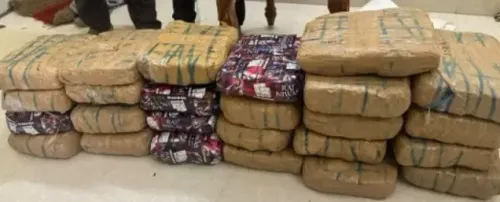
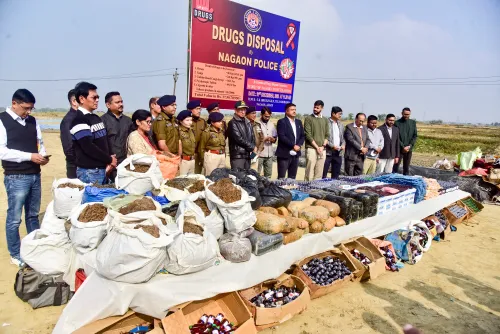
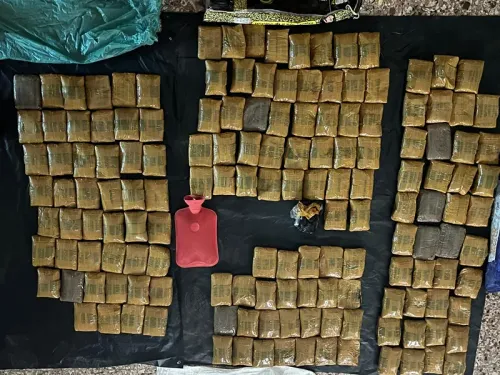
Significant amounts of Hashish oil and Charas have been seized.
The Indian Coast Guard is actively involved in interception efforts.
Collaboration among regional agencies is crucial to tackle this issue.
New Delhi, March 7 (NationPress) The route from Nepal to Sri Lanka via India for drug smuggling has once again drawn the attention of law enforcement agencies. This route, which had previously seen minimal activity, is now being utilized for transporting Hashish oil and Charas.
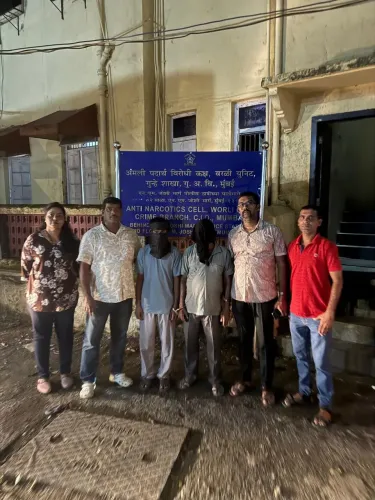
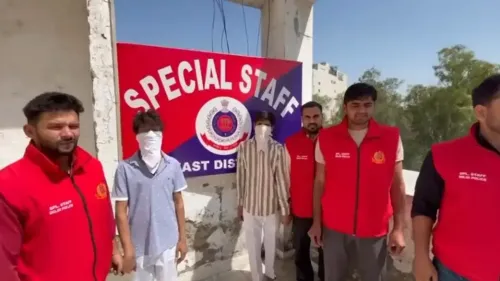
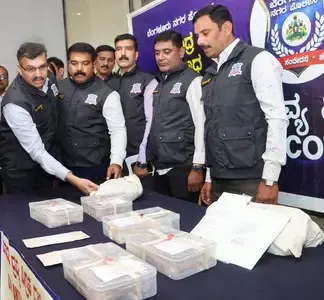
A coordinated operation, spearheaded by the Narcotics Control Bureau (NCB) units based in Chennai and Hyderabad, resulted in the confiscation of narcotics valued at around Rs 10 crore.
This initiative is part of the Indian government’s campaign, ‘Nasha Mukth Bharat’.
According to officials, there is a significant appetite for Hashish and Charas in Sri Lanka, where the nation has reported a worrying increase in drug-related cases.
The demand for these narcotics has prompted cartel operations to ramp up supply into the nation.
Strategically located in the Indian Ocean, Sri Lanka serves as a key transit point for drug smuggling. Additionally, narcotics not only arrive from Nepal but also from Afghanistan's Golden Crescent, passing through Pakistan and Iran.
Officials indicate that South India has become a pivotal transit hub for these drugs, with key landing points being Thoothukudi and Koddikarai.
A well-established network exists where smugglers meet their Sri Lankan associates to transfer shipments.
These landing spots are not new; historically, they were used for transporting opium, with Sri Lankan operatives exchanging goods for beedis.
The NCB has pinpointed Trincomalee, Halle, and Colombo as both entry and exit points.
Officials report that the value of this drug trade has skyrocketed. In the past, two cases might be resolved over a period of two to three months, while in 2024 alone, Sri Lanka recorded an astounding 35,000 drug busts.
Moreover, the smuggling into Sri Lanka extends beyond just marijuana and Hashish; since 2019, there has been a massive increase in demand for methamphetamine.
After the drugs reach Sri Lanka, smugglers often collaborate with local criminals, fishermen, and organized groups to package and distribute the narcotics throughout the country. Intelligence Bureau officials have noted a marked increase in the use of the Nepal to Sri Lanka route in recent months.
This uptick is attributed to heightened security at the borders with Pakistan in Jammu and Kashmir and Punjab.
While the route is not new, the concern lies in its increased usage today.
Indian agencies are working in close partnership with their counterparts in Nepal and Sri Lanka to tackle the growing issue of narcotics trafficking.
The Indian Coast Guard also plays a crucial role in intercepting fishing trawlers that depart from South India once the drugs arrive.
It has been reported that a Sri Lankan national is orchestrating this racket from Nepal, coordinating with operatives in Pakistan, Afghanistan, and Nepal, and facilitating the transportation of drugs into South India.
He has successfully established a network in Tamil Nadu to ensure a seamless transfer of drugs into Sri Lankan waters.
This ongoing operation seeks to uncover every possible loophole that smugglers exploit to further their operations, officials stated.
Point of View
The resurgence of the Nepal to Sri Lanka drug route raises significant concerns about drug trafficking and public health. The increase in drug busts indicates a growing crisis that demands immediate action from authorities. A coordinated response among regional agencies is essential to combat this escalating challenge.
NationPress
26 Sept 2026
Frequently Asked Questions
What is the Nepal to Sri Lanka drug route?
The Nepal to Sri Lanka drug route is a smuggling pathway for transporting illegal narcotics, primarily Hashish oil and Charas, through India.
Why has this route become active again?
The route has seen a resurgence due to high demand for drugs in Sri Lanka and increased operations by narcotic cartels.
What drugs are being smuggled through this route?
The primary drugs being smuggled are Hashish oil, Charas, and methamphetamine, among others.
How are Indian agencies responding to this issue?
Indian agencies are coordinating with counterparts in Nepal and Sri Lanka to combat drug trafficking through increased surveillance and operations.
What impact does this smuggling have on Sri Lanka?
The smuggling has led to a significant rise in drug abuse cases in Sri Lanka, posing a public health crisis.