Rijiju flags Akali Dal backing for Women's Quota and Delimitation

Synopsis
Union Parliamentary Affairs Minister Kiren Rijiju has spotlighted Shiromani Akali Dal's backing for the Women's Reservation Bill and a delimitation formula proposing a uniform 50% seat increase across all states — a move aimed at building cross-party consensus before the next census triggers a redrawing of India's electoral map.
Key Takeaways
Kiren Rijiju publicly flagged Shiromani Akali Dal 's support for implementing the Women's Reservation Bill and equitable delimitation on August 8, 2026 .
The 128th Constitutional Amendment (September 2023) reserves one-third of Lok Sabha and assembly seats for women, but takes effect only after a post-census delimitation.
The government's proposal involves a uniform 50% increase in seats across all states, designed to avoid penalising southern states that curbed population growth.
The current seat freeze traces to the 84th Constitutional Amendment of 2002 , which locked constituencies at 1971 census levels until after 2026.
Akali Dal's endorsement broadens the political coalition behind the delimitation-linked reservation framework beyond the BJP's core base.
Implementation still requires the next census, a Delimitation Commission, and fresh parliamentary legislation.
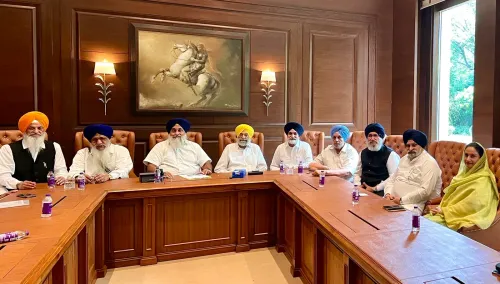
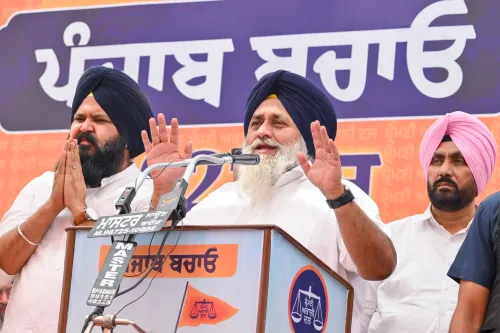
A regional party's endorsement is quietly reshaping the political arithmetic around two of India's most consequential constitutional promises. Union Parliamentary Affairs Minister Kiren Rijiju on Saturday, August 8, 2026, highlighted that Shiromani Akali Dal has extended its support for the implementation of the Women's Reservation Bill and for a delimitation exercise that guarantees equal representation for all states — signalling that the ruling coalition is actively building cross-party consensus ahead of what could be a landmark redrawing of India's electoral map.
Rijiju also flagged the government's proposal of a 'uniform 50% increase in seats across all states' as a step toward equitable representation — a formula designed to pre-empt the fiercest objection to any fresh delimitation: that a purely population-based exercise would hand disproportionate parliamentary weight to high-growth northern states at the expense of the south.
Why Akali Dal's signal matters now
The Shiromani Akali Dal, Punjab's dominant Sikh-interest party and a long-standing NDA ally, carries symbolic weight beyond its seat count. Its endorsement signals that the delimitation-linked reservation framework is drawing support not just from the BJP's core base but from regional formations with distinct federal concerns. For a bill whose implementation has been deliberately tied to a post-census delimitation, every ally that publicly backs the package makes the eventual legislative path smoother.
The Women's Reservation Bill — passed as the 128th Constitutional Amendment in September 2023 — reserves one-third of seats in the Lok Sabha and state assemblies for women. The catch: it does not take effect until after a delimitation exercise following the first census conducted after the Act came into force. With the census itself still pending, the timeline remains open — making the political groundwork Rijiju is laying now all the more significant.
The uniform seat-increase formula and the north-south fault line
The proposal for a uniform percentage increase in seats — rather than a strict population-proportional reallocation — is a direct response to a fault line that has threatened to fracture the delimitation debate before it begins. Southern states such as Tamil Nadu, Kerala, Karnataka, Andhra Pradesh and Telangana have long warned that rewarding population growth could penalise states that successfully implemented family-planning policies over decades. A uniform uplift across all states sidesteps that zero-sum dynamic, giving every state more seats without taking any away.
The seat freeze itself dates to the 84th Constitutional Amendment of 2002, which locked Lok Sabha and assembly constituencies at their 1971 census levels until after the first census post-2026. That window is now open — and the political decisions made in the coming months will determine whether women's reservation and a redrawn electoral map arrive together or stall again.
Consensus-building before the census clock runs out
Rijiju's post is less a policy announcement than a political temperature check — and the reading is warm. By publicly naming Akali Dal's support, the minister frames the Women's Reservation Bill's implementation not as a ruling-party project but as an emerging national consensus. The harder tests lie ahead: formal notification of the next census, constitution of a Delimitation Commission, and the parliamentary legislation that will finally translate the 2023 Act into reserved seats on the ballot.
The clock is ticking, the allies are lining up — and the question is no longer whether delimitation happens, but who gets to shape what it looks like.
Point of View
Making it harder for opponents to oppose without appearing anti-women or anti-federal. The uniform seat-increase formula is the real political masterstroke: it neutralises the south-versus-north fault line that has historically paralysed delimitation debates, offering every state a net gain rather than a redistribution of power. If the census is notified soon, the government will have both the legal window and a pre-assembled political coalition to push through the most significant electoral restructuring since 1977. The risk is that the formula's specifics — including the unverified '50% uniform increase' figure — will face intense scrutiny from state governments calculating their own gains and losses.
NationPress
23 Sept 2026
Frequently Asked Questions
When will the Women's Reservation Bill come into effect in India?
The Women's Reservation Bill (128th Constitutional Amendment), passed in September 2023, will come into effect only after a delimitation exercise that follows the first census conducted after the Act — meaning the next census and a subsequent Delimitation Commission must be completed first.
What is the uniform 50% seat increase proposal for delimitation?
The government has proposed increasing the number of Lok Sabha and assembly seats by a uniform 50% across all states, rather than redistributing seats based purely on population. This is intended to ensure that no state loses seats relative to others, addressing concerns from southern states.
Why is Shiromani Akali Dal's support for delimitation significant?
Shiromani Akali Dal is a Punjab-based regional party representing Sikh interests and a long-standing NDA ally. Its backing broadens the political consensus behind the delimitation-linked Women's Reservation Bill beyond the BJP, signalling cross-party support for the framework.
What is the current freeze on Lok Sabha seats and when does it end?
The 84th Constitutional Amendment of 2002 froze the number of Lok Sabha and assembly seats at 1971 census levels until after the first census conducted post-2026. That window is now open, making a fresh delimitation legally possible.
Why do southern states oppose population-based delimitation?
Southern states like Tamil Nadu, Kerala, and Karnataka argue that a purely population-based seat reallocation would reward northern states for higher population growth while penalising states that successfully implemented family-planning measures over decades — effectively reducing their proportional representation in Parliament.