Rijiju Hails India's Rise as Global Electronics Hub
Synopsis
Union Parliamentary Affairs Minister Kiren Rijiju on 3 July 2026 invoked the Make in India and AatmaNirbhar Bharat frameworks to highlight India's shift from technology importer to global electronics manufacturing and export hub, citing record growth in smartphone exports.
Key Takeaways
Kiren Rijiju , Union Parliamentary Affairs Minister, posted on 3 July 2026 celebrating India's manufacturing transformation in electronics and smartphones.
India's Make in India initiative, launched in September 2014 , laid the foundation for attracting global electronics manufacturers.
Production Linked Incentive (PLI) schemes for mobile phones and electronics, notified from 2020 , have been central to scaling domestic production and exports.
The AatmaNirbhar Bharat programme combines import substitution with export promotion, supporting India's bid to become a trusted global supply-chain partner.
Global firms diversifying supply chains away from China have accelerated India's emergence as an electronics assembly and export destination.
Future policy focus is expected on Union Budget PLI allocations and new incentives for deeper component manufacturing beyond assembly.
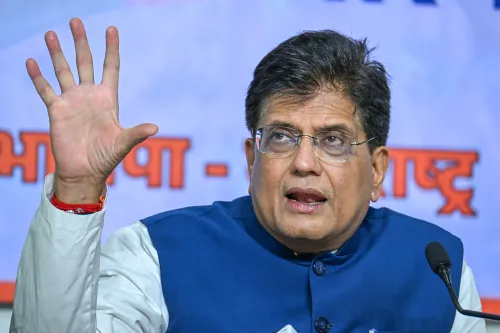
Union Parliamentary Affairs Minister Kiren Rijiju on Friday, 3 July 2026, highlighted India's transformation from a technology importer to a global manufacturing exporter, pointing to growth in smartphone and electronics exports as evidence of the country's deepening integration into global supply chains.
Context
In his post on X, Rijiju wrote: 'From importing technology to manufacturing for the world, India's journey has been remarkable. With record growth in smartphone and electronics exports, India is strengthening its position in global supply chains and steadily emerging as a trusted global manufacturing hub.' The remarks were tagged under #MakeInIndia and #AatmaNirbharBharat, two of the government's flagship economic frameworks.
The statement reflects a broader government narrative that India has moved decisively away from its historical dependence on imported finished electronics toward becoming an assembly and export base for global technology firms.
Policy Backdrop
The Make in India initiative, launched in September 2014, was designed to raise manufacturing's share of GDP and attract foreign direct investment into sectors including electronics. It set the institutional groundwork for what would later become a more targeted incentive architecture.
From 2020 onward, the government introduced Production Linked Incentive (PLI) schemes specifically for mobile phones and electronic components, offering manufacturers cash incentives tied to incremental sales. These schemes were a central pillar of the AatmaNirbhar Bharat — or 'self-reliant India' — programme announced that year, which combined import substitution with export promotion across key sectors.
Global supply-chain diversification, accelerated by firms seeking alternatives to China-centric production, has aligned with India's policy push and helped attract large-scale assembly operations to the country.
Stakeholders and Impact
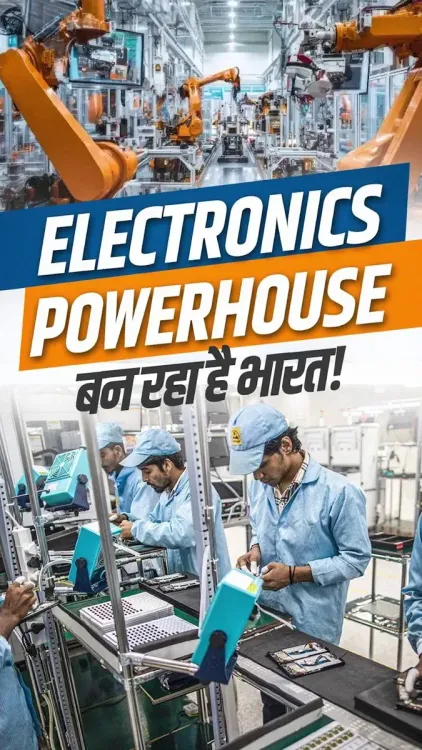
Electronics manufacturers and smartphone exporters stand at the centre of this policy shift. Large global technology companies have expanded or established assembly lines in India, generating employment and boosting merchandise export figures in the electronics category.
For domestic component makers, the PLI framework has created incentives to scale up, though the broader ecosystem for deep component manufacturing — as opposed to final assembly — remains a work in progress. The government's stated ambition is to move up the value chain over time.
Minority communities and workers in manufacturing corridors across states such as Tamil Nadu, Uttar Pradesh, and Karnataka are among those whose livelihoods are increasingly tied to this expanding sector.
What's Next
Attention in policy circles is turning to the next Union Budget cycle and whether allocations for PLI electronics will be expanded, and whether new notifications targeting component manufacturing — rather than assembly alone — will follow. Rijiju's post signals that the government intends to keep the manufacturing narrative prominent in its public communication ahead of that fiscal exercise.
As India consolidates its role in global supply chains, sustaining the momentum will require continued investment in infrastructure, skilling, and regulatory ease — areas that parliamentary deliberations are expected to address in the coming sessions.
Point of View
A sector where India has made measurable, if still partial, gains. Coming from the Parliamentary Affairs Minister rather than the Commerce or Electronics ministry, the post signals that the manufacturing narrative is being carried across the cabinet as a whole-of-government communication priority. The emphasis on 'trusted global manufacturing hub' is also notable: it positions India not merely as a cheap assembly destination but as a reliable alternative in an era of supply-chain geopolitics. The real test of this narrative will come in the next budget cycle, where the depth of PLI support for component manufacturing — as opposed to final assembly — will indicate whether policy ambition is being matched with fiscal commitment.
NationPress
2 Oct 2026
Frequently Asked Questions
What is Make in India and how does it relate to electronics exports?
Make in India is a flagship government initiative launched in September 2014 to position India as a global manufacturing destination. In electronics, it has been reinforced by Production Linked Incentive (PLI) schemes from 2020 onward, which have helped grow smartphone assembly and exports significantly.
What is AatmaNirbhar Bharat and its role in manufacturing?
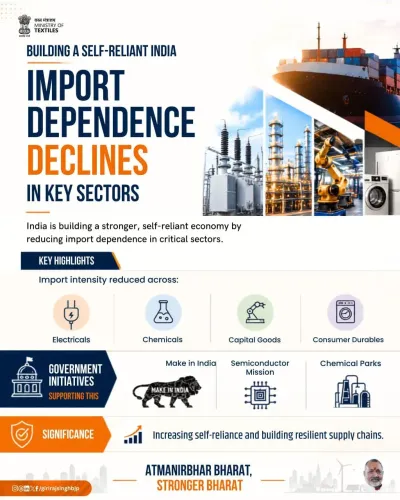
AatmaNirbhar Bharat, meaning 'self-reliant India,' is a programme announced in 2020 that combines production incentives, import substitution, and export promotion. In electronics, it works alongside the PLI scheme to reduce import dependence and build domestic manufacturing capacity.
Why did Kiren Rijiju post about India's electronics manufacturing?
Rijiju highlighted India's growth in smartphone and electronics exports to underscore the impact of the Make in India and AatmaNirbhar Bharat frameworks, reflecting a government-wide effort to communicate India's progress as a global manufacturing hub.
How has India's role in global electronics supply chains changed?
India has shifted from being primarily an importer of finished electronics to an assembly and export base, partly driven by global firms diversifying supply chains beyond China and partly by government incentives under PLI schemes.
What are PLI schemes for electronics in India?
Production Linked Incentive (PLI) schemes for mobile phones and electronic components were notified from 2020 onward. They offer manufacturers cash incentives linked to incremental sales, aiming to scale domestic production and boost exports in the electronics sector.