Rijiju on Pakistan: 'Blood and Water Cannot Flow Together'

Synopsis
Union Minister Kiren Rijiju has amplified PM Modi's assertive security doctrine against Pakistan, declaring that India now retaliates on enemy soil and that water-sharing cooperation cannot coexist with cross-border terrorism — echoing the government's post-Uri and post-Pulwama posture.
Key Takeaways
Kiren Rijiju , Union Parliamentary Affairs Minister and senior BJP leader, posted a strongly-worded statement on 23 May 2026 contrasting the current government's Pakistan policy with that of earlier administrations.
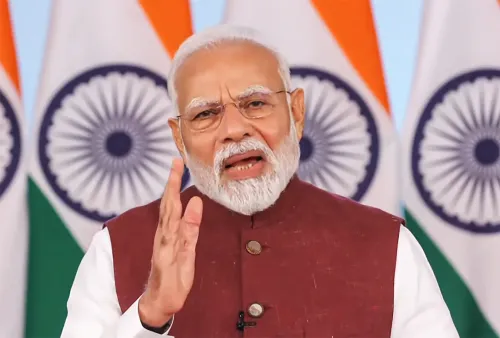
He quoted PM Narendra Modi 's doctrine: 'Blood and water cannot flow together,' first articulated after the Uri attack of September 2016 .
The post asserts that India now conducts cross-border retaliatory operations ('enters the enemy's home') rather than absorbing attacks passively.
The statement invokes the Indus Waters Treaty (1960) as a policy lever, linking water-sharing with Pakistan's conduct on terrorism.
India previously conducted airstrikes at Balakot in February 2019 — the first cross-border air strike since 1971 — establishing the precedent Rijiju references.
Analysts will watch for any formal government move to review or suspend the Indus Waters Treaty and for parliamentary debate on the issue.
Union Parliamentary Affairs Minister Kiren Rijiju on Saturday, 23 May 2026, invoked Prime Minister Narendra Modi's doctrine of assertive retaliation against Pakistan, declaring that the era of strategic restraint is over and that India now strikes back on enemy soil.
Context
Posting in Hindi, Rijiju wrote: 'ये नया भारत है। इसे जवाब देना आता है।' ('This is the new India. It knows how to respond.') He contrasted the current government's posture with that of earlier administrations, arguing that in the past, Pakistan used water granted by India under treaty arrangements to fuel violence on Indian soil. 'Now India responds by entering the enemy's home,' he wrote, quoting PM Modi's now-familiar formulation: 'Blood and water cannot flow together.'
The post, which included a video, is addressed to a domestic audience and frames military and diplomatic assertiveness as defining features of Modi's governance since 2014.
Policy Backdrop
The phrase 'blood and water cannot flow together' was first publicly articulated by PM Modi after the Uri attack of September 2016, when Indian Army soldiers were killed in a militant strike on an army brigade headquarters in Jammu and Kashmir. Following that attack, India suspended routine meetings of the Indus Waters Treaty Permanent Commission, signalling that water-sharing cooperation would henceforth be linked to Pakistan's conduct on terrorism.
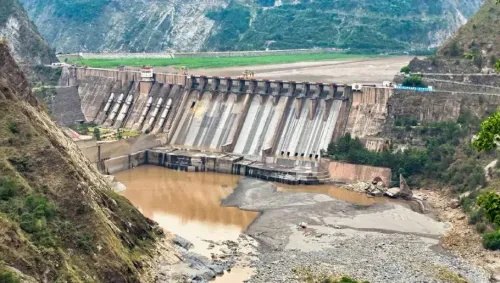
The Indus Waters Treaty, brokered by the World Bank in 1960, divides the six rivers of the Indus basin between the two countries. India controls the eastern rivers; Pakistan relies heavily on the western rivers. Any formal modification or suspension of the treaty would have significant consequences for Pakistan's agricultural economy.
In February 2019, following the Pulwama suicide bombing that killed over 40 Central Reserve Police Force personnel, India conducted airstrikes at Balakot inside Pakistani territory — the first such cross-border air strike since 1971. That action cemented the government's narrative of proactive deterrence, which Rijiju's post now reaffirms.
Stakeholders and Impact
The statement speaks most directly to residents of Jammu and Kashmir and to the families of Indian armed forces personnel who have borne the brunt of cross-border militancy. For them, the government's messaging is one of reassurance: that infiltration and attacks will be met with calibrated force rather than diplomatic restraint alone.
On the diplomatic front, the post reinforces India's position that security normalisation with Pakistan is a prerequisite for any resumption of broader bilateral engagement, including on water issues. It also signals to international stakeholders — including the World Bank, which is a trustee of the Indus Waters Treaty — that New Delhi views the treaty as a lever of statecraft, not merely a technical water-management accord.
What's Next
Observers will watch for any formal government notification regarding a review or modification of the Indus Waters Treaty, which would require a structured legal process under the treaty's dispute-resolution mechanism. The next session of Parliament is also expected to see debate on cross-border terrorism and water diplomacy, particularly if the security situation along the western border remains elevated. Rijiju's post, coming from a senior Cabinet minister, suggests the government intends to keep this assertive framing at the centre of its political and security communication.
Point of View
Not a policy announcement — it consolidates the BJP's 'New India' security brand ahead of any potential parliamentary or electoral cycle. By yoking water diplomacy to military retaliation in a single rhetorical frame, the government continues its post-2016 strategy of treating the Indus Waters Treaty as a coercive instrument rather than a settled bilateral compact. The reference to 'earlier governments' is a pointed dig at the Congress-era doctrine of separating water and security issues, and it sharpens the BJP's contrast narrative. The absence of a specific triggering incident makes this a proactive posture statement — one that keeps public attention on India's assertive security identity.
NationPress
20 Sept 2026
Frequently Asked Questions
What did Kiren Rijiju say about Pakistan and water?
Rijiju stated that unlike earlier governments, the current administration does not allow Pakistan to use Indian water while sponsoring violence on Indian soil, invoking PM Modi's phrase: 'Blood and water cannot flow together.'
What is the Indus Waters Treaty and why is it in the news?
The Indus Waters Treaty is a 1960 World Bank-brokered agreement dividing the Indus river system between India and Pakistan. It has been in focus since 2016 because India has linked water-sharing cooperation to Pakistan's actions on cross-border terrorism.
What does 'blood and water cannot flow together' mean?
The phrase, coined by PM Narendra Modi after the Uri attack in September 2016, means India will not continue normal bilateral arrangements — including water-sharing — with Pakistan as long as Pakistan supports terrorism against India.
Has India ever struck inside Pakistan in retaliation for terror attacks?
Yes. In February 2019, following the Pulwama bombing, India conducted airstrikes at Balakot inside Pakistani territory — the first cross-border air strike since 1971.
Can India suspend the Indus Waters Treaty?
The treaty has formal dispute-resolution and modification procedures overseen by the World Bank. India has previously suspended routine commission meetings but any full suspension or modification would require a structured legal process under the treaty.