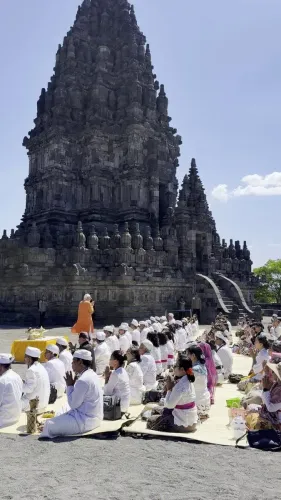
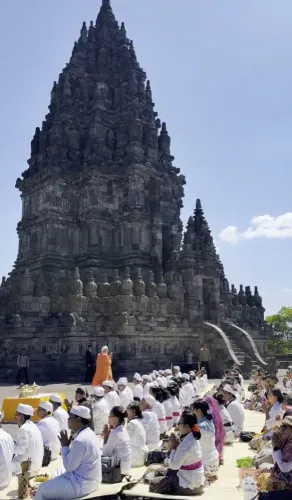
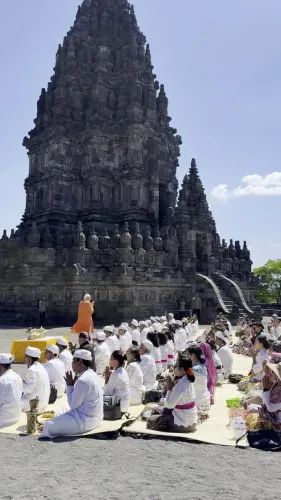
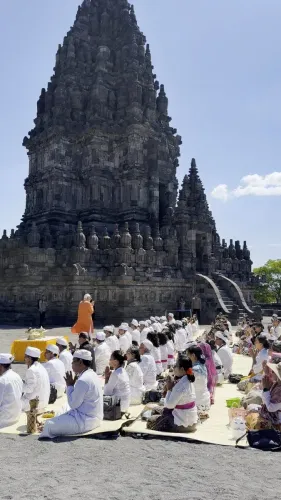
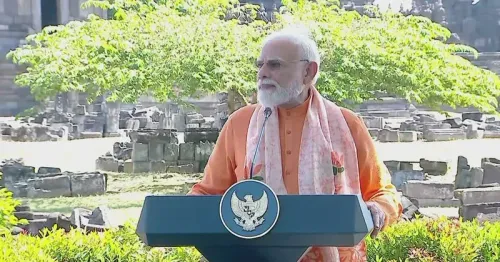
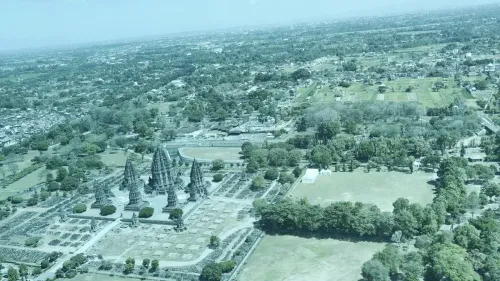
Rijiju chants Om Namah Shivaya at Prambanan temple
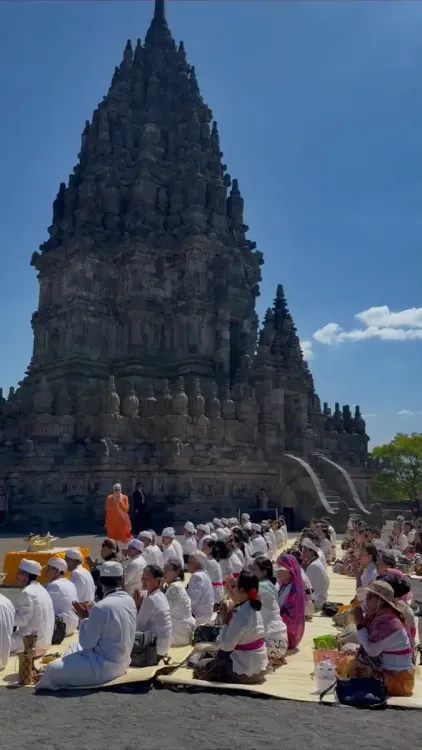
Synopsis
Union Parliamentary Affairs Minister Kiren Rijiju visited the Prambanan temple complex in Central Java, Indonesia, sharing a video of the sacred chant Om Namah Shivaya echoing through the 9th-century UNESCO World Heritage Hindu shrine, highlighting India's deep civilizational ties with Indonesia.
Key Takeaways
Union Parliamentary Affairs Minister Kiren Rijiju visited the Prambanan temple complex in Central Java, Indonesia on 8 July 2026 .
He shared a video of the chant Om Namah Shivaya resonating through the temple, posting it on X with a Hindi caption.
Prambanan is a 9th-century UNESCO World Heritage Site and the largest Hindu temple compound in Indonesia, dedicated primarily to Lord Shiva .
The visit reflects India's use of religious and heritage sites in Southeast Asia as instruments of cultural diplomacy and soft power.
India and Indonesia share ancient civilizational links through kingdoms such as Srivijaya and Majapahit , which underpin modern bilateral ties.
The visit aligns with India's broader Act East Policy and ongoing efforts to deepen people-to-people contacts with ASEAN nations.
Union Parliamentary Affairs Minister Kiren Rijiju visited the Prambanan temple complex in Central Java, Indonesia, offering prayers and sharing a video of the sacred chant Om Namah Shivaya resonating through the ancient Hindu shrine. The minister posted on Wednesday, 8 July 2026, capturing the spiritual atmosphere at one of Southeast Asia's most revered Hindu sites.
Context
The post, written in Hindi, reads: 'Prambanan mandir parisar mein goonja — Om Namah Shivaya' ('The chant of Om Namah Shivaya resonated through the Prambanan temple complex'). The accompanying video documents the devotional moment at the 9th-century UNESCO World Heritage Site, which is dedicated primarily to Lord Shiva and stands as a testament to the deep Hindu civilizational influence that once spread across the Indonesian archipelago.
Prambanan is the largest Hindu temple compound in Indonesia and among the finest examples of classical Hindu architecture outside the Indian subcontinent. Its towering spires and intricate carvings reflect the artistic and religious traditions carried eastward by ancient Indian maritime trade and cultural exchange.
Policy Backdrop
India and Indonesia share millennia-old civilizational ties rooted in the spread of Hinduism and Buddhism through ancient kingdoms such as Srivijaya and Majapahit. These historical links form a living foundation for contemporary cultural diplomacy between the two nations, which are also significant partners within the ASEAN framework.
Indian ministers and officials have increasingly visited Hindu-Buddhist heritage sites across Southeast Asia as part of a deliberate soft-power strategy, reinforcing India's narrative of shared civilizational heritage with the region. Such visits complement formal bilateral mechanisms by strengthening people-to-people and faith-based connections.
Stakeholders and Impact
Hindu devotees and cultural organisations in both countries have long viewed Prambanan as a symbol of the enduring spiritual bridge between India and Indonesia. A senior Indian minister offering prayers at the site and amplifying the moment publicly carries symbolic weight for communities invested in preserving this shared heritage.
The visit also underscores India's Act East Policy, which prioritises deeper engagement with Southeast Asian nations across cultural, economic, and strategic dimensions. Moments of religious and civilizational affirmation by senior officials add a human dimension to what are otherwise largely diplomatic and trade-focused relationships.
What's Next
Rijiju's visit is likely to be seen as a precursor to, or part of, broader cultural and diplomatic engagements between New Delhi and Jakarta. Observers will watch for any announcements on cultural cooperation agreements or heritage-site preservation partnerships that may follow from such high-profile ministerial visits. The next round of India-Indonesia bilateral talks could reference shared civilizational heritage as a pillar of the relationship.
Point of View
Placing India's cultural narrative at the heart of its Southeast Asia engagement. By amplifying the chant of Om Namah Shivaya from an Indonesian temple, he signals to both domestic and international audiences that India's influence in the region predates and transcends modern geopolitics. This fits a consistent BJP-era pattern of weaving Hindu heritage into foreign policy optics, particularly in ASEAN countries where ancient Indian cultural imprints remain visible. The gesture carries soft-power value that formal bilateral communiques rarely achieve.
NationPress
8 Jul 2026
Frequently Asked Questions
Why did Kiren Rijiju visit Prambanan temple in Indonesia?
Kiren Rijiju visited the Prambanan temple complex in Central Java, Indonesia, as part of cultural and diplomatic engagements highlighting the shared Hindu civilizational heritage between India and Indonesia. He shared a video of the Om Namah Shivaya chant at the site on 8 July 2026.
What is the Prambanan temple complex?
Prambanan is a 9th-century Hindu temple complex in Central Java, Indonesia, dedicated primarily to Lord Shiva. It is a UNESCO World Heritage Site and the largest Hindu temple compound in Indonesia, reflecting the ancient spread of Indian civilization across Southeast Asia.
What is the significance of Om Namah Shivaya at Prambanan?
Om Namah Shivaya is a sacred Hindu mantra devoted to Lord Shiva. Prambanan being a Shiva-dedicated temple makes the chanting of this mantra there especially significant, symbolising the living continuity of Hindu devotional traditions at a site built over 1,100 years ago.
What are India-Indonesia cultural ties?
India and Indonesia share deep civilizational links rooted in the spread of Hinduism and Buddhism through ancient kingdoms such as Srivijaya and Majapahit. These ties form a foundation for modern cultural diplomacy and people-to-people engagement between the two countries.
What is India's Act East Policy and how does it relate to Indonesia?
India's Act East Policy prioritises strategic, economic, and cultural engagement with Southeast Asian and Indo-Pacific nations. Indonesia, as a major ASEAN member, is a key partner under this policy, and ministerial visits to shared heritage sites like Prambanan reinforce the civilizational dimension of the relationship.