Rijiju, Khattar, Lalan Singh carpool to cut fuel use
Synopsis
Union Ministers Kiren Rijiju, Manohar Lal Khattar and Lalan Singh carpooled on 14 June 2026, framing the shared commute as a small but deliberate step toward fuel savings and lower emissions, invoking Swami Vivekananda to situate the act within a philosophy of incremental collective responsibility.
Key Takeaways
Three senior Union Cabinet ministers — Rijiju, Khattar and Lalan Singh — shared a single vehicle instead of travelling in separate official convoys.
Rijiju cited three explicit goals : saving fuel costs, reducing emissions, and easing traffic congestion.
The post opened with a Swami Vivekananda quote on the power of small, cumulative actions.
The gesture aligns with India's net-zero 2070 commitment made at COP26 in Glasgow and domestic sustainable mobility missions.
The carpooling involved ministers from both BJP and JD(U) , giving the act a coalition-wide character.
A video of the commute was shared publicly, framing the act as a demonstration rather than a private arrangement.
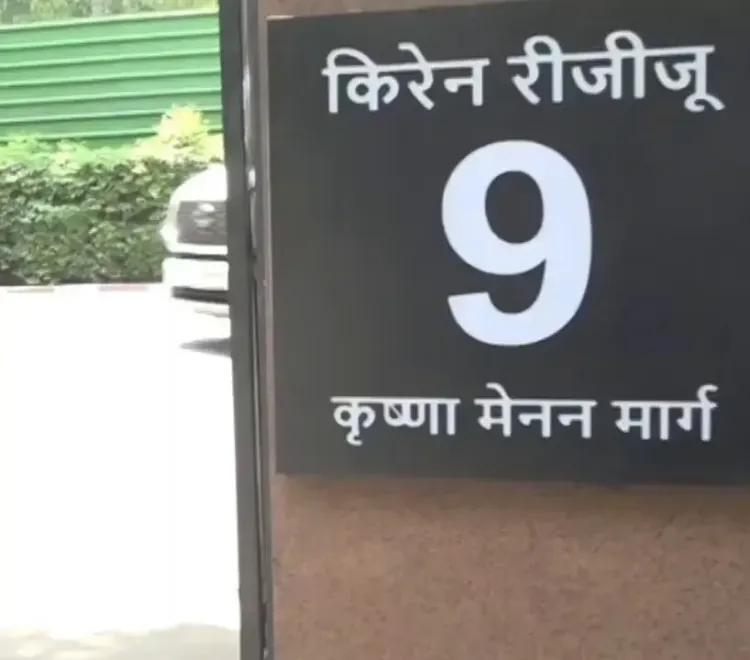
Union Parliamentary Affairs Minister Kiren Rijiju shared on Sunday, 14 June 2026 that he carpooled to a ministerial engagement alongside Union Ministers Manohar Lal Khattar and Rajiv Ranjan Singh (Lalan Singh), citing fuel savings, emission reduction, and easing traffic congestion as the motivations behind the gesture.
Opening his post with a quote from Swami Vivekananda — 'The ocean is made up of tiny drops of water. Even so, life is but an endless series of little details, actions, speeches, and thoughts' — Rijiju framed the act as a small but deliberate step consistent with the philosopher's philosophy of incremental collective responsibility.
Context
The three senior Union Cabinet ministers shared a single vehicle rather than travelling in separate official cars, a visible departure from the norm of individual ministerial convoys. Rijiju posted a video of the commute, lending the gesture an air of transparency and public demonstration rather than a private arrangement.
The invocation of Vivekananda is a recurring rhetorical device in BJP political communication, used to situate policy-adjacent actions within a broader cultural narrative of self-discipline and collective effort. Here it underscores the idea that large environmental goals are built from small, everyday choices.
Policy Backdrop
India committed to a net-zero emissions target by 2070 at the COP26 climate summit in Glasgow in 2021, alongside a pledge to meet 50 per cent of its energy requirements from non-fossil fuel sources by 2030. These commitments sit under India's broader obligations to the Paris Agreement.
On the domestic front, the National Electric Mobility Mission Plan (NEMMP) 2020, launched in 2013, was designed to accelerate the adoption of sustainable and shared transport. Carpooling by senior officials, while symbolic, aligns with the spirit of such frameworks promoting shared and low-emission mobility in urban corridors.
Traffic congestion and vehicular emissions remain acute challenges in New Delhi, where ministerial convoys contribute to both. India's capital has repeatedly featured among the world's most polluted cities, and urban mobility reform is a live policy conversation across central and state governments.
Stakeholders and Impact
The immediate audience is the urban commuter and the broader public following climate discourse. When senior ministers visibly choose to share vehicles, it carries a normative signal — that emission-conscious behaviour is not merely a citizen obligation but one modelled at the highest levels of government.
Manohar Lal Khattar, who previously served as Chief Minister of Haryana and now holds portfolios linked to urban development and power, and Lalan Singh, a JD(U) leader holding the Panchayati Raj portfolio, represent different wings of the National Democratic Alliance (NDA) government. Their joint participation lends the gesture a coalition-wide character rather than a single-party optic.
What's Next
Whether this remains a one-off symbolic act or seeds a more formal carpooling protocol among senior officials will be worth watching. Urban mobility schemes and electric vehicle incentive programmes are under active expansion, and such high-visibility demonstrations can provide political momentum for broader institutional adoption.
With COP31 on the horizon and domestic pressure building on air quality in major cities, expect similar low-key sustainability signals from the executive to continue as India balances its development imperatives with its climate commitments.
Point of View
Rijiju broadens the optic beyond a single-party gesture, lending it a coalition endorsement of climate-conscious conduct. The Vivekananda framing is deliberate — it anchors an environmentally coded act within a cultural register that resonates with the government's core constituency while sidestepping the more technocratic language of climate policy. Whether such gestures translate into institutional mandates — say, a formal carpooling directive for ministerial travel — will determine whether this is a one-day headline or the start of a traceable behavioural shift in government.
NationPress
13 Sept 2026
Frequently Asked Questions
Why did Rijiju, Khattar and Lalan Singh carpool?
The three Union ministers carpooled on 14 June 2026 to save fuel costs, reduce vehicular emissions and ease traffic congestion, as stated by Rijiju in his social media post.
What did Rijiju quote from Swami Vivekananda?
Rijiju quoted Vivekananda as saying 'The ocean is made up of tiny drops of water. Even so, life is but an endless series of little details, actions, speeches, and thoughts,' using it to frame the carpooling act as a small but meaningful collective step.
Is carpooling by Indian ministers a government policy?
There is no formal government mandate requiring ministers to carpool; the 14 June 2026 act was a voluntary, symbolic gesture aligned with India's broader climate commitments, including its net-zero target by 2070.
What is India's climate target and how does this relate?
India committed at COP26 in 2021 to achieve net-zero emissions by 2070 and source 50 per cent of energy from non-fossil fuels by 2030. The ministers' carpooling gesture is a symbolic, visible alignment with those goals at the executive level.
Who is Lalan Singh and which party does he belong to?
Lalan Singh, formally Rajiv Ranjan Singh, is a Union Cabinet minister holding the Panchayati Raj portfolio and is a senior leader of the Janata Dal (United), or JD(U), a key ally of the BJP in the National Democratic Alliance government.