Rijiju pays tribute to Bal Gangadhar Tilak on Jayanti
Synopsis
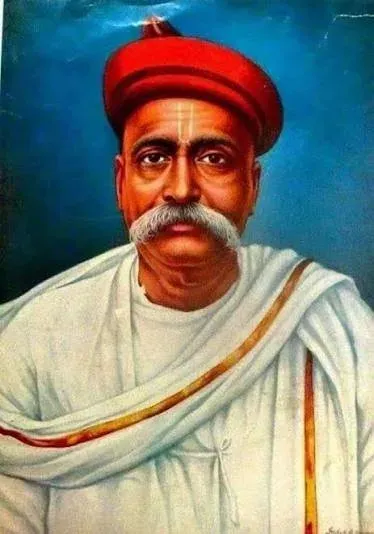
Union Parliamentary Affairs Minister Kiren Rijiju on 23 July 2026 paid tribute to Lokmanya Bal Gangadhar Tilak on his birth anniversary, honouring the nationalist leader's anti-colonial legacy and calling his life of Swaraj and public service a lasting inspiration for all Indians.
Key Takeaways
Kiren Rijiju , Union Parliamentary Affairs Minister and senior BJP leader, posted a tribute to Bal Gangadhar Tilak on 23 July 2026 , Tilak's birth anniversary.
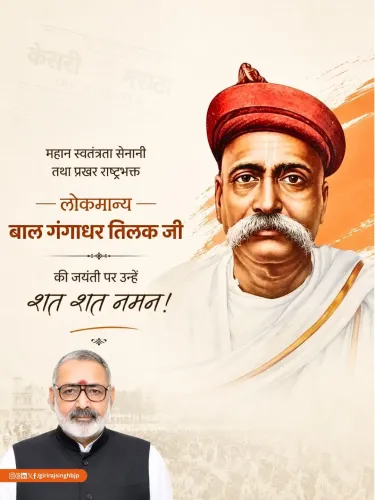
Rijiju described Tilak as a 'great freedom fighter and ardent nationalist' and offered 'countless salutations' ( koti-koti naman ).
Bal Gangadhar Tilak (1856–1920) was a leading architect of India's independence movement, famous for the declaration 'Swaraj is my birthright.' The tribute highlights themes of Rashtrabhakti , Swaraj , and Jan Seva — values Rijiju called a 'continuous inspiration' for national service.
Senior BJP leaders routinely mark Jayantis of pre-independence nationalists as part of a broader effort to keep their legacies central to national discourse.
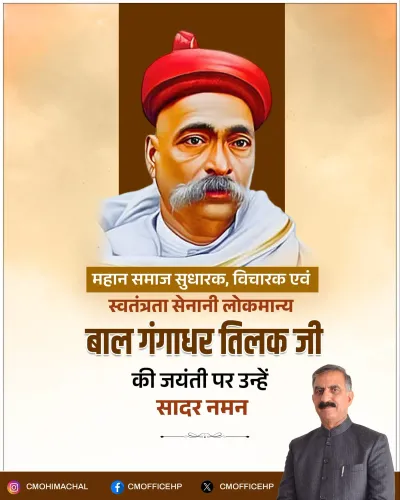
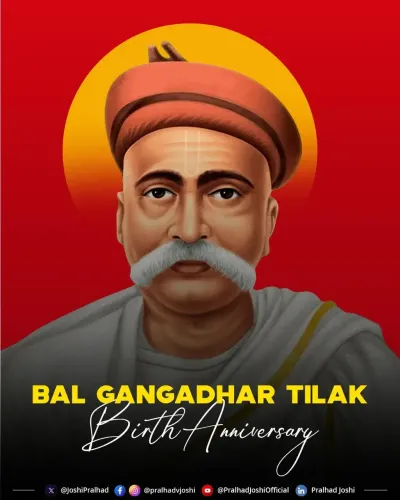
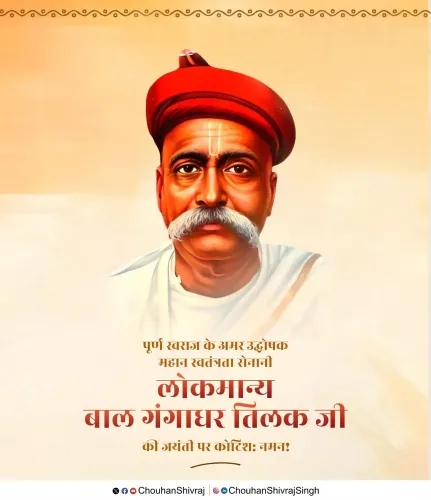
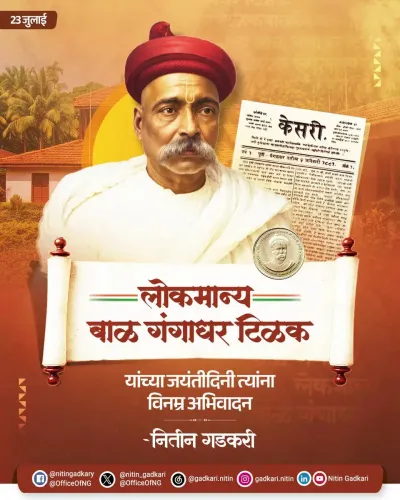
Union Parliamentary Affairs Minister Kiren Rijiju on Thursday, 23 July 2026, paid tribute to freedom fighter Bal Gangadhar Tilak on his birth anniversary, honouring the nationalist leader's legacy of anti-colonial resistance and his lifelong commitment to Swaraj and public service.
Context
Posting on X in Hindi, Rijiju wrote: 'महान स्वतंत्रता सेनानी एवं प्रखर राष्ट्रवादी लोकमान्य बाल गंगाधर तिलक जी की जयंती पर कोटि-कोटि नमन' — translating to 'Heartfelt salutations on the birth anniversary of great freedom fighter and ardent nationalist Lokmanya Bal Gangadhar Tilak.' He added that Tilak's struggle against colonial power and his devoted life in the service of the nation continue to inspire all Indians to place national service and the country's interests above everything else.
Bal Gangadhar Tilak was born on 23 July 1856 in Ratnagiri, Maharashtra. He is widely regarded as one of the foremost architects of India's independence movement and was among the first to demand complete self-rule, famously declaring, 'Swaraj is my birthright and I shall have it.'
Policy Backdrop
India has observed Tilak Jayanti on 23 July every year since independence as part of the national calendar of commemorations for pre-independence nationalist figures. Tilak's contributions spanned journalism — through his newspapers Kesari and Maratha — social mobilisation, and ideological leadership of the extremist faction within the Indian National Congress that pushed for outright independence rather than gradual reform.
Senior leaders of the Bharatiya Janata Party have consistently marked the Jayantis of early 20th-century nationalists, foregrounding themes of anti-colonial resistance, self-rule, and cultural pride. These public tributes form part of a broader political effort to integrate the legacies of such icons into contemporary national discourse.
Stakeholders and Impact
Rijiju's message is directed at the Indian public at large, invoking Tilak's values of Rashtrabhakti (patriotism), Swaraj (self-rule), and Jan Seva (public service) as enduring guiding principles. The tribute underscores the continued relevance accorded to pre-independence nationalist figures in shaping the political and cultural identity of modern India.
Tilak's legacy resonates particularly in Maharashtra, where he is revered as Lokmanya — meaning 'accepted by the people as their leader' — and where his popularisation of the Ganesh Chaturthi festival as a platform for mass political mobilisation remains a defining chapter in Indian social history.
What's Next
Similar tributes from senior political figures across party lines are expected throughout the year on the anniversaries of other independence-era leaders. Rijiju's message signals that the themes of national service and anti-colonial sacrifice will continue to feature prominently in official political communication, and may be echoed in parliamentary discourse around historical education and heritage initiatives in upcoming sessions.
Point of View
Particularly those associated with assertive, self-rule-oriented politics. By foregrounding Tilak's anti-colonial struggle alongside themes of Swaraj and Jan Seva, the message subtly aligns contemporary governance priorities with the ideological lineage of early 20th-century nationalism. As a senior minister from Arunachal Pradesh — itself a state with a strong sense of national identity at India's northeastern frontier — Rijiju's invocation of Tilak carries an implicit message about the universality of nationalist sentiment across India's diverse regions. Such tributes, while ceremonial in form, serve as consistent ideological signalling ahead of parliamentary sessions and public events where historical memory and national heritage often feature in policy framing.
NationPress
23 Jul 2026
Frequently Asked Questions
When is Bal Gangadhar Tilak Jayanti celebrated?
Bal Gangadhar Tilak Jayanti is celebrated on 23 July every year, marking the birth anniversary of the freedom fighter who was born on 23 July 1856 in Ratnagiri, Maharashtra.
What did Kiren Rijiju say about Bal Gangadhar Tilak?
Kiren Rijiju paid tribute to Tilak as a 'great freedom fighter and ardent nationalist,' saying Tilak's struggle against colonial power and his dedication to Swaraj and public service continue to inspire Indians to prioritise national service above all else.
Who was Lokmanya Bal Gangadhar Tilak?
Lokmanya Bal Gangadhar Tilak (1856–1920) was a leading Indian nationalist, journalist, and freedom fighter who championed the cause of complete self-rule (Swaraj) and led the extremist faction of the Indian National Congress. He edited the newspapers Kesari and Maratha and is famous for the declaration 'Swaraj is my birthright and I shall have it.'
Why do BJP leaders pay tribute to Bal Gangadhar Tilak?
Senior BJP leaders consistently mark the Jayantis of pre-independence nationalists like Tilak to honour their anti-colonial legacy and to foreground themes of self-rule, patriotism, and national service as enduring values relevant to contemporary India.
Who is Kiren Rijiju?
Kiren Rijiju is a senior BJP leader from Arunachal Pradesh who currently serves as Union Minister of Parliamentary Affairs and Minister of Minority Affairs in the Government of India.