Rijiju Pays Tribute to Swami Vivekananda on Nirvana Diwas
Synopsis
Union Minister Kiren Rijiju on 4 July 2026 paid tribute to Swami Vivekananda on his death anniversary, citing the monk's Vedantic philosophy, devotion to the motherland and inspiring call to youth as timeless guides for nation-building and Indian cultural pride.
Key Takeaways
Kiren Rijiju , Union Minister of Parliamentary Affairs and Minority Affairs, posted a Hindi tribute to Swami Vivekananda on 4 July 2026 , the monk's Nirvan Diwas .
Rijiju highlighted Vivekananda's role in reacquainting the world with Indian philosophy, Vedanta and the Sanatan knowledge tradition .
The minister invoked Vivekananda's legacy of self-confidence, patriotism, service and character-building as relevant to contemporary India.
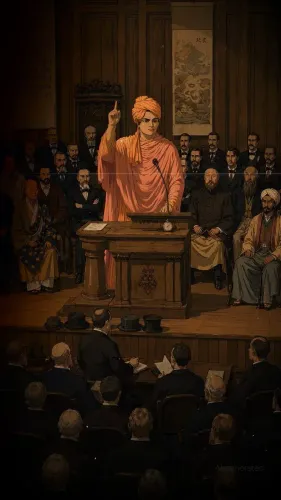
Swami Vivekananda (1863–1902) famously addressed the 1893 Parliament of the World's Religions in Chicago, placing Indian thought on the global stage.
The Government of India has observed National Youth Day on 12 January since 1984 to commemorate Vivekananda's birth anniversary and promote his ideals.
BJP ministers regularly mark Vivekananda's birth and death anniversaries as part of a broader pattern linking traditional Indian thought with present-day nation-building.
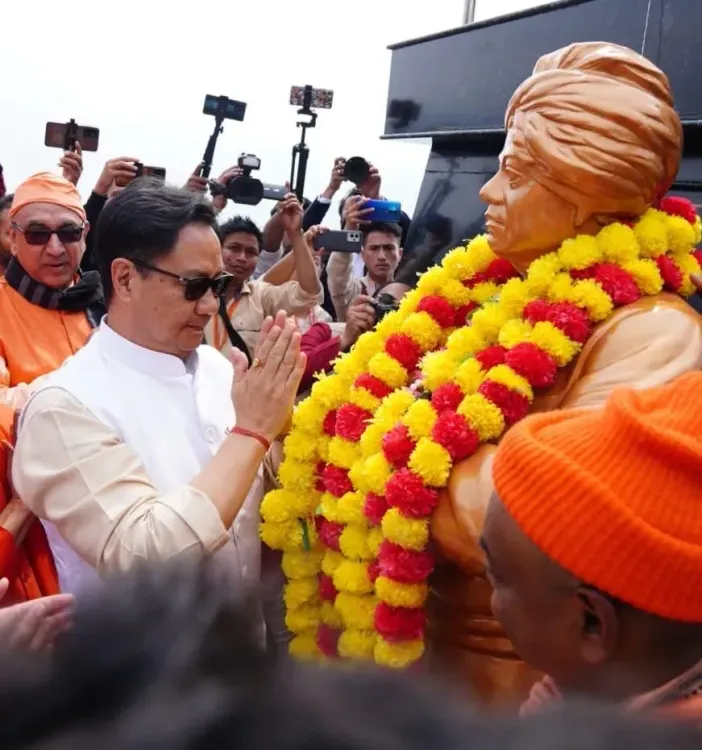
Union Parliamentary Affairs Minister Kiren Rijiju on Saturday, 4 July 2026, paid tribute to Swami Vivekananda on the monk's death anniversary, known as Nirvan Diwas, invoking his legacy of Vedantic philosophy, youth inspiration and nation-building as enduring guides for contemporary India.
Context
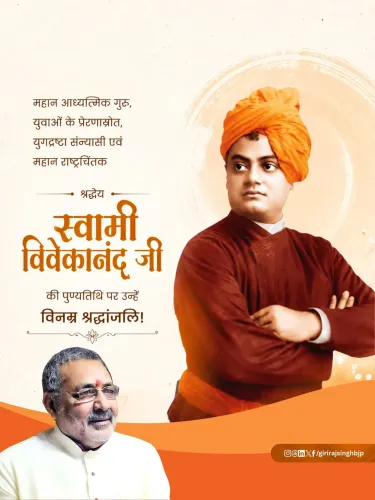
Posting in Hindi on X, Rijiju offered a reverential salutation to Swami Vivekananda, describing him as a 'mahaan adhyatmik guru evam yugadrashta' (great spiritual master and visionary of the age) who reacquainted the world with the universal message of Indian philosophy, Vedanta and the Sanatan knowledge tradition. He wrote that Vivekananda's 'unbreakable dedication to the motherland, his inspiring call to youth, and his far-sighted thinking on nation-building continue to inspire us to live lives devoted to national interest — internalising self-confidence, patriotism, service, character-building and pride in Indian culture.'
The tribute was accompanied by one image and posted from the minister's verified account at 10:58 AM IST.
Policy Backdrop
Swami Vivekananda (1863–1902) was the 19th-century monk and philosopher who placed Indian Vedanta and yoga before a global audience at the landmark 1893 Parliament of the World's Religions in Chicago. His lectures on universal tolerance, inner strength and social service became foundational texts for India's cultural self-confidence and the broader nationalist movement.
Since 1984, the Government of India has observed National Youth Day on 12 January — Vivekananda's birth anniversary — to promote his ideals among young people. His death anniversary, Nirvan Diwas, falls on 4 July. Both dates are regularly marked by central and state governments through commemorations, lectures and social-media tributes.
Stakeholders and Impact
Ministers from the ruling BJP regularly mark anniversaries of Swami Vivekananda to underscore themes of cultural revival, self-reliance and patriotism, linking pre-independence spiritual thought with present-day nation-building narratives. Rijiju, who holds charge of both Parliamentary Affairs and Minority Affairs, has frequently issued statements on cultural heritage and national values.
The primary audience for such messaging is Indian youth and cultural organisations that draw on Vivekananda's legacy — from the Ramakrishna Mission network to university student bodies — for whom the monk remains a touchstone of intellectual and moral aspiration.
What's Next
Observers may watch for references to Vivekananda's teachings in upcoming parliamentary debates on education or youth policy, as the government has consistently woven his ideas into policy rhetoric around skill development and character formation. State-level commemorations ahead of National Youth Day 2027 on 12 January are also likely to amplify these themes. The broader pattern of invoking Vivekananda's legacy suggests his philosophy will continue to feature prominently in official discourse on India's cultural identity and youth engagement.
Point of View
With Swami Vivekananda serving as an ideologically versatile icon acceptable across the political spectrum. By emphasising self-confidence, patriotism and cultural pride, the minister maps Vivekananda's philosophy directly onto the party's 'Viksit Bharat' and cultural-revival messaging. The consistency of such tributes — on both birth and death anniversaries, from ministers across portfolios — signals a deliberate, long-term communications strategy rather than routine ceremonial courtesy. As parliamentary sessions approach, these cultural reference points often reappear in policy debates on education, youth welfare and India's civilisational identity.
NationPress
4 Jul 2026
Frequently Asked Questions
When is Swami Vivekananda's death anniversary?
Swami Vivekananda's death anniversary, known as Nirvan Diwas , falls on 4 July each year. He passed away on 4 July 1902 at Belur Math near Kolkata.
What did Kiren Rijiju say about Swami Vivekananda on Nirvan Diwas 2026?
Kiren Rijiju paid tribute in Hindi, describing Vivekananda as a great spiritual master who reacquainted the world with Indian philosophy and Vedanta, and said his ideals of self-confidence, patriotism, service and character-building continue to inspire Indians today.
What is National Youth Day and how is it connected to Swami Vivekananda?
National Youth Day is observed on 12 January every year — Swami Vivekananda's birth anniversary — since 1984 , to promote his ideals of strength, service and cultural self-confidence among Indian youth.
What was Swami Vivekananda's contribution to Indian philosophy?
Swami Vivekananda presented Vedanta and yoga to the world at the 1893 Parliament of the World's Religions in Chicago, inspiring a global appreciation of Indian thought and fuelling India's cultural self-confidence and nationalist movement.
Why do BJP leaders frequently pay tribute to Swami Vivekananda?
BJP leaders regularly invoke Swami Vivekananda's legacy to underscore themes of cultural revival, self-reliance and patriotism , linking his pre-independence spiritual thought with the party's present-day nation-building and 'Viksit Bharat' narratives.