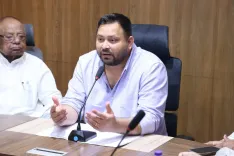
Rijiju: PM Modi forms task force under Nilekani for exam reforms
Synopsis
PM Modi has formed a High-Powered Task Force chaired by Nandan Nilekani to bring technology-led reforms to India's national examination system. Minister Kiren Rijiju announced the move, framing it as a commitment to integrity, transparency, and the future of India's youth.
Key Takeaways
PM Narendra Modi has constituted a High-Powered Task Force to reform national examinations.
The task force will be chaired by Nandan Nilekani , co-founder of Infosys and former UIDAI Chairman.
Its mandate is to drive technology-led reforms that strengthen integrity, transparency, and credibility of national tests.
The announcement was made by Union Minister Kiren Rijiju on 26 July 2026 .
The move follows repeated concerns over paper leaks and irregularities in exams conducted by the National Testing Agency .
Nilekani's Aadhaar experience positions the task force to apply large-scale digital infrastructure thinking to examination systems.
Union Parliamentary Affairs Minister Kiren Rijiju on Sunday, 26 July 2026 announced that Prime Minister Narendra Modi has constituted a High-Powered Task Force to drive technology-led reforms in national examinations, with the body to be chaired by Nandan Nilekani, co-founder of Infosys and the architect of India's Aadhaar system.
Context
Rijiju shared the development on X, stating: 'When it comes to the future of our youth, there can be no compromise.' He added that the task force will work to 'drive technology-led reforms that strengthen the integrity, transparency and credibility of national examinations.' The announcement signals the government's intent to address long-standing concerns over irregularities in high-stakes competitive tests.
National examinations such as NEET and JEE — conducted by the National Testing Agency (NTA) — have faced repeated scrutiny over alleged paper leaks and procedural lapses in recent years, triggering widespread student protests and demands for systemic overhaul.
Policy Backdrop
The National Testing Agency was established in 2017–18 to centralise and professionalise the conduct of competitive examinations previously managed by multiple bodies. Despite that consolidation, incidents of question-paper leaks and examination malpractice continued to erode public confidence in the system.
The National Education Policy 2020 had called for examinations to become more flexible, transparent, and focused on conceptual learning. The new task force appears to be a direct operational response to that policy direction, with technology positioned as the primary lever for reform.
Nandan Nilekani brings formidable credentials to the role. As the founding Chairman of the Unique Identification Authority of India (UIDAI), he oversaw the rollout of Aadhaar — a biometric identity infrastructure now linked to over a billion Indians. His appointment signals that the government intends to apply a similarly rigorous, tech-first approach to examination infrastructure.
Stakeholders and Impact
The task force's mandate directly concerns millions of students who appear annually for centrally conducted entrance examinations for medical, engineering, and other professional courses. Any reform to NTA's systems — from question-paper security to result processing — would affect the prospects of aspirants from every state and economic background.
Parents, coaching institutions, and state education boards also have a stake in the outcome. A credible, tamper-proof examination framework could reduce the advantage currently held by well-resourced candidates who benefit from leaked material, and restore trust in merit-based selection.
What's Next
The task force is expected to examine existing vulnerabilities in examination design, question-paper logistics, digital delivery, and result authentication. Observers will watch closely for its report submission timeline and any subsequent changes to NTA operations, examination rules, or new legislation introduced in Parliament. The Nilekani-led body's recommendations could reshape how India conducts national-level testing for years to come.
Point of View
And expectations for this mandate will be correspondingly high. The real test will be whether the task force's recommendations translate into enforceable structural change at the NTA or remain advisory.
NationPress
26 Jul 2026
Frequently Asked Questions
What is the High-Powered Task Force on national examinations?
It is a committee constituted by PM Narendra Modi to drive technology-led reforms aimed at improving the integrity, transparency, and credibility of India's national examinations such as NEET and JEE.
Who is chairing the task force on exam reforms?
Nandan Nilekani, co-founder of Infosys and the former Chairman of UIDAI who led the Aadhaar project, has been appointed to chair the High-Powered Task Force.
Why was this task force formed?
The task force was formed in response to persistent concerns over paper leaks and procedural irregularities in examinations conducted by the National Testing Agency, which have undermined student confidence.
What is the National Testing Agency and what does it do?
The National Testing Agency is an autonomous body set up in 2017–18 to centralise the conduct of major competitive entrance examinations in India, including NEET for medical admissions and JEE for engineering colleges.
What reforms could the Nilekani-led task force recommend?
The task force is expected to examine vulnerabilities in question-paper security, digital exam delivery, and result authentication, potentially recommending changes to NTA operations or new examination legislation.