Kiren Rijiju says Rahul Gandhi 'trapped himself' by targeting HM Shah
Synopsis
Parliamentary Affairs Minister Kiren Rijiju turned the tables on Leader of Opposition Rahul Gandhi in Parliament on 29 July, arguing Gandhi 'trapped himself' by blaming Home Minister Amit Shah for the July 20 protest crackdown — a power that constitutionally rests with local magistrates, not ministers. Rijiju also noted Gandhi failed to speak a single word on the anti-paper leak Bill he had come to debate.
Key Takeaways
Kiren Rijiju on 29 July said Rahul Gandhi 'got himself trapped' by blaming Home Minister Amit Shah for police action during the July 20 Parliament march .
Rijiju argued that orders during violent protests are the exclusive domain of the District Magistrate or Sub-Divisional Magistrate — not a central minister.
Rijiju said Gandhi's claim is now 'in the records' and called it a 'misleading statement.' Gandhi also drew criticism for not raising a single substantive point on the anti-paper leak Bill during the Lok Sabha debate.
The confrontation unfolded during a debate on legislation aimed at preventing malpractice in competitive examinations.
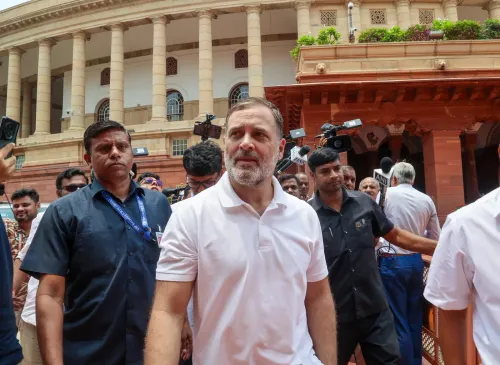
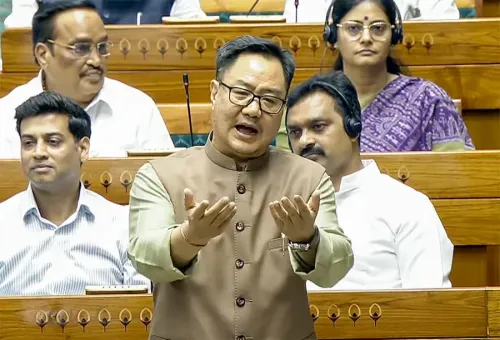
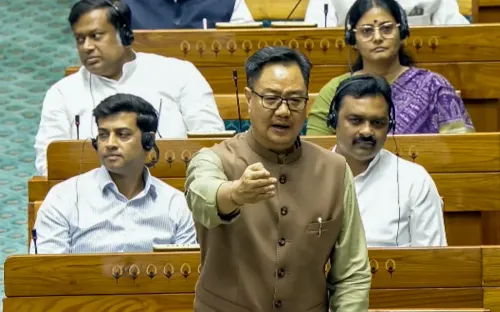
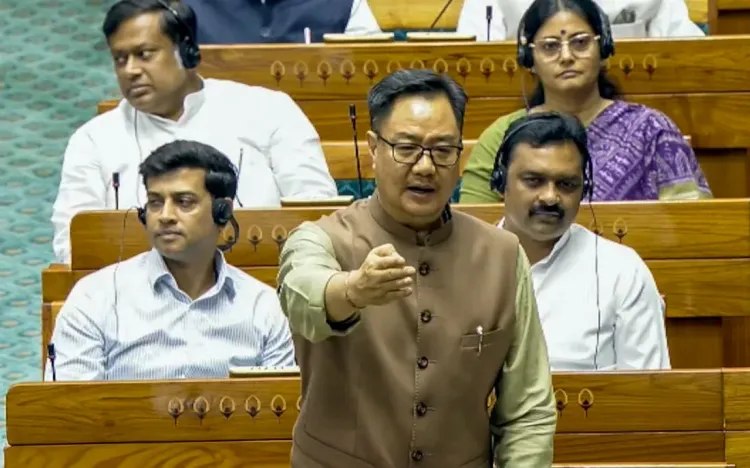
Union Minister for Parliamentary Affairs Kiren Rijiju on Wednesday, 29 July sharply criticised Lok Sabha Leader of Opposition Rahul Gandhi, asserting that Gandhi had 'got himself trapped' by making what Rijiju called 'lies' against Home Minister Amit Shah on the floor of the Lok Sabha. The remarks came after Gandhi targeted Shah over alleged police excesses against protesters during the July 20 Parliament march, during a debate on the anti-paper leak Bill.
What Rijiju Said
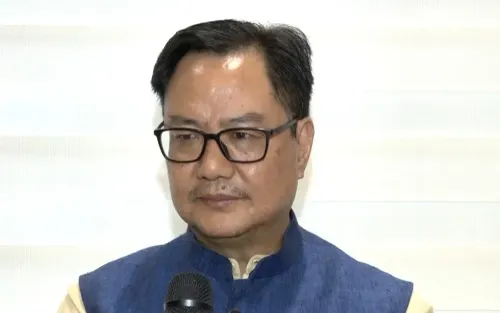
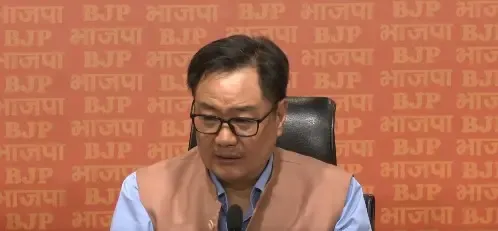
Speaking to reporters outside Parliament House in New Delhi, Rijiju said: 'He (Rahul Gandhi) got trapped himself. If Rahul Gandhi had spoken on the issue in a better way, then he would have got some praise. He got trapped by taking the name of Home Minister.'
Rijiju went further, stating that Gandhi is 'very badly trapped by making such a misleading statement' and that the Congress leader 'may try to clarify later, but now it is in the records.'
'He is now in a difficult situation after stating lies and now cannot come out of the difficulties that he has created for himself. I feel sorry for him,' Rijiju added.
The Constitutional Argument
Rijiju explained that ordering police action during protests falls outside a minister's legal jurisdiction entirely. 'These are the orders to be passed by the District Magistrate or the Sub-Divisional Magistrate who are present at that particular spot. It is their power,' he said.
He elaborated: 'The rules are very clear. If the protests turn violent, the magistrate is the one who decides whether shots need to be fired or not. How can the Home Minister take the magistrate's power. Leave about firing, a Minister can never pass an executive order...the Leader of Opposition does not know about this and so claimed that the Home Minister gave the order.'
Gandhi's Failure on the Anti-Paper Leak Bill
Beyond the Shah controversy, Rijiju also took aim at Gandhi's performance during the substantive debate on the anti-paper leak Bill — legislation aimed at curbing malpractice in competitive examinations. As Parliamentary Affairs Minister, Rijiju said he had expected a meaningful intervention from the Leader of Opposition, which Gandhi 'failed' to deliver.
'Despite being the Leader of Opposition, Rahul Gandhi could not speak even one point on the anti-paper leak bill, such an important (Bill) to prevent the unfair means. He could not speak a word about the provisions in the Bill,' Rijiju said.
Background and Context
The exchange unfolded against a charged parliamentary backdrop. On 20 July, protesters — including members affiliated with the opposition — marched toward Parliament, and reports of police action against agitators surfaced. Gandhi used the anti-paper leak Bill debate to raise the issue, directly naming Home Minister Shah as responsible for the alleged excesses. Rijiju's rebuttal frames this as a constitutional misunderstanding, arguing that crowd-control orders rest with local magistrates, not central ministers. Notably, this is not the first time the Treasury Bench has used procedural arguments to deflect opposition criticism of law-enforcement conduct near Parliament.
With the anti-paper leak Bill at the centre of parliamentary business this session, the government's counter-offensive appears aimed at shifting focus from the July 20 events to Gandhi's legislative engagement — or the perceived lack of it.
Point of View
Not ministers — is legally sound, but it sidesteps the political question Gandhi was actually raising: whether the Home Ministry's broader posture toward the July 20 march set the tone for the response on the ground. The Treasury Bench's pivot to Gandhi's procedural error is tactically effective, but it does not address accountability for what happened on July 20. Meanwhile, Gandhi's failure to engage on the anti-paper leak Bill's provisions hands the government a legitimate parliamentary critique — one that risks overshadowing whatever point he intended to make on police conduct.
NationPress
28 Oct 2026
Frequently Asked Questions
What did Kiren Rijiju say about Rahul Gandhi in Parliament?
Kiren Rijiju said Rahul Gandhi 'got himself trapped' by falsely attributing the July 20 protest police action to Home Minister Amit Shah. Rijiju argued that such orders are constitutionally the prerogative of local magistrates, not central ministers, and called Gandhi's statement 'misleading.'
Why did Rahul Gandhi target Home Minister Amit Shah?
Rahul Gandhi raised the issue of alleged police excesses against protesters during the July 20 Parliament march while speaking during a Lok Sabha debate on the anti-paper leak Bill. He reportedly held Home Minister Amit Shah responsible for the police action taken against the agitators.
Who has the legal power to order police action during protests near Parliament?
According to Kiren Rijiju, the authority to order police action during violent protests rests with the District Magistrate or Sub-Divisional Magistrate present at the location — not with a Union Minister. Rijiju said a minister 'can never pass an executive order' of that nature.
What is the anti-paper leak Bill being debated in the Lok Sabha?
The anti-paper leak Bill is legislation aimed at preventing malpractice and unfair means in competitive examinations. It was under debate in the Lok Sabha on 29 July, and Rijiju criticised Gandhi for failing to speak on any of its provisions despite being Leader of Opposition.
What was the July 20 Parliament march?
On 20 July, protesters — reportedly including opposition-affiliated individuals — marched toward Parliament. Reports of police action against the agitators emerged, which subsequently became a flashpoint in parliamentary debates, with opposition members accusing the government of excessive force.