Rijiju accuses Rahul Gandhi of colluding with anti-India forces abroad

Synopsis
Union Minister Kiren Rijiju has gone on the offensive after Rahul Gandhi told a Columbia University audience that Indian democracy was 'destroyed in 2014' — accusing the Leader of Opposition of colluding with anti-India forces abroad and spreading falsehoods about the country's economy. The exchange sets up a sharp pre-Parliament-session collision between the government and the opposition.
Key Takeaways
Union Minister Kiren Rijiju on 19 November 2026 accused Rahul Gandhi of 'colluding with foreign-based anti-India forces.' Gandhi had alleged at Columbia University in the US that democracy in India was 'destroyed in 2014' and criticised the economy and education system.
Rijiju cited IMF and World Bank data to rebut Gandhi's claim that India's economy had 'collapsed.' The minister challenged Gandhi's democracy critique, arguing his freedom to travel and criticise the government itself proves India's democratic functioning.
Rijiju claimed India 'set a global record' for reducing poverty at the fastest pace, contrasting this with the Congress-led UPA era.
Congress had not issued a formal response at the time of reporting; the exchange is likely to spill into Parliament's upcoming winter session.
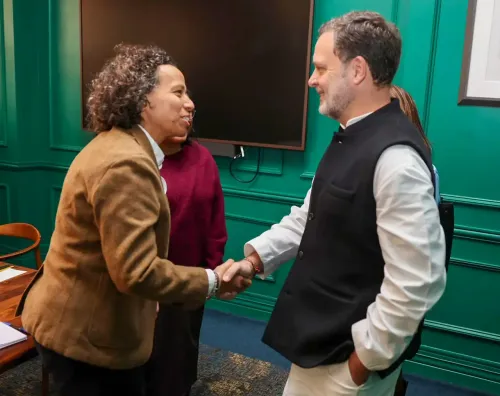
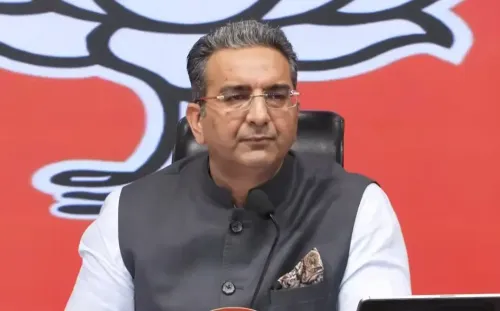
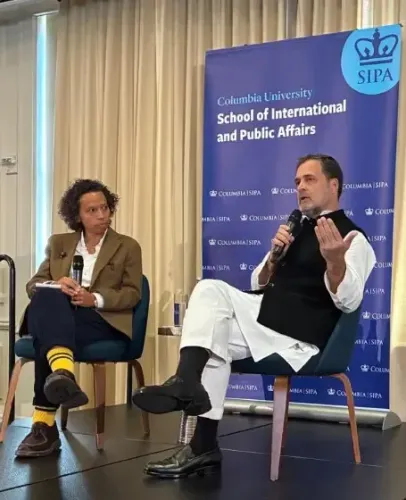
Union Minister Kiren Rijiju on Thursday, 19 November 2026, accused Leader of Opposition in the Lok Sabha Rahul Gandhi of 'colluding with foreign-based anti-India forces' and spreading 'falsehoods' about India's democracy and economy. The sharp attack came after Gandhi made critical remarks about India's democratic record and economic health during an interaction at Columbia University in the United States.
What Triggered the Charge
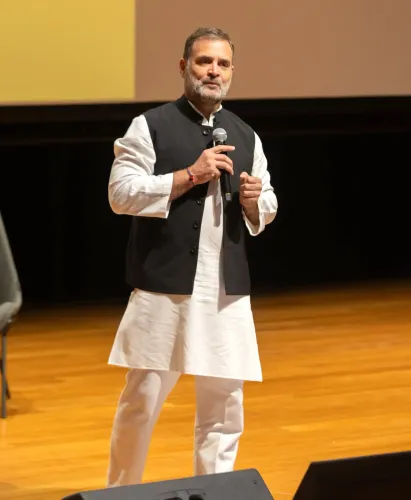
Gandhi had alleged at the Columbia University event that democracy in India was 'destroyed in 2014' and criticised the country's economy and education system. The remarks drew an immediate response from the Bharatiya Janata Party (BJP)-led government, with Rijiju leading the counter-offensive.
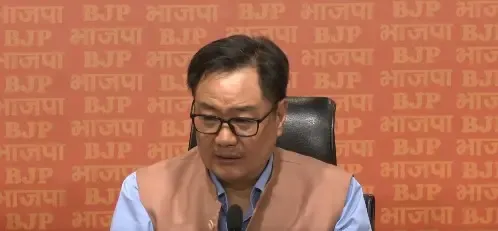
Speaking to reporters in New Delhi, Rijiju accused the Leader of Opposition of making statements aimed at 'defaming' the country on foreign soil.
What Rijiju Said
'It is also possible that anti-India forces abroad and across the world keep provoking him. He has himself developed an anti-India mindset, focusing on how to undermine India, its civilisation, traditions, democracy and the Constitution. Rahul Gandhi has already opened a front against these institutions,' Rijiju alleged.
The minister also challenged Gandhi's claim that India lacks democracy. 'Whether in the United States or any other country, he keeps saying that India's economy has collapsed and is finished. The entire world says that India is the fastest-growing economy,' Rijiju said, citing findings by the International Monetary Fund (IMF) and the World Bank. 'The IMF was not created by us. The World Bank and all the major financial institutions say that India is the fastest-growing major economy today. Yet Rahul Gandhi says that the economy is dead. Who can explain this to him?' he added.
Rijiju also questioned the internal consistency of Gandhi's democracy critique. 'How is he able to protest and spend the entire day criticising Prime Minister Narendra Modi, the BJP, and the government?' he asked, asserting that India functions as an 'open and vibrant democracy.'
Poverty Record and Congress Legacy
Rijiju drew a pointed comparison with the previous Congress-led United Progressive Alliance (UPA) government on poverty reduction. Citing World Bank data, he claimed India had 'set a global record for reducing poverty at the fastest pace' and questioned Congress's decades-long campaign slogan 'Garibi Hatao' (Remove Poverty). 'How many times did it come to power? Did poverty disappear during Congress rule?' he asked.
Two Suggestions to Rahul Gandhi
Rijiju offered what he described as two direct suggestions to the opposition leader. First, he said Gandhi — who travels freely, criticises the government openly, and campaigns without restriction — should 'stop saying that there is no democracy in the country. At least do not lie to yourself.' Second, Rijiju urged Gandhi to 'not call it a dead economy. Do not spread falsehoods. Do not deceive yourself,' describing India's economy as 'one of the brightest economies in the world and an engine of global economic growth.'
The minister further claimed Gandhi was 'harming himself, his party, and the Opposition' with such statements. Notably, this is not the first time senior BJP leaders have criticised Gandhi for remarks made during overseas visits — similar controversies have followed his interactions in the United Kingdom and the United States in prior years.
What Comes Next
Congress has not issued an immediate formal response to Rijiju's remarks. With Parliament's winter session on the horizon, the exchange is likely to escalate into a broader floor battle over free speech, national interest, and the government's economic record.
Frequently Asked Questions
What did Rahul Gandhi say at Columbia University that triggered the row?
Rahul Gandhi allegedly told an audience at Columbia University in the United States that democracy in India was 'destroyed in 2014' and criticised the state of India's economy and education system. The remarks drew sharp condemnation from Union Minister Kiren Rijiju and the ruling BJP.
What exactly did Kiren Rijiju accuse Rahul Gandhi of?
Rijiju accused Gandhi of 'colluding with foreign-based anti-India forces' and spreading 'falsehoods' about India's democracy and economy. He alleged Gandhi had developed an 'anti-India mindset' and was harming himself, his party, and the broader opposition with such statements.
How did Rijiju counter Gandhi's claims about India's economy?
Rijiju cited reports by the World Bank and the IMF, both of which describe India as the fastest-growing major economy in the world. He argued that Gandhi's characterisation of India's economy as 'dead' or 'collapsed' contradicted the assessments of major global financial institutions.
Is this the first time Gandhi has faced criticism for overseas remarks?
No. Senior BJP leaders have previously criticised Gandhi over remarks made during interactions in the United Kingdom and the United States, making this part of a recurring political pattern around the opposition leader's foreign visits.
What are the likely political consequences of this exchange?
With Parliament's winter session approaching, the dispute is expected to escalate into floor debates on free speech, national interest, and the government's economic record. Congress had not issued a formal response at the time of reporting.