Rijiju to Rahul: Women's Quota Before 2029 Needs Delimitation Now

Synopsis
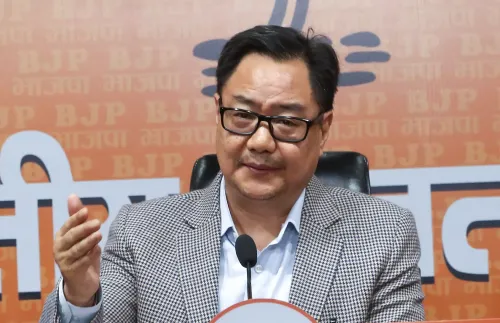
Parliamentary Affairs Minister Kiren Rijiju has publicly told Rahul Gandhi that women's reservation under the 2023 constitutional amendment cannot take effect before 2034 without immediate delimitation action — and that the bill to enable a 2029 rollout has already been defeated in the Lok Sabha.
Key Takeaways
The Constitution (106th Amendment) Act, 2023 reserves one-third of Lok Sabha and state assembly seats for women, but activation is tied to post-2026 census and delimitation.
The ongoing caste-based census component could push final figures publication well beyond 2026, making 2034 the earliest realistic election under the current framework.
To implement reservation by 2029 , delimitation must begin now using available census data — the position underpinning the Delimitation Bill 2026 .
The Constitution (131st Amendment) Bill, 2026 , designed to enable this, was defeated in the Lok Sabha.
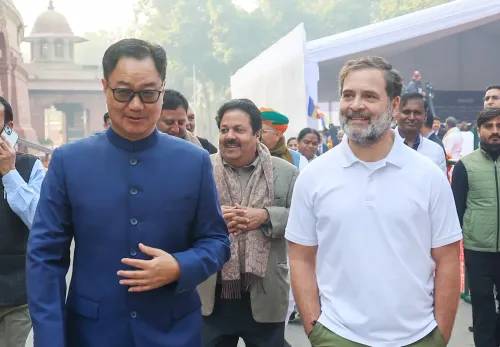
Minister Rijiju addressed the post directly to Rahul Gandhi , implying the Opposition shares responsibility for the resulting delay.
A constitutional timeline, a defeated bill, and a pointed message to the Leader of Opposition — Union Parliamentary Affairs Minister Kiren Rijiju laid out, in precise numbered steps on Saturday, 8 August 2026, exactly why women's reservation cannot reach voters before 2034 unless Parliament acts fast on delimitation.
The 2023 law and the clock that started ticking
The Constitution (106th Amendment) Act, 2023 — formally the Nari Shakti Vandan Adhiniyam — reserved one-third of seats in the Lok Sabha and state legislative assemblies for women. But the law came with a built-in waiting condition: it activates only after a delimitation exercise based on the first census published after the year 2023. That means, as Rijiju spells out, census figures published after 2026.
The census exercise is currently underway, Rijiju acknowledges — but he flags a critical complication. The inclusion of a caste-based census component means the final figures 'may take substantial time' to publish, pushing the earliest realistic implementation to 2034 General Elections under the existing framework.
The 2029 window — and what it demands
Rijiju's post is not merely an explainer; it is a challenge. He argues that to bring women's reservation into force for the 2029 general elections, the delimitation exercise must begin immediately, using the latest available census figures as already published — without waiting for the full caste-census data.
That is precisely the logic, he says, behind the Delimitation Bill 2026, introduced in the Lok Sabha alongside constitutional amendments. The vehicle for this was the Constitution (131st Amendment) Bill, 2026 — and it was defeated in the House.
A bill defeated, a question aimed at Congress
The defeat of the 131st Amendment Bill is the sharpest edge of Rijiju's post. By addressing Rahul Gandhi directly — 'Rahul Ji, you know it very well' — the minister frames the Opposition not as a critic of delay but as a participant in it. The subtext is unmistakable: if the bill that could have unlocked 2029 implementation was voted down, the delay that follows is a shared political responsibility.
Women's reservation legislation has circled Indian parliamentary politics since the 1990s, repeatedly stalled before the 2023 breakthrough. That breakthrough, it now appears, carried its own deferral mechanism — one that requires fresh legislative action to override.
The minister has drawn the map. The question now is who picks up the pen.
Point of View
The BJP shifts the narrative on women's reservation delay from executive inaction to legislative opposition. The post also signals that the government intends to keep delimitation — and by extension the reservation trigger — as a live political battleground ahead of 2029. For the Congress, which has championed women's reservation rhetorically for decades, the challenge is now to explain its position on the defeated bill without ceding the moral high ground it has long claimed on this issue.
NationPress
8 Aug 2026
Frequently Asked Questions
When will women's reservation actually come into effect in India?
Under the current framework, women's reservation cannot take effect before the 2034 general elections because it requires a delimitation exercise based on census figures published after 2026, and the ongoing caste census may delay those figures significantly.
What is the Nari Shakti Vandan Adhiniyam?
The Nari Shakti Vandan Adhiniyam is the Constitution (106th Amendment) Act, 2023, which reserves one-third of seats in the Lok Sabha and state legislative assemblies for women. Its implementation is contingent on a post-2023 census and a fresh delimitation exercise.
What is the Delimitation Bill 2026?
The Delimitation Bill 2026 was introduced in the Lok Sabha to enable delimitation based on the latest available census data, which would allow women's reservation to be implemented in time for the 2029 general elections . The accompanying Constitution (131st Amendment) Bill, 2026 was defeated in the House.
Why is the caste census causing a delay in women's reservation?
The constitutional amendment requires delimitation based on census figures published after 2023. Because the current census exercise includes a caste-based component, it is expected to take considerably longer to finalise and publish, pushing the earliest possible implementation date to 2034 .
Why did Kiren Rijiju address his post to Rahul Gandhi?
Minister Rijiju addressed Rahul Gandhi directly to argue that the Opposition, as a key parliamentary force, is aware of the legal and procedural conditions for women's reservation — and implicitly, that the defeat of the 131st Amendment Bill makes the Opposition a participant in any resulting delay.