Rijiju Invokes Geographic Diversity of India's Top Leadership
Synopsis
Union Minister Kiren Rijiju on June 7, 2026 called for national unity, pointing to the geographic spread of India's top three constitutional offices — President from Odisha, Prime Minister from Gujarat, and Vice President from Tamil Nadu — as evidence of pan-Indian representation.
Key Takeaways
Union Parliamentary Affairs Minister Kiren Rijiju posted on June 7, 2026 urging citizens not to divide the nation.
He highlighted that President Droupadi Murmu is a tribal leader from Odisha , eastern India.
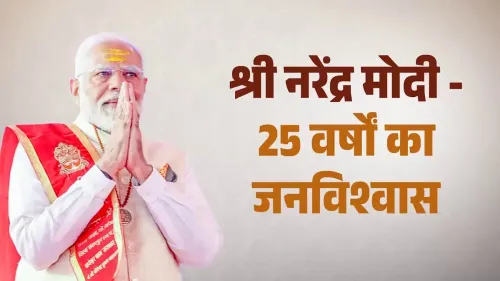
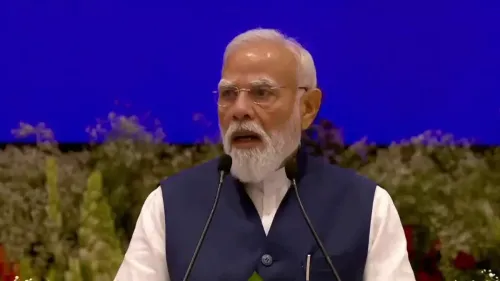
Prime Minister Narendra Modi was described as a 'visionary leader' born in Gujarat , western India.
The Vice President was cited as being from Tamil Nadu , southern India.
The post reflects the BJP's long-standing narrative of projecting the constitutional triad as geographically balanced across India's regions.
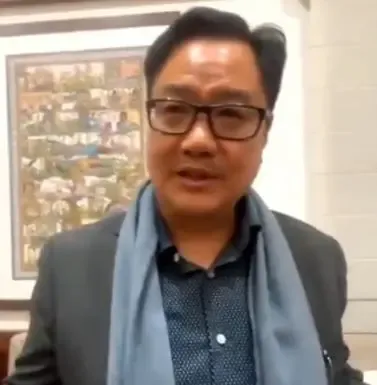
Rijiju himself represents Arunachal Pradesh in the northeast, adding a further dimension to the regional-inclusion argument.
Union Parliamentary Affairs Minister Kiren Rijiju on Sunday, June 7, 2026, posted a pointed message on X urging citizens not to divide the nation, while highlighting the regional diversity represented by India's three highest constitutional offices.
Context
Rijiju's post appears to be a direct response to what he described as divisive rhetoric, addressed to someone he referred to as 'his leader.' The minister wrote: 'Please do not try to divide the nation. We all are Indians.' He then drew attention to the geographic spread of the country's top leadership — President Droupadi Murmu from Odisha in eastern India, Prime Minister Narendra Modi born in Gujarat in western India, and the Vice President described as hailing from Tamil Nadu in southern India.
The post, which carried a video attachment, was framed as a rebuttal to perceived attempts at regional or identity-based polarisation. Rijiju's own background as a senior leader from Arunachal Pradesh in India's northeast further underscores the regional-inclusion argument his party has long championed.
Policy Backdrop
Droupadi Murmu was elected India's 15th President in July 2022, becoming the first tribal leader to occupy Rashtrapati Bhavan. Her election was widely projected by the ruling dispensation as a milestone in recognising communities from eastern and tribal India at the highest level of constitutional authority.
Prime Minister Modi, who has led the country since 2014, was born in Vadnagar, Gujarat. The BJP has consistently highlighted his origins as evidence of a leader who rose from humble, non-elite roots in western India to the nation's top executive post.
The framing of the constitutional triad — President, Prime Minister, and Vice President — as a geographically balanced ensemble has been a recurring motif in BJP's political communication, deployed particularly when the party faces opposition criticism of centralisation or regional neglect.
Stakeholders and Impact
Rijiju's message is directed at a broad national audience, but its sharpest resonance is likely felt in regions that have historically felt underrepresented in New Delhi's power corridors — the northeast, eastern states, and the south. By spotlighting leaders from Odisha, Gujarat, and Tamil Nadu, the post signals that the current constitutional arrangement cuts across India's major regional blocs.
Opposition parties, who have at various points accused the ruling party of concentrating power within a narrow geographic or ideological base, are the implicit audience for the counter-narrative. The post's call — 'We all are Indians' — is a well-worn but politically potent formulation in the context of identity debates.
What's Next
The post is likely to generate responses from opposition leaders and political commentators, particularly those who have raised questions about regional representation in governance. Upcoming parliamentary sessions and any high-level appointments will be watched closely to see whether the regional-balance narrative is reinforced through policy or personnel decisions. Rijiju, as the minister responsible for managing the government's business in Parliament, is positioned at the centre of any such legislative or political developments.
Point of View
Personalised rebuttal rather than a routine messaging exercise, indicating that the party felt a specific provocation warranted a senior minister's response. By anchoring the argument in tribal identity, eastern India, and the south simultaneously, the post attempts to neutralise multiple opposition attack vectors at once. Whether this messaging holds traction will depend on how substantively governance outcomes in these regions are perceived by voters ahead of the next electoral cycle.
NationPress
26 Oct 2026
Frequently Asked Questions
Why did Kiren Rijiju ask people not to divide the nation?
Rijiju posted on June 7, 2026 in apparent response to what he viewed as divisive rhetoric, urging citizens to remember their shared Indian identity and pointing to the regional diversity of the country's top constitutional leadership.
Who is Droupadi Murmu and why is she significant?
Droupadi Murmu is India's 15th President , elected in July 2022 . She is the first tribal leader to hold the office and hails from Odisha in eastern India, making her election a landmark in representation for tribal and eastern communities.
What is the BJP's argument about regional representation in India's top offices?
The BJP has consistently highlighted that the President, Prime Minister, and Vice President come from different regions of India — east, west, and south respectively — as evidence that the ruling dispensation represents the entire country rather than a single region or community.
Where is Kiren Rijiju from?
Kiren Rijiju is a senior BJP leader from Arunachal Pradesh in northeastern India. He currently serves as Union Minister of Parliamentary Affairs and Minority Affairs.
What does India's constitutional triad mean in political terms?
The constitutional triad refers to the President, Vice President, and Prime Minister — the three highest offices in India's constitutional framework. Their geographic and social backgrounds are frequently cited in political discourse as indicators of how inclusive national leadership is.