ILP must protect Nagaland identity and enable progress: CM Rio
Synopsis
Nagaland CM Neiphiu Rio used a national seminar on the 150-year-old BEFR Act to push for an ILP system that is legally robust, economically enabling, and constitutionally defensible — even as senior advocate Prashant Bhushan flagged a fundamental tension between indigenous protection and the right to free movement. With the Naga Students' Federation demanding a statutory regulatory body, the debate over the ILP's future is entering a new, more formal phase.
Key Takeaways
Nagaland CM Neiphiu Rio called for the ILP to evolve into an effective instrument protecting indigenous identity while enabling economic development, at a seminar in Dimapur on 30 August .
The Gauhati High Court upheld the state's extension of the ILP to Dimapur , Chumoukedima , and Niuland districts — hailed by Rio as a 'big victory for Nagas'.
The Naga Students' Federation (NSF) submitted a representation seeking a legislatively constituted autonomous Inner Line Regulation Commission .
Senior advocate Prashant Bhushan raised constitutional concerns, arguing ILP restrictions could conflict with citizens' fundamental right to free movement under Article 19 .
The ILP system currently operates in Mizoram , Arunachal Pradesh , Nagaland , and Manipur ; demands for its extension to Meghalaya and Tripura remain active.
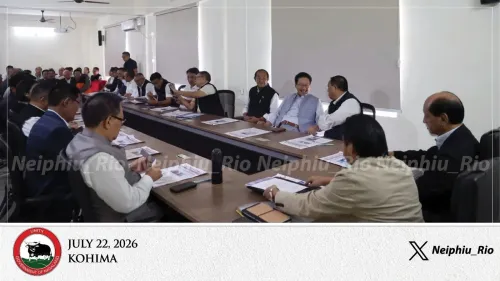
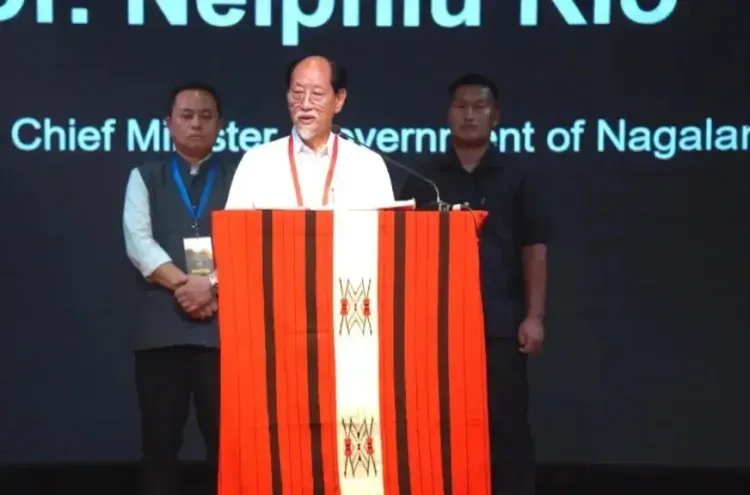
Nagaland Chief Minister Neiphiu Rio on 30 August called for the Inner Line Permit (ILP) system to evolve beyond a routine regulatory tool into a robust instrument that simultaneously safeguards the state's identity, land, culture, and indigenous rights while fostering economic development. He was addressing a national seminar on the Bengal Eastern Frontier Regulation (BEFR) Act, 1873, held at the Town Hall in Dimapur.
Key Remarks by the Chief Minister
Rio called for a policy that is both effective and humane, striking a balance between protecting indigenous interests and enabling legitimate economic activity. 'We have to bring a system of using this BEFR 1873 which will protect Indian citizens, indigenous Nagas, and mutual interest for economic development,' he said.
The Chief Minister also cautioned against isolationism, urging Nagaland to learn from best practices elsewhere and find ways to complement other regions rather than cut itself off from them.
Gauhati High Court Verdict Hailed as Victory
Rio noted that the state government's move to extend the ILP system to the districts of Dimapur, Chumoukedima, and Niuland had been challenged before the Gauhati High Court, which ultimately upheld the government's decision. He described the ruling as a 'big victory for Nagas', saying it reinforced the constitutional weight of Article 371A, which provides special protections to Nagaland.
He further stressed that the BEFR Act's provisions on immovable property must be applied judiciously and not weaponised to harm others. He recalled that Nagaland's leaders had ensured the continuation of the Act when signing the 16-Point Agreement.
Student Body Seeks Autonomous Regulatory Commission
The Inner Line Regulation Commission (ILRC) of the Naga Students' Federation (NSF) submitted a representation to Rio at the seminar, requesting the formation of an autonomous Nagaland Inner Line Regulation Commission through legislation. The proposed body, according to the NSF, should have the authority to frame rules and enforce the ILP system more stringently and efficiently.
Constitutional Questions Raised by Senior Advocate
Senior advocate Prashant Bhushan, who also addressed the seminar, questioned the constitutional validity of restricting the movement of Indian citizens under the ILP system. Citing Article 29, he acknowledged every community's right to preserve its language, script, and culture, but noted that citizens also hold the fundamental right to move freely across India.
Bhushan argued that ILP-based entry restrictions could conflict with this constitutional guarantee of free movement, even as the system remains operative in several Northeastern states. This tension between indigenous protection and fundamental rights is not new — it has been debated in legal and policy circles for decades, particularly as demands grow to extend the ILP to Meghalaya and Tripura.
Background: The ILP System in Northeast India
The ILP regime is rooted in the Bengal Eastern Frontier Regulation, 1873, notified by the British administration in 1875. It currently applies in Mizoram, Arunachal Pradesh, Nagaland, and Manipur, allowing Indian citizens to visit these states for a limited period and specific purposes. Several organisations continue to press for its extension to Meghalaya and Tripura, reflecting the ongoing sensitivity around demographic change and indigenous land rights in the Northeast.
As the debate over the ILP's scope and enforcement deepens, the Dimapur seminar signals that Nagaland is seeking a more structured, legislatively grounded framework — one that can withstand constitutional scrutiny while delivering on its protective mandate.
Point of View
But Prashant Bhushan's invocation of free movement rights points to a challenge that could eventually reach the Supreme Court. The NSF's push for a statutory commission is the more consequential development: it would shift ILP enforcement from executive discretion to a rule-bound body, reducing arbitrariness but also raising new questions about accountability. The broader Northeast ILP debate is no longer just about identity — it is increasingly about who gets to define the rules, and whether those rules can survive constitutional scrutiny.
NationPress
14 Oct 2026
Frequently Asked Questions
What is the Inner Line Permit (ILP) system in Nagaland?
The ILP is a travel document required by Indian citizens from outside certain Northeastern states to enter those states, rooted in the Bengal Eastern Frontier Regulation of 1873. It currently applies in Nagaland, Mizoram, Arunachal Pradesh, and Manipur, and is designed to protect indigenous communities from demographic and cultural change.
Why did CM Neiphiu Rio address the BEFR seminar in Dimapur?
Rio used the national seminar on the Bengal Eastern Frontier Regulation Act, 1873, to advocate for a reformed ILP policy that balances indigenous protection with economic openness. He stressed that the system must be effective and humane, not merely bureaucratic.
What did the Gauhati High Court rule on Nagaland's ILP extension?
The Gauhati High Court upheld the Nagaland government's decision to extend the ILP system to the districts of Dimapur, Chumoukedima, and Niuland. CM Rio described the verdict as a 'big victory for Nagas' and said it reinforced the constitutional significance of Article 371A.
What is the Naga Students' Federation demanding regarding the ILP?
The NSF's Inner Line Regulation Commission submitted a representation to CM Rio seeking the creation of an autonomous Nagaland Inner Line Regulation Commission through legislation, with powers to frame and enforce ILP rules more stringently.
What constitutional concerns did Prashant Bhushan raise about the ILP?
Senior advocate Prashant Bhushan argued that restricting the movement of Indian citizens through the ILP system could conflict with the constitutional guarantee of free movement. He cited Article 29, acknowledging communities' cultural rights, but noted these must be weighed against fundamental rights.