Rising Bihar Investor Summit 2026: Samrat Choudhary pitches 14 crore-strong market, 20,000 MW power target
Synopsis
Bihar's biggest investment pitch of the year just launched in Patna — and CM Samrat Choudhary is selling scale: 14 crore consumers, a road network grown from 8,000 km to 1.5 lakh km, power capacity up 20x since 2005, and a first-ever silt policy. The question is whether structural challenges around floods, migration, and implementation can be answered as convincingly as the headline numbers.
Key Takeaways
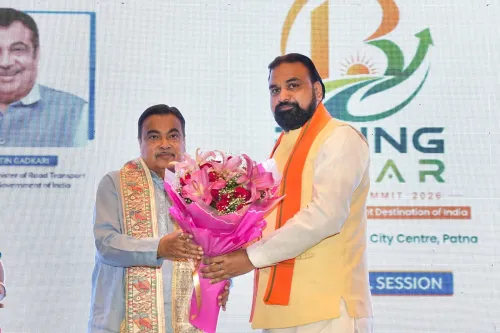
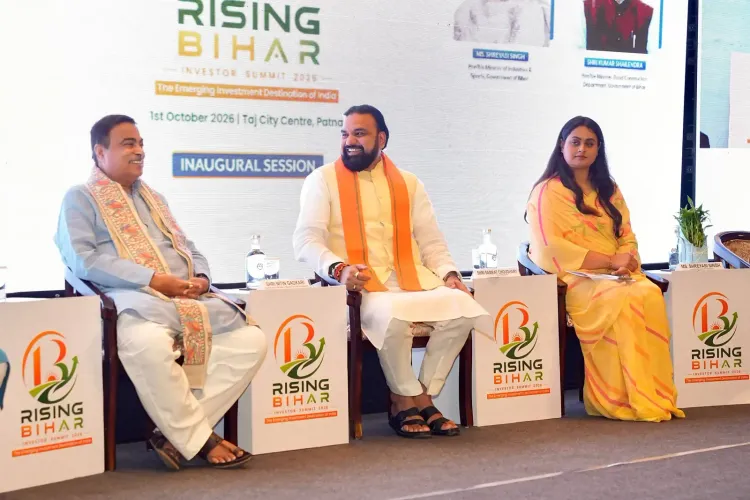
Rising Bihar Investor Summit 2026 inaugurated on 1 October 2026 at Taj City Centre, Patna by CM Samrat Choudhary and Union Minister Nitin Gadkari .
State government to give 25% procurement priority to products manufactured in Bihar, subject to quality norms.
Bihar's road network has expanded from 8,000 km to approximately 1.5 lakh km ; power availability has grown from 500 MW in 2005 to over 10,000 MW .
Target set to reach 20,000 MW electricity capacity within the next five years .
Bihar has formulated its first-ever silt policy , aiming to use river-dredged material to cut road construction costs.
Tourism, hotels, eco-tourism, Kosi region industrial corridors , and a Patna–Sonepur ropeway flagged as new investment frontiers.
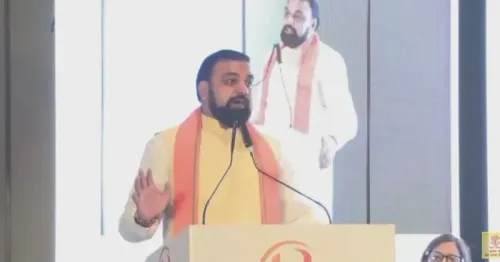
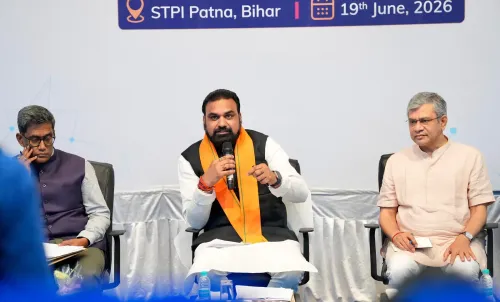
Bihar Chief Minister Samrat Choudhary on 1 October 2026 formally opened the Rising Bihar Investor Summit 2026 at the Taj City Centre in Patna, urging industrialists to tap into the state's 14 crore-strong population as a ready consumer market while pledging full government support on infrastructure, procurement, and policy. The summit was co-inaugurated by Union Minister for Road Transport and Highways Nitin Gadkari, Industries Minister Shreyasi Singh, and Road Construction Minister Kumar Shailendra.
Key Commitments from the State Government
Addressing investors, Choudhary assured that products manufactured by industries set up in Bihar would receive 25 per cent priority in government procurement, subject to quality standards. The state's procurement policy is also being amended to better support industrial development. He added that the government would work to facilitate wider market access for new industries beyond state tenders.
Choudhary also announced that Bihar would solarise agricultural feeders — a move he said would guarantee daytime electricity for farmers while reducing the fiscal burden of power subsidies. The state has formulated a silt policy for the first time, exploring the use of river-dredged material in road construction to lower project costs.
Infrastructure Growth: Roads, Power and Connectivity
The Chief Minister cited a dramatic expansion of Bihar's road network — from roughly 8,000 km to approximately 1.5 lakh km — as evidence of the state's infrastructure transformation. Power availability, he said, had surged from around 500 MW in 2005 to over 10,000 MW today, with a government target of reaching 20,000 MW within the next five years.
On connectivity, Choudhary highlighted plans for new transport modes including ropeways and water transport. A proposed ropeway project linking Patna with the Baba Hariharnath Temple in Sonepur across the Ganga was specifically mentioned as part of the state's tourism infrastructure push.
Water Management and the Flood-Drought Challenge
Choudhary acknowledged Bihar's perennial water challenges — recurring floods driven by inflows from Nepal and neighbouring states through rivers such as the Ganga, Kosi, and Gandak — while also flagging drought-prone pockets in south Bihar. He called for a long-term river management strategy and said the Kosi region could be developed into industrial corridors, townships, and tourism zones if water resources were better managed.
Efforts to ensure availability of Ganga water for drinking and irrigation in drought-affected areas are also underway, he said.
Tourism, Hotels and Sectors Flagged for Investment
The Chief Minister identified tourism, hotels, and eco-tourism as sectors with significant untapped potential, pointing to sites in Patna and Gaya as priority locations for hospitality projects. He invoked Bihar's historical legacy — citing Nalanda, Vikramshila, the empires of Magadh and Pataliputra, and the state's association with Lord Buddha, Lord Mahavir, and Guru Gobind Singh Ji — to argue that the state's cultural capital remained undermonetised.
Centre-State Alignment and Gadkari's Backing
Choudhary thanked Gadkari for attending and said Centre-state cooperation was key to accelerating highway and expressway development in Bihar. Gadkari, in his address, acknowledged that significant development work was underway in the state under Choudhary's leadership. This alignment is notable given Bihar's ongoing dependence on central highway funding and its strategic position on the eastern economic corridor.
The summit signals Bihar's most structured attempt yet to reframe the state's narrative — from a high-migration, flood-prone belt to an investment-ready destination with scale.
Point of View
Infrastructure statistics, and procurement promises — but the 2026 edition carries slightly more credibility than its predecessors, simply because the headline numbers on roads and power are verifiable improvements rather than projections. The real gap is on the demand side: 25% procurement priority and solarised feeders are supply-chain nudges, not transformative incentives for large manufacturers weighing Bihar against Gujarat or Tamil Nadu. The migration crisis — hundreds of thousands leaving every year — will not be reversed by a ropeway to Sonepur. Bihar needs anchor investments in manufacturing at scale, not just sector-level tourism and hotel signals, to change the employment calculus for its 14 crore people.
NationPress
2 Oct 2026
Frequently Asked Questions
What is the Rising Bihar Investor Summit 2026?
It is a state-level investment summit inaugurated on 1 October 2026 at Taj City Centre, Patna, by Bihar Chief Minister Samrat Choudhary and Union Minister Nitin Gadkari. The summit aims to attract domestic and international investors by showcasing Bihar's infrastructure growth, market size, and new policy incentives.
What procurement benefits has the Bihar government promised to investors?
The Bihar government has committed to purchasing 25% of eligible produce from industries established in the state, provided the products meet required quality standards. The state's procurement policy is also being revised to better support industrial development and market access.
How has Bihar's power infrastructure improved?
Bihar's electricity availability has grown from approximately 500 MW in 2005 to over 10,000 MW today, according to Chief Minister Choudhary. The government has set a target of doubling this to 20,000 MW over the next five years.
Which sectors has Bihar identified as priority investment areas?
Chief Minister Choudhary highlighted tourism, hotels, eco-tourism, industrial corridors in the Kosi region, and agricultural infrastructure including solarised feeders as key investment sectors. Patna and Gaya were specifically mentioned as hospitality investment locations.
What is Bihar's silt policy and why does it matter?
Bihar has formulated its first-ever silt policy, which explores using soil and silt dredged from rivers in road construction and other development projects. According to the Chief Minister, this could reduce construction costs while putting dredged material to productive use.