RSS leader Atul Limaye calls Jantar Mantar student protest 'unconstitutional, anti-national'
Synopsis
RSS Joint General Secretary Atul Limaye has formally labelled the Jantar Mantar student protest 'unconstitutional' and 'anti-national', urging the public to see it not as anti-BJP politics but as an ideological challenge to the Constitution itself. The Sangh Parivar's institutional framing of the protest raises the stakes in an already charged debate over student dissent and national interest.
Key Takeaways
Atul Limaye , RSS Joint General Secretary, called the Jantar Mantar student protest 'unconstitutional' and 'anti-national' on 2 August .
Limaye spoke at an ABVP event in Chhatrapati Sambhajinagar, Maharashtra .
He urged the public not to view the protest merely as an 'anti-BJP' movement, but as a challenge to the Constitution and the nation.
The RSS leader called for an in-depth study of the ideological forces driving such student agitations.
Limaye stressed the importance of shaping youth values ('sanskar') in line with the vision of a developed Bharat .
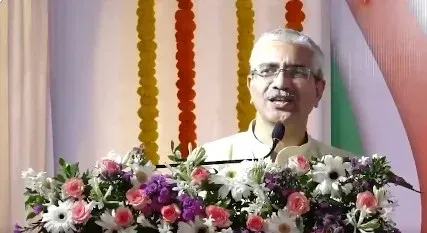
Rashtriya Swayamsevak Sangh (RSS) Joint General Secretary Atul Limaye on Sunday, 2 August labelled the recent student protest at Jantar Mantar in New Delhi as 'unconstitutional' and 'anti-national', cautioning the public against viewing the agitation purely as an anti-Bharatiya Janata Party (BJP) movement. Limaye made the remarks while addressing an event organised by the Akhil Bharatiya Vidyarthi Parishad (ABVP) in Chhatrapati Sambhajinagar, Maharashtra.
What Limaye Said
The RSS leader urged citizens to look beyond the political optics of the protest. 'Do not look at it solely from an ‘anti-BJP’ perspective. View it instead as a movement weaponised against the Constitution—a movement used as a tool to oppose the Constitution. View it as a movement raised against the nation—against India—and it is from this perspective that we must properly assess this force,' Limaye said.
He called for a serious and in-depth study of the movement to understand what he described as the underlying mindset and objectives behind such incidents, arguing that only a careful examination of the forces and ideologies at play would help society correctly evaluate the protest's implications for India's democratic framework.
On Youth and Nation-Building
Limaye also underscored what he called the indispensable role of India's youth in nation-building, particularly in realising the vision of a developed Bharat. He raised pointed questions about the values, aspirations, and ideological orientation that the country's younger generation should carry.
'What kind of youth power do we need? What values ('sanskar') should they possess? What dreams should they harbour? What songs should be on their lips? We must determine this with great care and depth,' he said.
Context and Significance
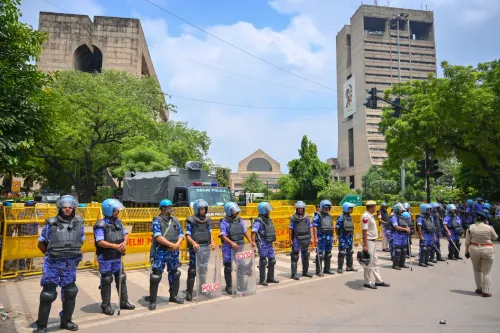
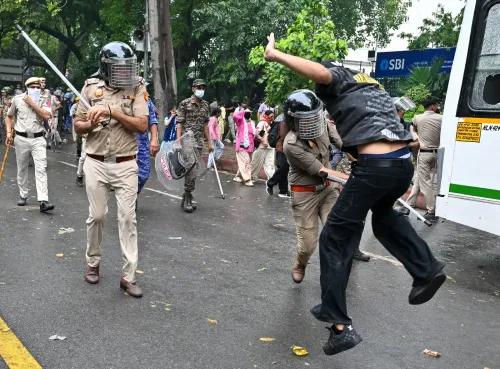
The remarks come amid ongoing public debate around student politics and campus movements in India. The Jantar Mantar protest, which drew significant attention, has become a flashpoint in broader conversations about the role of student organisations, their political alignments, and their relationship with constitutional values.
Notably, the RSS leader's intervention — delivered at an ABVP platform — signals the Sangh Parivar's intent to frame the protest not as legitimate democratic dissent but as an ideologically motivated challenge to the state. Critics of this position argue that student protests are a constitutionally protected form of expression, and that characterising them as 'anti-national' risks chilling legitimate campus activism.
What Comes Next
Limaye's remarks are likely to intensify the political debate around the Jantar Mantar agitation, with opposition parties and student groups expected to respond. The RSS's formal positioning on the protest — articulated by a Joint General Secretary — adds institutional weight to a narrative that until now had been advanced largely by ruling-party spokespersons.
Point of View
It is a deliberate escalation in register. The choice of an ABVP platform amplifies the signal: the Sangh is staking out ideological ground, not just political ground. What this framing does, however, is sidestep a harder question — whether the grievances animating the protest are legitimate, regardless of who is exploiting them. Labelling dissent anti-national has a history of silencing valid criticism alongside genuine bad-faith actors, and the RSS's credibility on constitutional values will be tested by how it distinguishes between the two.
NationPress
17 Sept 2026
Frequently Asked Questions
What did RSS leader Atul Limaye say about the Jantar Mantar student protest?
Atul Limaye, RSS Joint General Secretary, called the Jantar Mantar student protest 'unconstitutional' and 'anti-national' at an ABVP event in Chhatrapati Sambhajinagar on 2 August. He urged the public to view it not as an anti-BJP movement but as an ideological challenge to the Constitution and the nation.
Where and when did Atul Limaye make these remarks?
Limaye made the remarks on Sunday, 2 August, at an event organised by the Akhil Bharatiya Vidyarthi Parishad (ABVP) in Chhatrapati Sambhajinagar, Maharashtra.
What is the Jantar Mantar student protest about?
The protest at Jantar Mantar in New Delhi drew significant public attention and has become a focal point in debates around student politics, campus movements, and their alignment with national priorities. The specific demands of the protest are part of ongoing public discourse.
Why does the RSS want people to look beyond the 'anti-BJP' framing?
Limaye argued that viewing the protest solely as an anti-BJP movement understates what he sees as its deeper ideological character — namely, a challenge to constitutional values and national interest. He called for a thorough examination of the forces and mindsets driving such agitations.
What did Limaye say about the role of youth in India?
Limaye emphasised that India's youth are indispensable to realising the vision of a developed Bharat, and called for careful deliberation on the values, aspirations, and ideological grounding that the younger generation should carry.