India-US ties strengthen as Rubio visit seals trade, defence and minerals pacts
Synopsis
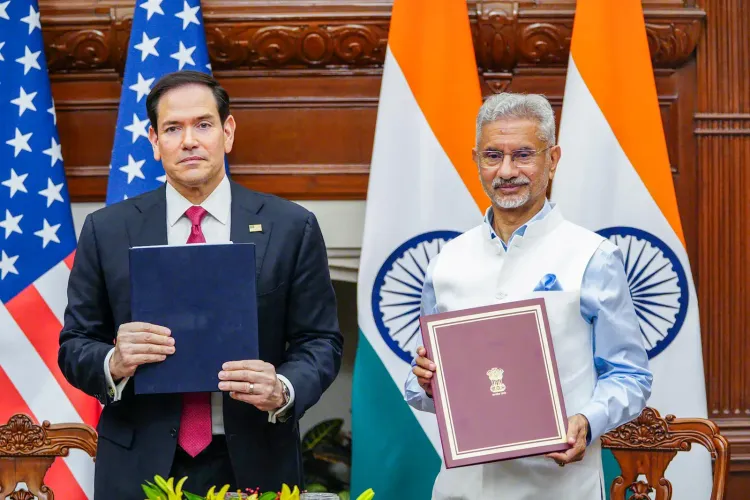
Marco Rubio's New Delhi visit delivered more than diplomatic optics — it produced a critical minerals pact directly targeting China's supply-chain dominance, a renewed $500 billion trade target, and a deepened defence framework. With the Quad also convening in New Delhi, India is cementing its role as the US's most consequential Indo-Pacific partner.
Key Takeaways
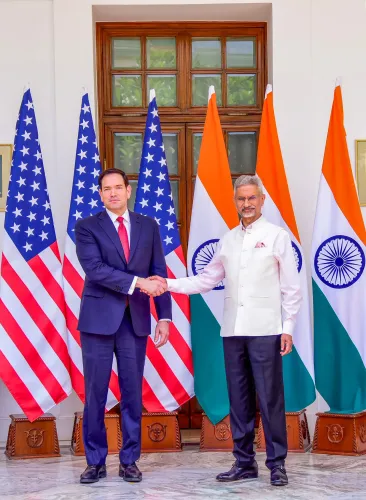
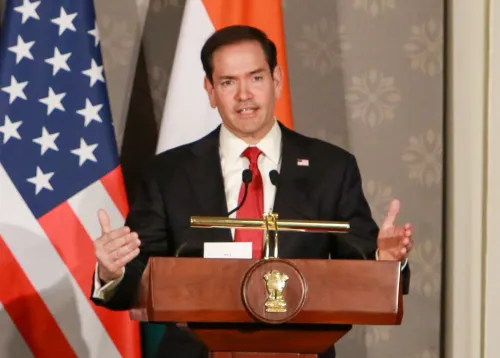
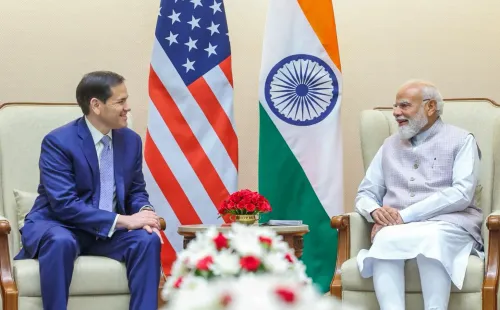
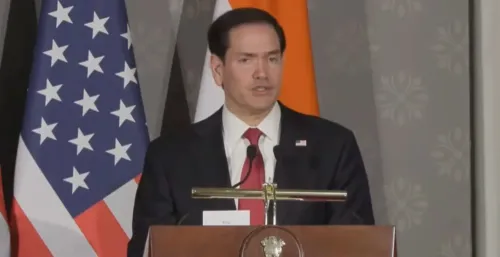
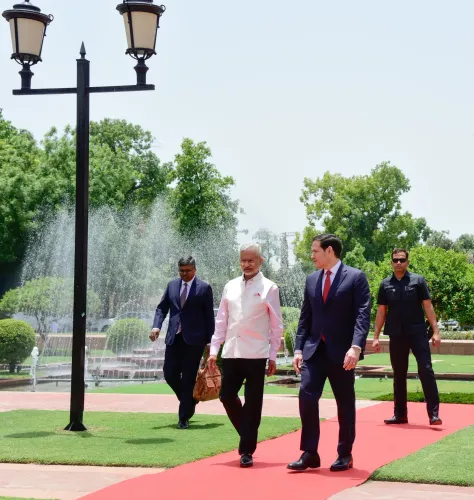
US Secretary of State Marco Rubio visited New Delhi , reinforcing India-US strategic and economic ties.
Both sides renewed commitment to Mission 500 , targeting $500 billion in bilateral trade by 2030 .
India's exports to the US grew from $76.17 billion (FY2021-22) to $87.32 billion (FY2025-26) .
The India-US Framework for Securing Critical Minerals and Rare Earths was signed, countering China's dominance in the sector.
The 10-year Major Defence Partnership Framework Agreement was renewed alongside an Underwater Domain Awareness Roadmap .
The Quad Foreign Ministers' Meeting , hosted by India, launched the Quad Critical Minerals Initiative to diversify supply chains.
US Secretary of State Marco Rubio's visit to New Delhi has reinforced the upward trajectory of India-US bilateral relations, yielding concrete outcomes on trade, critical minerals, and defence cooperation. The visit, which coincided with the Quad Foreign Ministers' Meeting hosted by India, signals Washington's recognition of New Delhi as a central pillar in shaping the Indo-Pacific balance of power.
Mission 500: Doubling Bilateral Trade by 2030
A key outcome of Rubio's visit was a renewed commitment to the Mission 500 initiative, which targets doubling India-US bilateral trade in goods and services to $500 billion by 2030. The trade relationship has already shown steady momentum: India's exports to the US climbed from $76.17 billion in FY2021-22 to $87.32 billion in FY2025-26, while imports from the US rose from $43.31 billion to $53.49 billion over the same period.
Ongoing negotiations for a broader bilateral trade agreement are expected to further open market access and accelerate investment flows. Analysts note that achieving the $500 billion target will require sustained structural reforms, improved ease of doing business, stronger supply chains, and deeper collaboration in emerging sectors.
Critical Minerals Framework: Countering China's Dominance
One of the most consequential agreements signed during the visit was the India-US Framework for Securing the Supply of Critical Minerals and Rare Earths — a sector in which China currently holds a dominant global position. Critical minerals underpin electric vehicles, renewable energy infrastructure, semiconductors, advanced electronics, and defence hardware.
The framework covers the full value chain — mining, processing, recycling, and investment. Complementing this, the Quad countries simultaneously launched the Quad Critical Minerals Initiative to diversify supply chains and reduce dependence on concentrated sources. For India, the partnership offers a pathway to build domestic processing capacity, attract foreign capital, and bolster its Make in India industrial agenda.
Defence Cooperation Deepens
The two countries renewed the 10-year Major Defence Partnership Framework Agreement and signed an Underwater Domain Awareness Roadmap, marking a significant deepening of strategic cooperation. Enhanced collaboration on surveillance, intelligence sharing, and maritime monitoring is expected to strengthen India's security posture in the Indian Ocean region.
Notably, the partnership increasingly supports India's indigenous defence manufacturing ambitions through co-development, co-production, and technology transfer arrangements — aligning with the broader Aatmanirbhar Bharat defence strategy.
Quad Meeting Underscores Indo-Pacific Alignment
The Quad Foreign Ministers' Meeting, hosted by New Delhi, reinforced the four-nation alliance's role in promoting a stable and prosperous Indo-Pacific. The gathering — involving India, the US, Japan, and Australia — demonstrated a convergence of strategic interests at a moment of heightened regional competition. This comes amid sustained pressure on Indo-Pacific supply chains and growing calls for multilateral frameworks to balance China's regional influence.
What Comes Next
With trade negotiations ongoing and sectoral frameworks now in place, the focus shifts to implementation. Industry observers note that the real test of the Mission 500 ambition lies in translating diplomatic momentum into verifiable trade and investment outcomes. The critical minerals and defence frameworks, if operationalised effectively, could meaningfully reposition India within global supply chains over the next decade.
Point of View
But its real significance lies in the critical minerals framework — a direct structural counter to China's rare-earths leverage that neither side has been willing to name quite so explicitly before. The Mission 500 trade target, however, deserves scrutiny: India-US goods trade has grown steadily but remains well below the pace needed to hit $500 billion by 2030 without a comprehensive trade agreement that is still being negotiated. The defence partnership's emphasis on co-production and technology transfer is the right direction, but past frameworks have moved slowly from paper to factory floor. The Quad's critical minerals initiative adds multilateral weight, yet diversifying away from China's processing dominance requires industrial investment at a scale that none of the four nations has yet committed to publicly.
NationPress
17 Sept 2026
Frequently Asked Questions
What is the Mission 500 initiative between India and the US?
Mission 500 is a bilateral initiative that aims to double India-US trade in goods and services to $500 billion by 2030. It was reaffirmed during US Secretary of State Marco Rubio's visit to New Delhi, with ongoing trade agreement negotiations expected to accelerate progress.
What did India and the US agree on critical minerals during Rubio's visit?
The two countries signed the India-US Framework for Securing the Supply of Critical Minerals and Rare Earths, covering mining, processing, recycling, and investment across the value chain. The agreement is aimed at reducing global dependence on China, which currently dominates critical mineral processing.
What is the Quad Critical Minerals Initiative?
The Quad Critical Minerals Initiative was launched by India, the US, Japan, and Australia during the Quad Foreign Ministers' Meeting in New Delhi. It seeks to diversify critical mineral supply chains and reduce concentration risk, complementing the bilateral India-US minerals framework.
How has India-US trade grown in recent years?
India's exports to the US rose from $76.17 billion in FY2021-22 to $87.32 billion in FY2025-26, while imports from the US increased from $43.31 billion to $53.49 billion over the same period, reflecting steady bilateral trade growth.
What defence agreements were signed during Rubio's India visit?
The two countries renewed the 10-year Major Defence Partnership Framework Agreement and signed an Underwater Domain Awareness Roadmap. The partnership focuses on co-development, co-production, technology transfer, and enhanced maritime surveillance cooperation.